- 中文网站请点击 http://www.pinxinggroup.com
-
 +86-21-57566731
-
 cai@pinxingmotor.com
-
 DOWNLOAD


 English
 русский
 Français
 عربى

3-Phase Electric Motor Guide: Types, Efficiency, Voltage, and Buying Specs
Content
- 1 What a 3-Phase Electric Motor Does Differently
- 2 3-Phase Electric Motor Types and Where Each Works Best
- 3 Efficiency Classes and the Real Cost of Running a 3-Phase Electric Motor
- 4 Voltage, Speed, and Frame Size: The Specs That Lock In Your 3-Phase Electric Motor
- 5 Explosion-Proof and VFD Requirements for 3-Phase Electric Motors
- 6 Frequently Asked Questions About 3-Phase Electric Motors
When a 300 kW compressor drive fails, the replacement decision starts at the bus: three phases at 660 V. That voltage fixes the motor family, but it does not fix the specification. A 3-phase electric motor built as a squirrel cage, a wound rotor, or a synchronous unit will all run on the same power rail, yet each will behave differently under heavy load, high inertia, or continuous duty. The engineer who compares these differences before ordering pays once; the one who orders from habit pays for years in energy and downtime.
What a 3-Phase Electric Motor Does Differently
Three-phase motors are the backbone of industrial power because they use three alternating currents offset by 120 degrees to create a rotating magnetic field without any auxiliary starting device. Torque stays constant through the entire 360-degree rotation, so the motor runs quietly and the driven machinery does not vibrate at line frequency.
A 3-phase motor is an AC induction machine that converts three-phase electrical energy into mechanical rotation. Three stator windings are energized by currents displaced 120 degrees in time, producing a magnetic field that rotates continuously around the rotor cage. The rotor follows that field at a speed determined by the number of poles and the supply frequency.
Single-phase motors must use a capacitor and a start winding to create a second phase artificially. They produce a pulsating torque, and the practical power ceiling is around 3.7 kW. Three-phase motors skip all of that hardware and scale from fractional horsepower to more than 1,000 kW, which is why any plant with a medium-voltage bus runs almost every machine in the building on three phases.
| Parameter | Single-phase motor | Three-phase motor |
| Power range | up to 3.7 kW | up to 1,000+ kW |
| Starting method | Capacitor and start winding | Direct online, field rotates |
| Torque ripple | Pulsating | Smooth and constant |
| Efficiency | Lower | Higher |
| Typical use | Small tools, domestic fans | Pumps, fans, compressors, mills |
3-Phase Electric Motor Types and Where Each Works Best
Squirrel cage, wound rotor, and synchronous are the three 3-phase motor families an engineer will compare on a datasheet, and each solves a different mechanical problem. The naming comes from the rotor construction, which determines starting torque, efficiency, and how much maintenance the operator will do over the motor's life.
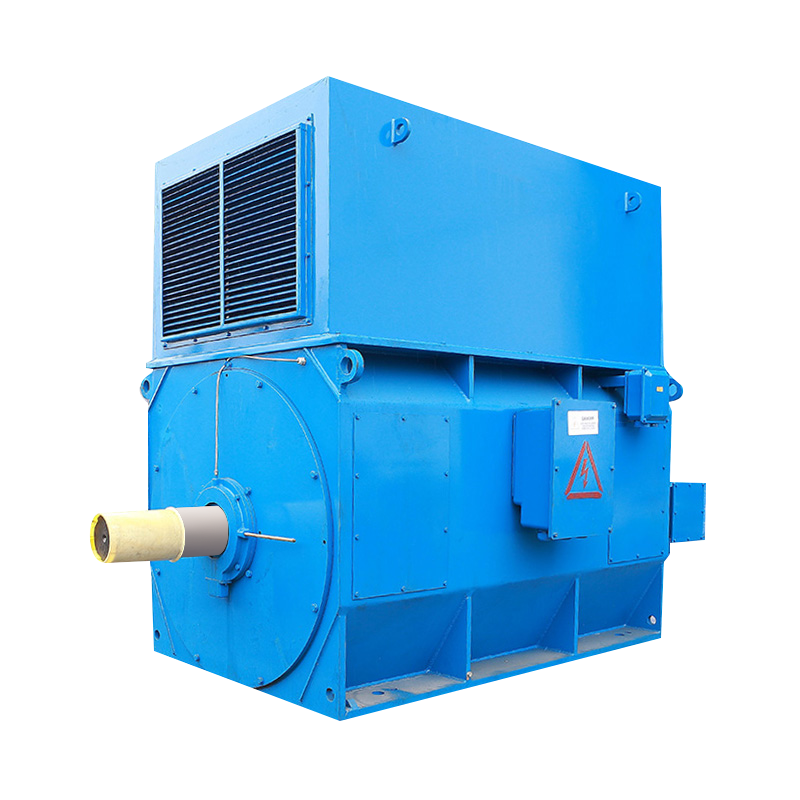
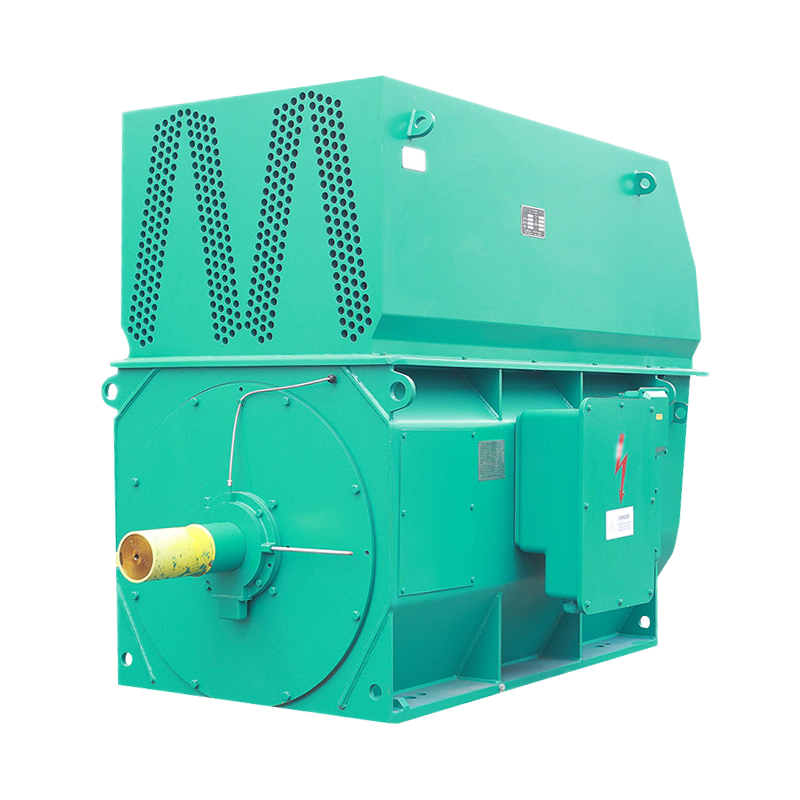
 Y Series High-Voltage Three Phase Squirrel Cage Induction MotorThis medium-size high-voltage motor features a squirrel cage rotor, suitable for driving compressors, pumps, and other general machinery. Its box-type construction and Class F insulation ensure reliable performance with low vibration and high efficiency.View Product →
Squirrel cage machines are the default choice for pumps, fans, and compressors. Rotor bars are cast or welded into a laminated core, with no slip rings and no brushes to inspect. For a 24/7 continuous process, the maintenance burden is almost zero. The trade-off is a fixed starting torque, usually 150 to 250 percent of full load, which is fine for fan and pump curves but not ideal for a loaded crusher start. For a deeper look at the construction, see how a 3-phase squirrel cage motor works.
Wound rotor motors add slip rings and external resistance to the rotor circuit, which lets the operator control acceleration and ramp up torque. They are the right choice for high-inertia loads like ball mills, conveyors starting under load, and cranes. The cost is a part that needs attention: brushes and slip rings require scheduled inspection.
Synchronous 3-phase motors run at exactly the rotor field speed, which means no slip. They are used on very large compressors and pumps where the ability to generate reactive power improves plant power factor. The trade-off is a more complex exciting circuit and a higher purchase price.
- Squirrel cage: cast rotor bars, no brushes, low maintenance
- Wound rotor: slip rings plus external resistors, high starting torque
- Synchronous: no slip, can supply reactive power, needs excitation
| Motor type | Starting torque | Efficiency | Maintenance | Typical use |
| Squirrel cage | 150 to 250% | High | Very low | Pumps, fans, compressors |
| Wound rotor | 250 to 350% | Moderate | Moderate | Crushers, conveyors |
| Synchronous | Normal | Very high | Low | Continuous process loads |
Efficiency Classes and the Real Cost of Running a 3-Phase Electric Motor
Efficiency is not a performance badge on a 3-phase motor; it is a measurable operating cost. IEC 60034-30-1 defines IE2, IE3, and IE4 efficiency classes for low-voltage motors. The difference between the classes is only a few percentage points, but those points compound into thousands of dollars over a motor's life because the motor consumes its own capital cost in electricity every few months.
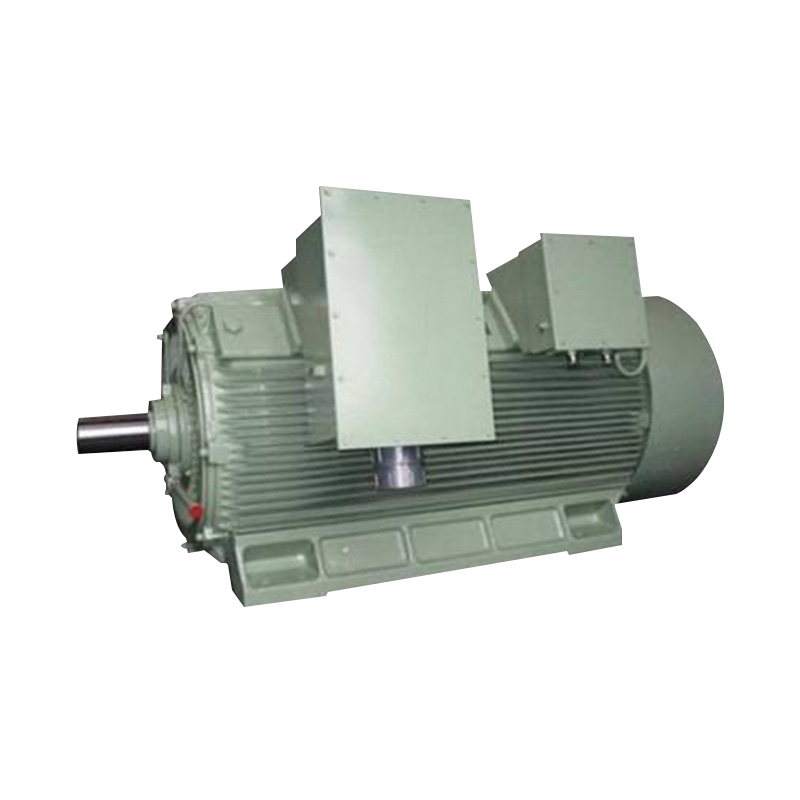
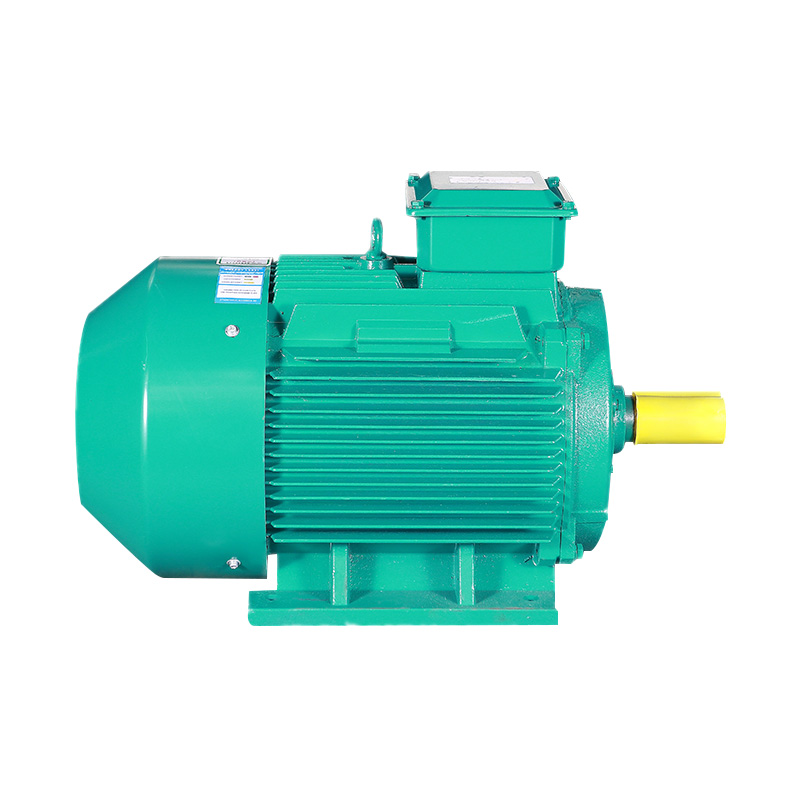 IE3 Series Three Phase Induction Motor for Energy EfficiencyThis low-voltage motor meets IE3 efficiency standards, offering reduced energy consumption. Its cast-aluminum rotor and VPI-impregnated windings provide reliability, making it a cost-effective choice for continuous-duty applications.View Product →
Consider a 30 kW, 4-pole motor running 6,000 hours per year at USD 0.10 per kWh. A typical IE2 machine draws about 32.4 kW of input power. An IE4 machine draws about 31.6 kW. The 0.8 kW difference is worth USD 468 per year, or USD 4,680 over ten years. On a motor that costs USD 8,000 to replace, that is 58 percent of the replacement cost returned in energy savings over ten years.
Regulatory minimums are also moving. The EU requires IE3 as a minimum for motors from 0.75 to 375 kW, and parts of North America require NEMA Premium efficiency. Specifying IE4 on a continuous-duty machine is a purchasing decision that the energy auditor will see in the first year, and it often pays back in less than three years before any rebate is applied. If you are specifying a high-voltage machine, our IE4 standards and selection guide covers the same questions on medium-voltage frames.
Do not confuse efficiency with power factor. A motor can be high efficiency and still draw reactive current that increases distribution losses. On older plants with lagging power factor, a synchronous 3-phase motor or a capacitor bank is handled separately from the IE class in the motor specification.
Voltage, Speed, and Frame Size: The Specs That Lock In Your 3-Phase Electric Motor
Voltage, pole count, and frame size are the three specifications that decide whether a 3-phase motor will fit physically and electrically. Everything else on the datasheet is negotiable; these three are not.
Motor voltage must match the plant bus. If the supply is 400/690 V, a 230/400 V motor will connect in delta for the lower voltage. If the bus is 6 kV, the winding and insulation system change completely, and the motor will not run on a lower voltage supply without a transformer.
| Supply voltage | Typical application | Frame range |
| 230/400 V | Small workshop equipment | 63 to 200 |
| 400/690 V | General industrial plants | 200 to 355 |
| 3.3 kV | Medium-voltage distribution | 355 to 500 |
| 6 kV or 10 kV | Large compressors, mills, fans | 500 to 1000 |
Speed is set by pole count. A 4-pole motor on a 50 Hz supply runs near 1,490 rpm while synchronous speed is 1,500 rpm. A 2-pole motor is roughly 2,900 rpm, and a 6-pole motor is near 960 rpm. If the process needs 1,450 rpm, the frame size and the coupling have to be selected together, or the pump curve will not line up.
- 4-pole on 50 Hz = 1,480-1,490 rpm typical
- Insulation class F or H, choose per thermal margin
- IP55 standard, IP65 for washdown, Ex d for hazardous area
- Duty cycle S1 continuous, S4 or S5 for variable loads
Explosion-Proof and VFD Requirements for 3-Phase Electric Motors
Two conditions change a 3-phase motor specification beyond the standard catalogue pages: explosive atmospheres and variable-frequency drives. Both require checking that the winding, enclosure, and cooling match the actual process, not just the nameplate power.
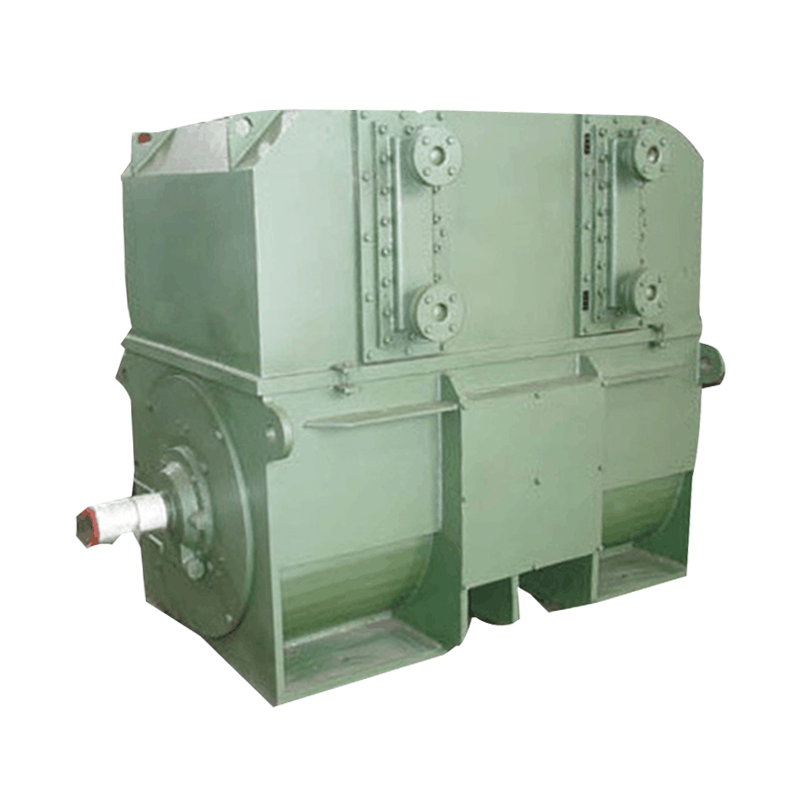
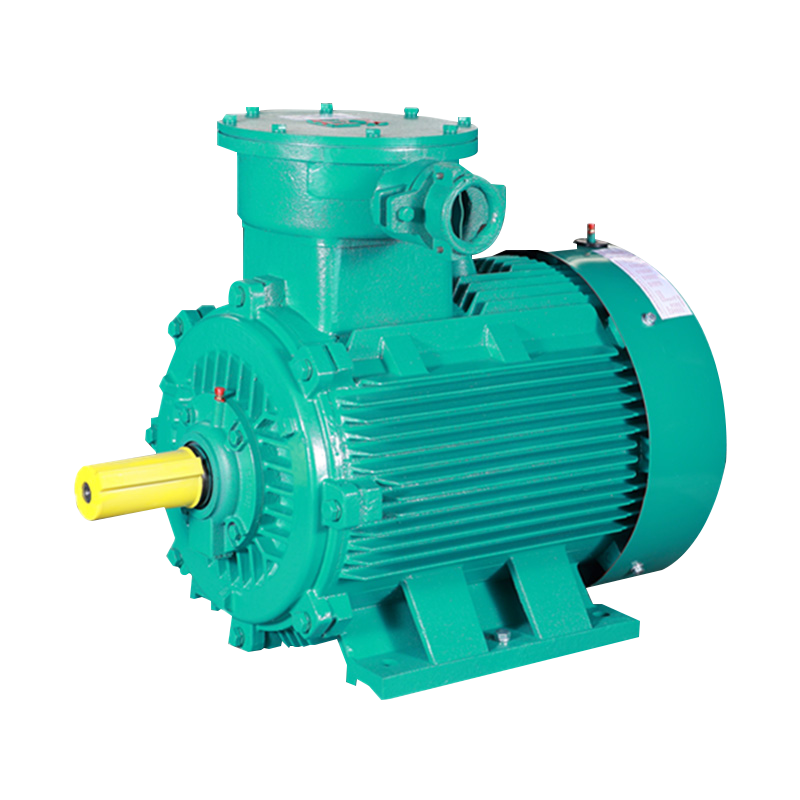 Custom Low Voltage Explosion-Proof Motor for Hazardous AreasDesigned for environments with flammable risks, this explosion-proof motor operates below a few hundred volts. It features robust construction and materials to prevent sparks or high temperatures, ensuring safety in chemical, oil, and mining industries.View Product →
Hazardous areas are classified by zone and gas or dust group. A 3-phase motor for a Zone 1 petrochemical area needs an Ex d flameproof enclosure or an Ex e increased safety design, with a certification plate that matches the gas group. For a Zone 22 dust area, the enclosure must meet the tD standard. These motors use stronger frames and sealed lead entry points, and the frame temperature must be below the ignition temperature of the surrounding atmosphere.
Variable-frequency operation adds two constraints. First, the inverter output has a high rate of voltage rise, or dv/dt, so the motor winding insulation must be rated for inverter duty, generally with phase-to-phase insulation and a higher thermal class. Second, at low speed a shaft-mounted fan loses cooling, so a separately driven forced-air fan is often required to keep the motor within its temperature limit below 30 percent of rated speed.
- Confirm inverter-duty winding with phase-to-phase insulation
- Add separately driven fan for low-speed operation
- Verify speed range matches the motor torque curve
- Use shielded cable and properly grounded drive enclosure
Inverter-duty rating means the motor winding insulation is designed to withstand the voltage spikes generated by a PWM drive, typically up to 1,600 V peak for a 400 V drive, without premature phase-to-phase insulation failure.
Frequently Asked Questions About 3-Phase Electric Motors
What is the difference between a 3-phase motor and a single-phase motor?
A 3-phase motor uses three AC currents offset by 120 degrees to create a continuous rotating magnetic field, so it needs no starting capacitor and produces smooth torque. A single-phase motor depends on a capacitor and start winding to start, and its torque pulsates at line frequency, which limits practical sizes to about 3.7 kW.
How do I choose between a squirrel cage and a wound rotor 3-phase motor?
Choose a squirrel cage machine for pumps, fans, and compressors with low starting torque and low maintenance. Choose a wound rotor machine when the process demands high starting torque with controlled acceleration, such as a crusher, conveyor, or mill starting under load.
Can a 3-phase motor run on a variable frequency drive?
Yes, but the motor must be rated for inverter duty. Use insulation rated for the inverter dv/dt, add a separately driven fan for low-speed operation, and confirm that the torque requirement stays within the motor's continuous torque curve across the full speed range.
What efficiency class should I choose for a new 3-phase motor?
Choose the highest class that the budget and the local regulation allow. EU rules make IE3 the minimum for most motors from 0.75 to 375 kW. For a continuous-duty motor running more than 6,000 hours a year, IE4 typically pays for itself in 2 to 3 years through lower energy cost.

Get in Touch
Related Products
 Shanghai Pinxing
Explosion-proof Motor Co., Ltd.
-
 cai@pinxingmotor.com
-
 +86-21-57566731
-
 +86-21-57566967
-
 No.699, Pinxing Rd., Qinggang Industrial Zone, Fengxian District, Shanghai, China.(East Gate)
-
No. 168, Qingling Rd, Qinggang Industrial Zone, Qingcun Town, Fengxian District, Shanghai, China (South Gate)
Copyright@ 2024 Shanghai Pinxing Explosion-proof Motor Co., Ltd. All Rights Reserved.
Privacy