- 中文网站请点击 http://www.pinxinggroup.com
-
 +86-21-57566731
-
 cai@pinxingmotor.com
-
 DOWNLOAD


 English
 русский
 Français
 عربى

Three Phase Electric Motor Selection Guide: Types, Voltage, Efficiency
Content
- 1 Three Phase Electric Motor Basics: How the Rotating Field Sets Limits
- 2 Three Phase Electric Motor Types: Squirrel Cage, Wound Rotor, or Synchronous?
- 3 Voltage and Frequency: How to Specify a Three Phase Electric Motor
- 4 Efficiency Standards for Three Phase Electric Motors: IE3 vs IE4
- 5 Explosion-Proof Three Phase Electric Motor Selection for Hazardous Areas
- 6 Three Phase Electric Motor Selection Checklist: From Load to Installation
- 7 Frequently Asked Questions About Three Phase Electric Motors
In a recent upgrade project for a cement plant, the engineering team had to decide between a 380V and a 6kV three phase electric motor for the main raw mill. Choosing the wrong voltage level would have increased the low-voltage panel cost by roughly 30% and forced the selection of a larger cable tray. That is why the three phase electric motor selection process is not just a power-matching exercise; it is a system-level decision that affects the entire electrical layout.
Wrong voltage selection on a 500 kW motor can add 30% to the low-voltage switchgear cost alone.
Three Phase Electric Motor Basics: How the Rotating Field Sets Limits
Conclusion first: the synchronous speed of a three phase electric motor is fixed by the power frequency and the number of poles. At 50 Hz, a 2-pole motor turns at 3000 rpm, a 4-pole at 1500 rpm, and a 6-pole at 1000 rpm. This is not an approximation; it is a physical constraint.
The rotating magnetic field is produced by three currents that are 120 degrees out of phase. The field sweeps across the stator at synchronous speed. If the rotor is a cage, it lags behind by slip, which creates torque. Slip is a useful diagnostic value. For example, a 4-pole motor running at 1470 rpm has a slip of 2%, which is normal for an IE3 induction motor.
Definition: A three phase electric motor is an AC motor that uses three phase currents to create a rotating magnetic field. The rotor follows that field at synchronous speed minus slip.
Three Phase Electric Motor Types: Squirrel Cage, Wound Rotor, or Synchronous?
The right three phase electric motor type depends on the starting torque, the duty cycle, and whether you need speed control. Squirrel cage motors are the default for constant-speed loads. Wound rotor motors are chosen when high starting torque must be managed without a VFD. Synchronous motors are used when power factor correction is worth the extra cost.
| Parameter | Squirrel Cage | Wound Rotor | Synchronous |
| Starting torque | Low to medium | High | Low |
| Speed control | VFD required | Rheostat possible | VFD or fixed |
| Efficiency | IE3 to IE4 | IE2 to IE3 | IE4 available |
| Maintenance | Minimal | Brush and slip rings | Minimal |
| Typical application | Pumps, fans, compressors | Ball mills, cranes, hoists | Large compressors, mills |
In most industrial drive applications, squirrel cage motors account for more than 90% of installed three phase motors because of their low maintenance and high efficiency.
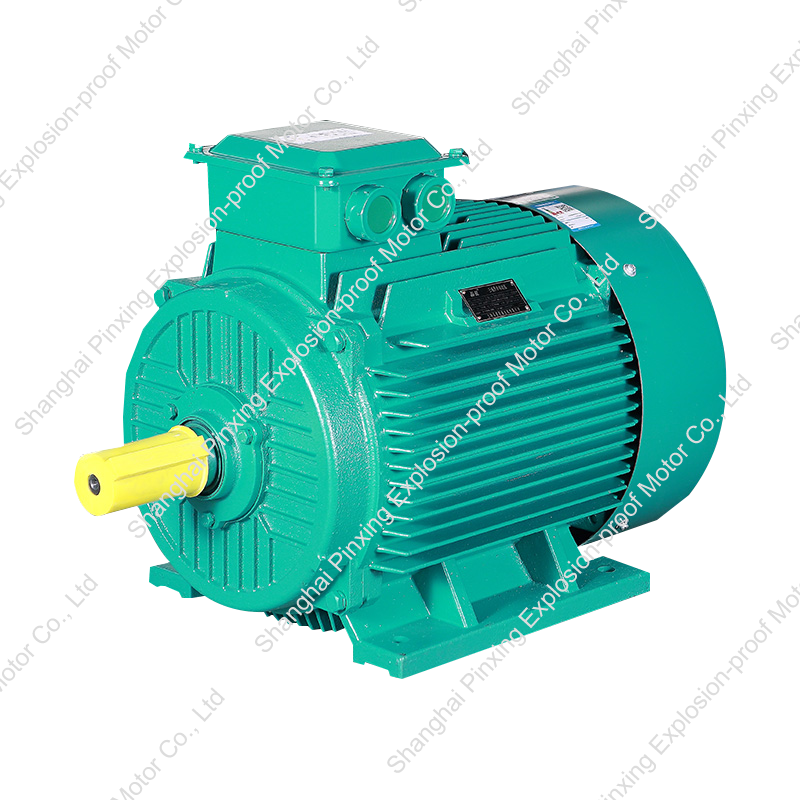
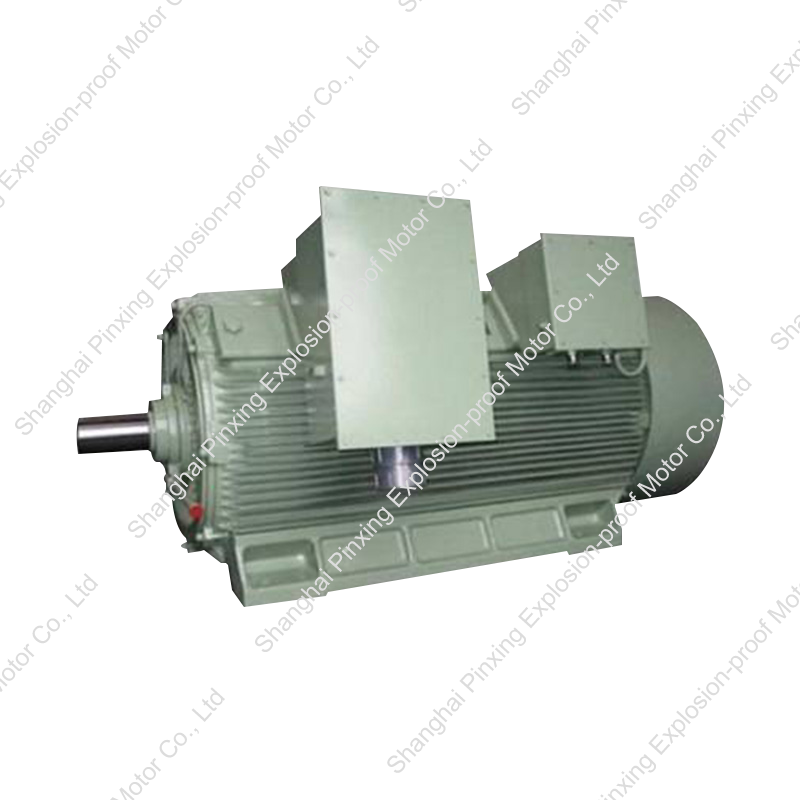
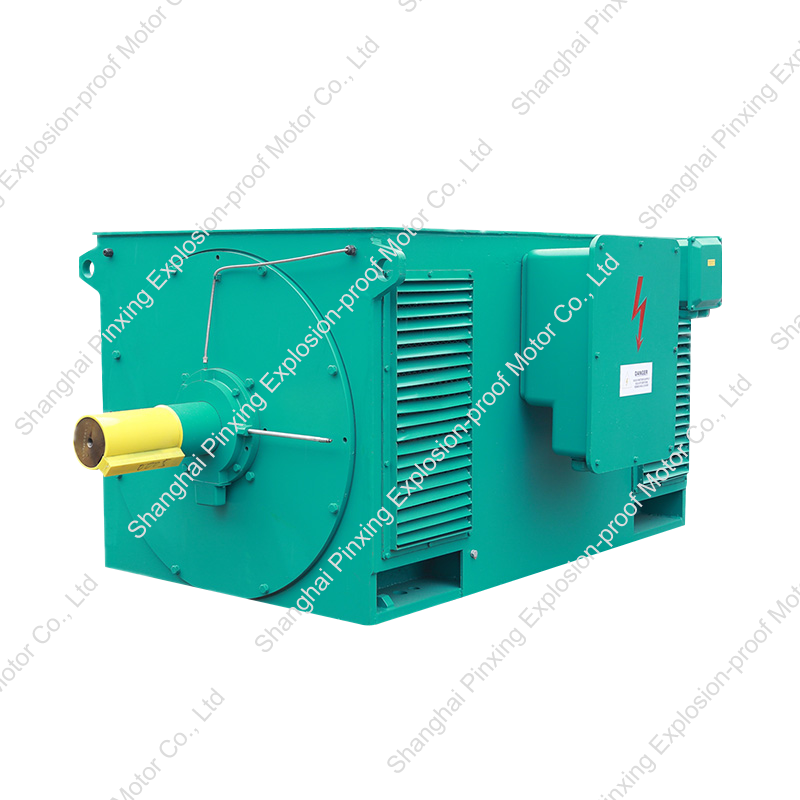 3-Phase Squirrel Cage Motor for Industrial DrivesCommon AC motor with a simple design, widely used in industrial applications. Available in several high-voltage series, suitable for drives that require reliable, low-maintenance operation.View Product →
Voltage and Frequency: How to Specify a Three Phase Electric Motor
The supply voltage decides the motor frame size and the cost of the associated switchgear. In general, motors below 355 kW are specified at 380V or 400V, while motors above this threshold are best served by 3kV, 6kV, or 10kV.
Choosing 6kV instead of 400V for a 500 kW motor reduces the copper cross-section of the feeder cable and allows smaller MCCBs. But it also requires a separate transformer if the plant does not have a medium-voltage distribution system. This is why the electrical layout often determines the practical motor voltage.
| Supply voltage | Typical power range | Most common application |
| 380V-400V | 0.75kW - 355kW | Standard industrial drives |
| 415V | 0.75kW - 315kW | 50Hz or 60Hz export machines |
| 690V | 75kW - 500kW | Offshore or marine systems |
| 3kV-3.3kV | 200kW - 1600kW | Mining and steel rolling mills |
| 6kV-6.6kV | 250kW - 2500kW | Large compressors and pumps |
| 10kV-11kV | 500kW - 5000kW | Power plant auxiliaries |
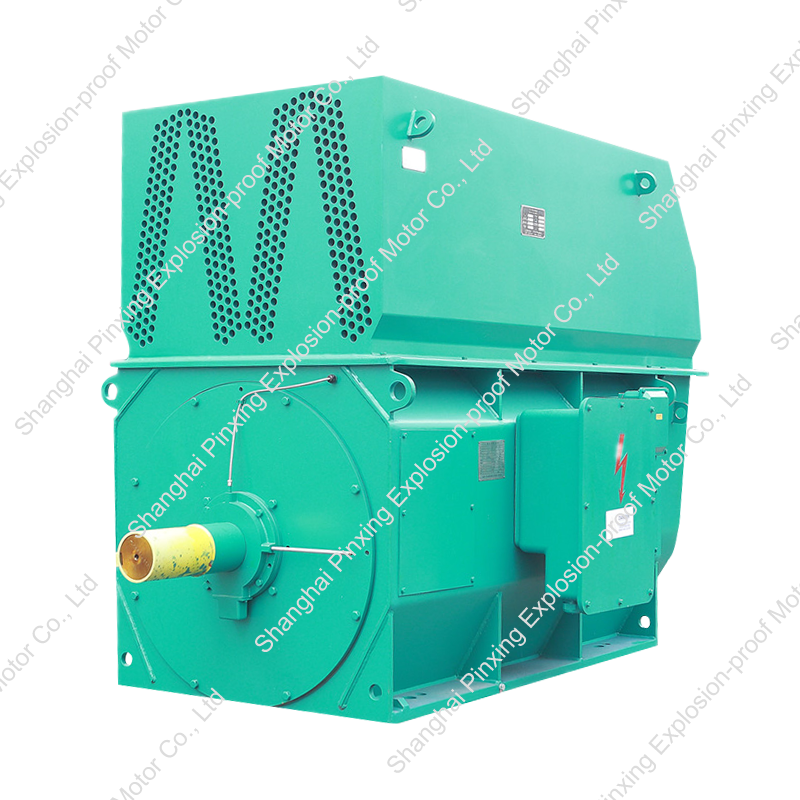
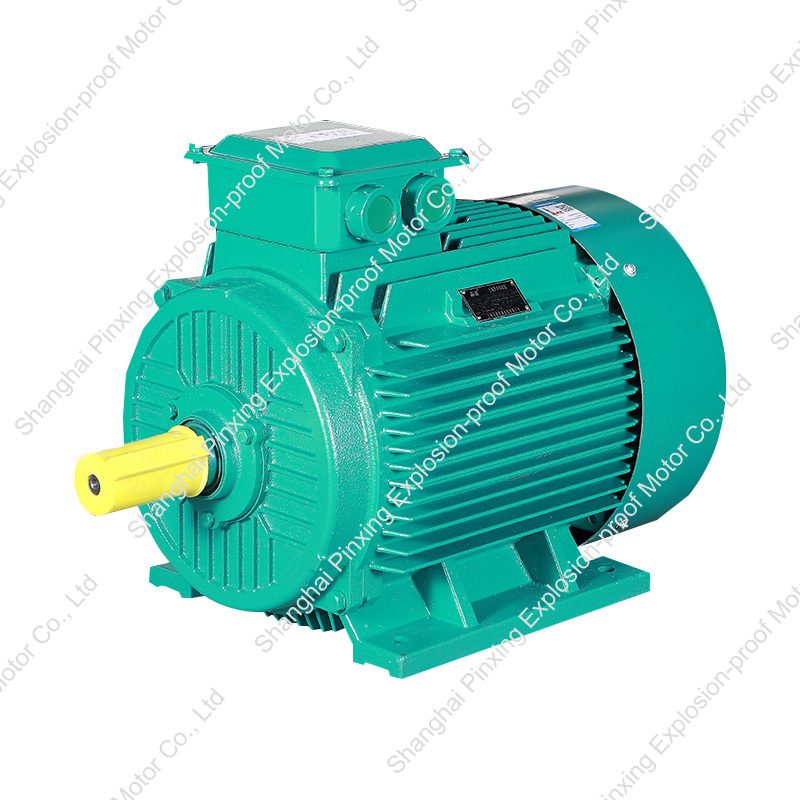 IE4 High-Efficiency Three-Phase Induction MotorSuper-premium efficiency motor with a compact, low-noise design. Offers energy savings over IE3, making it suitable for continuous-duty applications where operating costs matter.View Product →
Efficiency Standards for Three Phase Electric Motors: IE3 vs IE4
IE4 classes cost 10-15% more than IE3 but can pay back the difference in under two years when the annual operating hours exceed 6000. The payback period is the key metric, not the efficiency label alone.
At an electricity price of 0.10 USD per kWh, the IE4 motor saves roughly 260 USD annually compared with the IE3 motor, giving a payback period of less than one year for the typical cost difference.
Explosion-Proof Three Phase Electric Motor Selection for Hazardous Areas
For any plant atmosphere containing flammable gas or dust, the three phase electric motor must carry a certified Ex rating. Selecting a standard industrial motor in a Zone 1 area is a direct safety violation and a common cause of insurance rejection.
Ex d flameproof
Contains internal explosion without letting flames escape. Suitable for Zone 1 and Zone 2 areas.
Ex e increased safety
Prevents sparks by stricter insulation and terminal design. Suitable for Zone 1 and Zone 2, but with lower starting current limits.
- Zone 0: only Ex ia or Ex ma rated motors may be used.
- Zone 1: Ex d or Ex e motors are acceptable.
- Zone 2: Ex nA or Ex nC motors can be considered.
- Temperature class: select T4 or better for most chemical processes.
In our work with chemical plant clients, replacing non-Ex motors with Ex d units in a single reactor area has required re-certification of the electrical loop and increased project cost by roughly 20%, but it is a non-negotiable step for insurance approval.
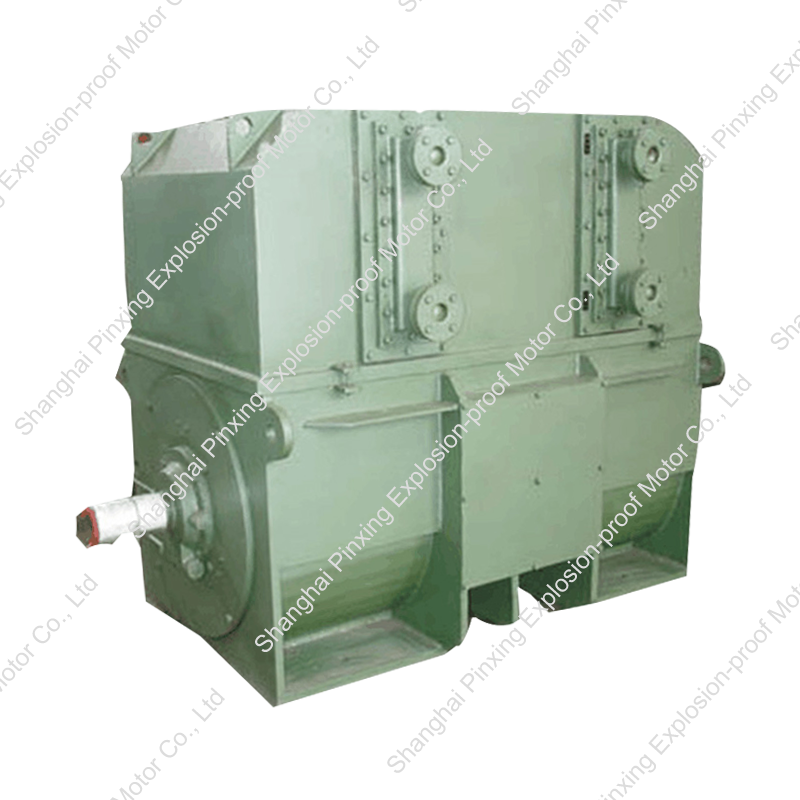
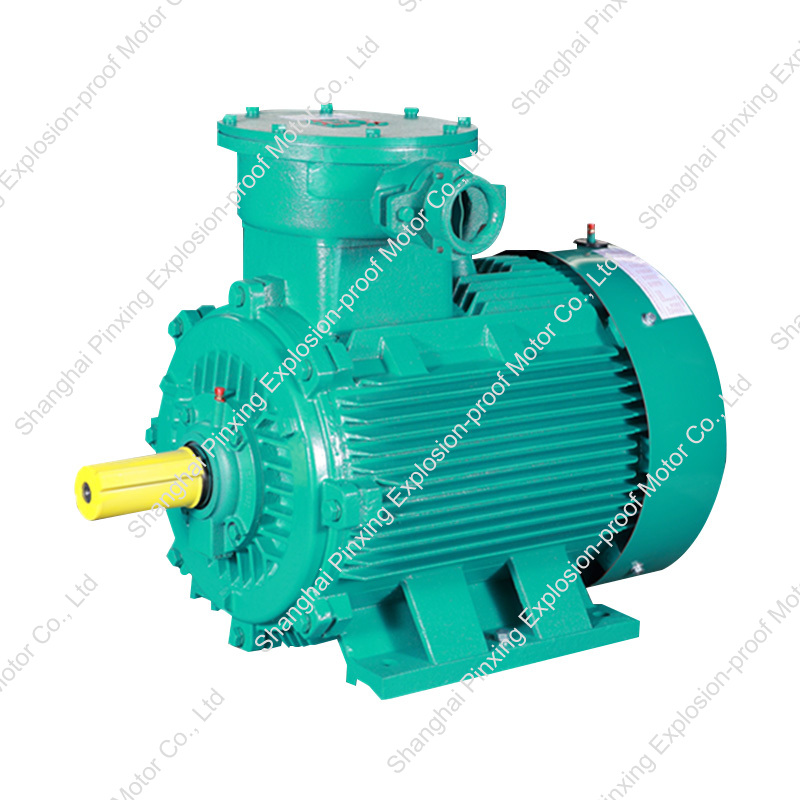 YBX4 Low-Voltage Flameproof Induction MotorExplosion-proof motor for hazardous environments, featuring high efficiency and low noise. Built to drive heavy equipment in explosive atmospheres, with a wide power range and flexible voltage options.View Product →
Three Phase Electric Motor Selection Checklist: From Load to Installation
The selection process should follow a fixed sequence: calculate the load torque, verify the starting method, check the efficiency class, and then confirm the mounting and cooling arrangement. Skipping the starting torque step is the most common cause of oversized motors and unstable starting.
Estimate load torque
Use the driven equipment's friction and inertia to calculate the required starting torque and running torque.
Verify the starting method
Select direct-on-line, star-delta, soft starter, or VFD based on the supply capacity and the allowed current inrush.
Choose the voltage level
Match the motor voltage to the existing plant grid or the nearest available transformer.
Confirm the efficiency class
Compare IE3 and IE4 total owning cost over the expected life, not just the purchase price.
Check the cooling and mounting
Verify IC411, IC416, or IC511 cooling methods and the required IM mounting arrangement.
Selection is done when the motor can start the load, run at the required speed, and survive the ambient conditions for the planned lifetime.
Frequently Asked Questions About Three Phase Electric Motors
Which three phase electric motor type is best for high starting torque?
A wound rotor motor is typically the best choice for high starting torque when the power source is weak, because it can add rotor resistance to limit current. If a VFD is acceptable, a squirrel cage motor with a soft starter can also handle the duty.
Can a three phase electric motor run on a VFD?
Yes, but the motor must be rated for inverter duty. This means it needs a matching insulation class and a forced cooling fan for low-speed operation. The YPT series of three phase motors is designed for VFD operation.
What is the difference between IE3 and IE4 efficiency classes?
The IE code defines efficiency levels of a motor. IE4 motors have lower losses than IE3 by roughly 1.5-3 percentage points depending on the frame size. The extra cost is usually recovered through energy savings within 1-3 years at 6000 annual operating hours.
How do I select the right voltage for a three phase electric motor?
Start with the existing plant distribution voltage. If the motor is above 355 kW, consider a medium-voltage motor at 6kV or 10kV to reduce conductor size and switchgear cost. For smaller motors, 380V-400V is the standard choice.

Get in Touch
Related Products

 Shanghai Pinxing
Explosion-proof Motor Co., Ltd.
-
 cai@pinxingmotor.com
-
 +86-21-57566731
-
 +86-21-57566967
-
 No.699, Pinxing Rd., Qinggang Industrial Zone, Fengxian District, Shanghai, China.(East Gate)
-
No. 168, Qingling Rd, Qinggang Industrial Zone, Qingcun Town, Fengxian District, Shanghai, China (South Gate)
Copyright@ 2024 Shanghai Pinxing Explosion-proof Motor Co., Ltd. All Rights Reserved.
Privacy