
 English
 русский
 Français
 عربى
عربى
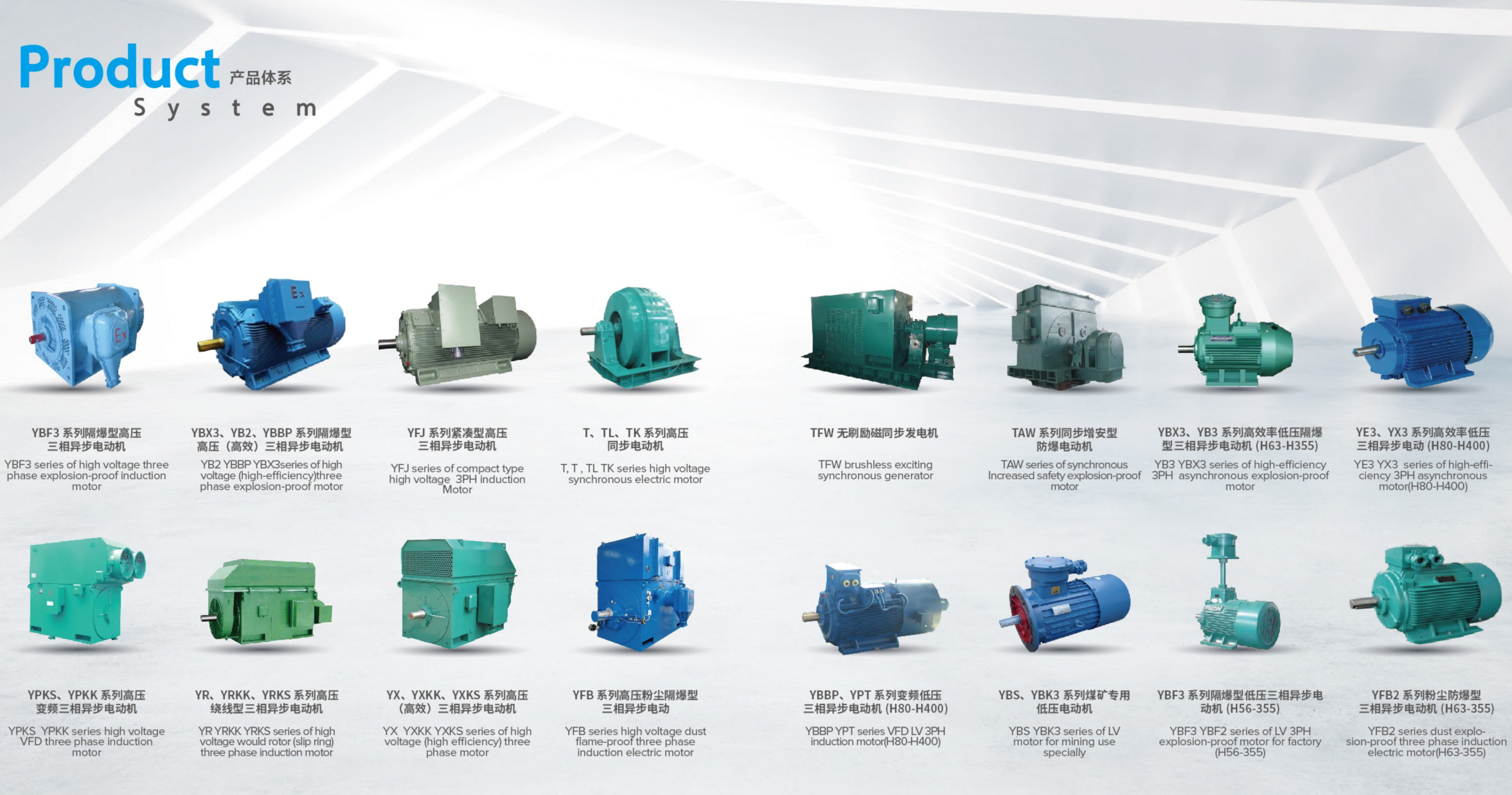
Why choose us?
Shanghai Pinxing's Maintenance Expertise
Shanghai Pinxing Explosion-proof Motor Co., Ltd. has developed comprehensive maintenance expertise through decades of supporting motor installations across diverse industries. Our technical service team includes specialists in electrical testing, mechanical alignment, bearing maintenance, and insulation systems with certifications in various maintenance methodologies. The company maintains advanced diagnostic equipment including motor circuit analyzers, vibration analyzers, thermal imaging cameras, and alignment systems. Our engineering department analyzes failure data from field installations to identify common issues and develop improved maintenance recommendations. Documentation systems maintain service histories for motors we manufacture, supporting predictive maintenance and lifecycle management. Training programs transfer maintenance knowledge to customer personnel, enabling effective in-house maintenance capabilities.
Proactive Maintenance Program Development
We develop proactive maintenance programs based on analysis of specific operating conditions, equipment criticality, and available resources. Program development begins with assessment of current maintenance practices and equipment condition. Criticality analysis identifies motors where failures would have significant operational impact. Condition assessment establishes baseline measurements for trending. Maintenance task development defines specific procedures for inspection, testing, lubrication, and component replacement. Interval optimization balances maintenance frequency with resource availability and failure risks. Documentation systems establish records for maintenance history, condition data, and performance trends. Implementation support includes training, procedure validation, and initial execution assistance. Performance monitoring tracks program effectiveness through metrics including mean time between failures, maintenance cost per operating hour, and equipment availability. Continuous improvement processes refine programs based on performance data and changing operational conditions.
Technical Support for Maintenance Activities
Shanghai Pinxing provides comprehensive technical support for motor maintenance activities including troubleshooting assistance, procedure development, and specialized tooling recommendations. Our technical support team assists with interpretation of condition monitoring data, identification of developing issues, and determination of appropriate corrective actions. Procedure development creates step-by-step instructions for specific maintenance tasks with attention to safety and quality. Tooling recommendations identify appropriate equipment for maintenance activities including alignment tools, bearing heaters, lubrication equipment, and testing instruments. Remote support utilizes digital communication to provide real-time assistance during maintenance activities. Documentation support maintains records of maintenance interventions, condition findings, and corrective actions. This comprehensive support enables effective maintenance execution while minimizing risks of improper procedures causing additional damage.
Popular Industries And Applications
Continuous Process Industries
Chemical plants, refineries, and continuous manufacturing facilities require maintenance strategies that maximize equipment availability while ensuring safety in hazardous environments. These applications utilize condition-based maintenance with extensive monitoring to detect developing issues before they cause unscheduled downtime. Maintenance windows are limited to planned shutdowns, requiring accurate prediction of maintenance needs. Special procedures address explosion-proof equipment maintenance without compromising safety certifications. Documentation requirements include detailed records for regulatory compliance and process safety management. Energy efficiency monitoring identifies degradation affecting operating costs. Predictive maintenance utilizes vibration analysis, thermal imaging, and motor current analysis to optimize intervention timing.
Utilities and Power Generation
Power plants and utility facilities employ maintenance programs focused on reliability for critical equipment with severe consequences of failure. These applications utilize redundancy where possible, with maintenance scheduled during low-demand periods. Condition monitoring includes partial discharge detection for high-voltage motors, vibration analysis for rotating equipment, and lubrication analysis for bearing condition assessment. Maintenance procedures address specific challenges including high-temperature operation, water exposure in cooling systems, and electrical stress from variable loads. Documentation supports equipment lifecycle management with complete maintenance histories. Spare parts strategies balance inventory costs against outage risks. Training programs ensure personnel competence for maintenance of specialized equipment.
Mining and Heavy Industry
Mining operations and heavy industrial facilities face challenging environments with dust, moisture, and mechanical stress requiring robust maintenance approaches. These applications emphasize contamination control in lubrication systems, alignment maintenance despite foundation movement, and protection of electrical connections in corrosive environments. Maintenance accessibility is often limited in remote or confined locations, requiring extended service intervals with reliable performance between interventions. Predictive maintenance utilizes portable monitoring equipment during routine inspections. Maintenance procedures address specific challenges including abrasive dust exclusion, moisture protection, and vibration-induced fastener loosening. Spare parts management considers lead times for remote locations. Training focuses on practical skills for field conditions with limited resources.
Commercial and Institutional Facilities
Commercial buildings, hospitals, and institutional facilities require maintenance programs that minimize disruption to operations while ensuring reliable performance of critical systems. These applications often utilize run-to-failure strategies for non-critical equipment with preventive maintenance for critical systems. Maintenance scheduling considers occupancy patterns and seasonal demands. Noise and vibration monitoring addresses comfort requirements. Energy efficiency maintenance identifies opportunities for operational cost reduction. Documentation supports facility management systems and regulatory compliance. Contractor management coordinates specialized maintenance services. Training ensures facility personnel can perform basic maintenance and identify issues requiring specialist attention.
Transportation and Infrastructure
Transportation systems, water treatment plants, and public infrastructure employ maintenance programs focused on public safety and service continuity. These applications utilize redundancy where practical, with maintenance scheduled during low-usage periods. Condition monitoring includes remote systems for distributed equipment. Maintenance procedures address specific environmental exposures including salt spray, temperature extremes, and vibration from traffic. Documentation supports regulatory compliance and public accountability. Emergency response plans address failure scenarios with rapid restoration procedures. Training programs ensure maintenance personnel competence for safety-critical systems. Spare parts strategies consider the consequences of extended outages on public services.
Hardcore Parameters
| Maintenance Category | Recommended Activities | Typical Intervals |
| Daily/Weekly Inspection | Visual inspection, temperature checks, unusual noise | Daily to weekly based on criticality |
| Monthly Testing | Vibration measurement, current measurement | Monthly for critical equipment |
| Quarterly Maintenance | Alignment check, belt tension, connection tightness | 3-6 months depending on operation |
| Semi-Annual Tasks | Bearing lubrication, insulation resistance test | 6 months for general industry |
| Annual Maintenance | Complete inspection, performance testing, cleaning | 12 months or 8000 operating hours |
| Bearing Replacement | Based on condition monitoring or running hours | 3-5 years typical, condition-dependent |
| Winding Maintenance | Cleaning, impregnation if needed, testing | 5-10 years based on environment |
| Major Overhaul | Complete disassembly, bearing replacement, rewinding | 10-15 years or condition-based |
| Electrical Testing | Insulation resistance, polarization index, surge test | Annual for critical, biennial for general |
| Mechanical Testing | Vibration analysis, alignment verification, balance check | Quarterly to annual based on criticality |
| Thermal Monitoring | Infrared inspection, temperature trending | Quarterly or continuous monitoring |
| Performance Testing | Efficiency measurement, power factor, current balance | Annual or after major maintenance |
| Documentation Review | Maintenance history analysis, procedure updates | Annual review and update |
| Training Verification | Personnel competency assessment, procedure knowledge | Annual refresher training |
1-Minute Selection Guide
Lubrication System Specifications
Lubrication system specifications for motor maintenance define appropriate lubricants, application methods, and interval guidelines based on operating conditions. Grease specifications include base oil type (mineral, synthetic), viscosity grade, thickener type (lithium, polyurea, calcium), additive package (anti-wear, rust prevention, oxidation inhibitors), and consistency (NLGI grade). Application specifications define quantity (typically 1/3 to 1/2 of bearing cavity for regreasing), method (grease gun, automatic lubricator), and procedure (clean fittings, run motor after application). Interval guidelines consider operating hours, temperature, speed, and environmental conditions. Monitoring specifications define methods for assessing lubrication condition including grease analysis, vibration monitoring, and temperature measurement. Documentation requirements maintain records of lubrication activities, lubricant types used, and condition observations. Alternative lubricants are identified for special conditions including high temperature, food-grade requirements, or compatibility with specific environments.
Testing Equipment Specifications
Testing equipment specifications define appropriate instruments for motor maintenance activities. Insulation testers specify voltage ranges (typically 500V, 1000V, 2500V, 5000V), measurement ranges, and accuracy requirements. Vibration analyzers define frequency ranges, measurement parameters (velocity, acceleration, displacement), and analysis capabilities (FFT, envelope analysis). Thermal imaging cameras specify temperature range, resolution, accuracy, and features (emissivity adjustment, spot measurement). Alignment systems define measurement methods (laser, dial indicator), accuracy, and capabilities (horizontal, vertical, soft foot). Current measurement equipment specifies clamp-on ammeter capabilities including true RMS measurement, harmonic analysis, and power measurement. Data management systems define software for storing, analyzing, and reporting test results. Calibration requirements specify intervals and standards for maintaining measurement accuracy. Training requirements ensure personnel competence in equipment use and data interpretation.
Spare Parts Planning Guidelines
Spare parts planning guidelines support effective maintenance through appropriate inventory management. Criticality analysis identifies parts whose failure would cause significant downtime or safety issues. Lead time analysis considers procurement time for various components. Inventory strategies balance holding costs against outage risks: fast-moving consumables (bearings, seals) may be stocked locally; slow-moving expensive items (complete rotors, frames) may be stocked centrally or supplied as needed. Vendor management identifies reliable suppliers with appropriate quality systems. Documentation maintains accurate parts lists with cross-references to equipment records. Obsolescence planning addresses parts that may become unavailable during equipment life. Standardization promotes use of common parts across equipment types. Condition monitoring data informs parts replacement timing. Maintenance history analysis identifies parts with high failure rates requiring inventory attention. These guidelines optimize spare parts investment while ensuring availability when needed.
Customized services
Comprehensive Maintenance Program Development
Shanghai Pinxing provides comprehensive maintenance program development services including current state assessment, criticality analysis, procedure development, and implementation support. Our technical team evaluates existing maintenance practices, equipment condition, and operational requirements to develop customized maintenance strategies. Program development includes definition of maintenance tasks, establishment of intervals based on condition and criticality, development of standardized procedures, and creation of documentation systems. Implementation support includes training of maintenance personnel, validation of procedures, and establishment of performance monitoring. Ongoing support includes periodic program review, analysis of maintenance effectiveness, and adjustment of strategies based on performance data. Documentation services maintain complete program records including procedures, training materials, and performance reports. These services enable organizations to establish effective maintenance programs that optimize reliability while controlling costs.
Condition Monitoring and Predictive Maintenance Services
We offer condition monitoring and predictive maintenance services including baseline testing, periodic monitoring, data analysis, and maintenance recommendations. Services include vibration analysis, thermal imaging, electrical testing, and performance measurement. Monitoring can be conducted periodically by our technicians or through installed continuous monitoring systems. Data analysis identifies developing issues, predicts remaining useful life, and recommends maintenance actions. Reporting includes detailed findings, trend analysis, and prioritized recommendations. Integration services connect monitoring systems with maintenance management software. Training programs teach personnel to interpret monitoring data and plan maintenance activities. Emergency response services provide rapid assessment and recommendations for unexpected issues. These services enable predictive maintenance approaches that optimize intervention timing based on actual equipment condition.
Technical Training and Knowledge Transfer
Shanghai Pinxing provides technical training programs covering motor maintenance principles, specific procedures, and troubleshooting techniques. Training programs are customized based on audience experience, equipment types, and maintenance responsibilities. Course content includes theoretical principles, practical demonstrations, and hands-on practice. Training materials include manuals, videos, and job aids. Certification programs validate competence in specific maintenance activities. On-site training at customer facilities addresses specific equipment and conditions. Train-the-trainer programs enable organizations to develop internal training capabilities. Knowledge management services help capture and organize maintenance knowledge for organizational learning. Documentation of training activities maintains records for compliance and competency management. These training services build internal maintenance capabilities, reducing dependence on external services and improving maintenance effectiveness.