- 中文网站请点击 http://www.pinxinggroup.com
-
 +86-21-57566731
-
 cai@pinxingmotor.com
-
 DOWNLOAD


 English
 русский
 Français
 عربى
عربى
What Defines an Explosion-Proof Motor?
Content
- 1 The Physics of Containment: How Do Explosion-Proof Motors Prevent Ignition?
- 2 What Are the Critical Class 1 Division 1 Explosion-Proof Motor Specifications?
- 3 Explosion-Proof Motor Temperature Rise Limits: How Hot Is Too Hot?
- 4 Flameproof vs. Increased Safety Motors: What's the Core Difference?
- 5 How to Conduct an Explosion-Proof Motor Maintenance Checklist in a Coal Mine?
- 6 NEMA vs. IEC Explosion-Proof Motor Standards: Which One to Choose?
- 7 Frequently Asked Questions (FAQ)
- 7.1 1. Can a standard Explosion-Proof Motor be repaired in a local workshop without losing its certification?
- 7.2 2. What do the gas groups (IIA, IIB, IIC) in Class 1 Division 1 explosion-proof motor specifications signify?
- 7.3 3. How do VFDs affect explosion-proof motor temperature rise limits?
- 7.4 4. Is an Ex e (Increased Safety) motor always cheaper than an Ex d (Flameproof) motor?
- 7.5 5. In a NEMA vs IEC explosion-proof motor standards debate, which standard offers higher reliability?
- 8 References
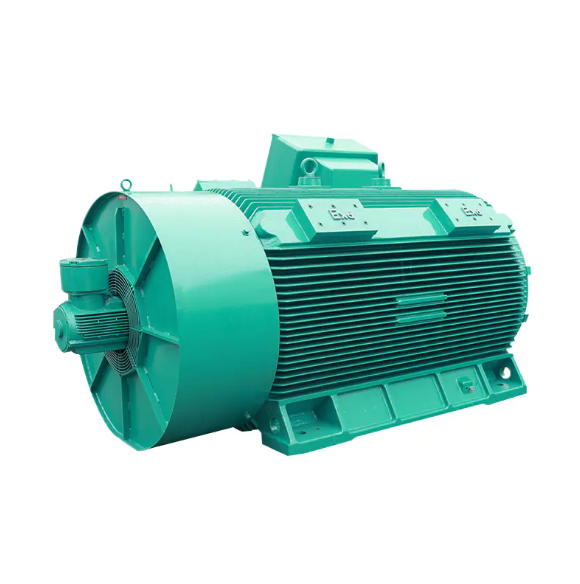
In hazardous industrial environments—coal mines, petrochemical refineries, grain elevators—the margin for error is zero. A standard electric motor's normal operation, involving arcing across brushes or simple surface heat, can trigger a catastrophic explosion. An Explosion-Proof Motor is not designed to be impervious to an external explosion; it is engineered to contain an internal spark or explosion, preventing it from igniting the surrounding volatile atmosphere. This requires a deep understanding of metallurgy, thermodynamics, and precision engineering. For procurement engineers and plant managers sourcing equipment for Zone 1 or Division 1 locations, the technical specifications behind this "containment" are the difference between operational safety and disaster.
The Physics of Containment: How Do Explosion-Proof Motors Prevent Ignition?
Flame Path Principle: The Engineering of Gap Width and Pressure Piling
The core mechanism of a flameproof motor (Ex d) is the "flame path." This is not a seal, but a precisely machined joint between the motor's enclosure parts—the flange between the end shield and the frame, or the shaft fit through the bearing housing. If flammable gases seep into the motor and ignite, the resulting explosion increases internal pressure. The flame path is engineered with a specific width (the "land") and a maximum gap. As the hot gases travel this narrow path, they cool below the ignition temperature of the external atmosphere before they exit. The critical engineering parameters here are the maximum gap (e.g., 0.1mm to 0.2mm depending on gas group) and the path length (usually 6mm to 25mm), which are rigorously defined in standards like IEC 60079-1.
Temperature Classification (T-Code): Matching Motor Surface Temperature to Ignition Point of Surrounding Gas
Even if an internal explosion is contained, a motor can become an ignition source if its external surface temperature reaches the auto-ignition point of the surrounding hazardous material. This is governed by the motor's Temperature Class, or T-Code. A motor operating in a hydrogen-rich environment (auto-ignition ~560°C) might be safe with a T1 rating (max surface 450°C). However, in a carbon disulfide environment (auto-ignition ~95°C), a specialized T6 rating (max surface 85°C) is mandatory. The T-Code is not just a label; it dictates the motor's entire thermal design, from cooling fan efficiency to the type of bearings used.
Enclosure Integrity: IP Rating and Its Role in Hazardous Location Safety
While the flame path handles internal pressure, the overall enclosure integrity (Ingress Protection rating) prevents dust and moisture ingress that could lead to tracking, corrosion, or component failure. In a coal mine (classified as Zone 21 or 22 for dust), an IP55 rating might be insufficient if coal dust can accumulate on the windings, leading to overheating. A more robust IP66 or IP67 rating ensures that the internal components remain isolated from the conductive and corrosive contaminants that are ubiquitous in heavy industry.
What Are the Critical Class 1 Division 1 Explosion-Proof Motor Specifications?
When a project specification calls for Class 1 Division 1 explosion-proof motor specifications, it refers to the North American (NEC 500) classification system. Division 1 indicates that the hazardous material (gas, vapor, or liquid) is present continuously, intermittently, or periodically under normal operating conditions. This is the most demanding environment, equivalent to the IEC Zone 1 or Zone 0 areas.
Decoding the "Division 1" Requirement: When is it Mandatory?
A Division 1 rating is mandatory inside process vessels, storage tanks, or near open loading ports where volatile chemicals are handled. The motor must be capable of withstanding an internal explosion without propagating an external ignition, regardless of how frequently the flammable atmosphere is present. This dictates a more robust construction compared to Division 2 motors, which are only required to operate normally without sparking under abnormal fault conditions.
Material Selection for Division 1: Why High-Strength Cast Iron or Steel is Non-Negotiable
The enclosure material must withstand the maximum pressure generated by an internal explosion (pressure piling) without rupturing or deforming. For this reason, Division 1 motors almost exclusively use high-tensile cast iron (e.g., ASTM A48 Class 40) or fabricated steel. These materials have the ductility and strength to absorb the shock wave, while materials like aluminum could fracture, creating a new pathway for flames.
Essential Specification Parameters for Zone 1/Division 1 Environments
- Frame Size and Mounting Configuration: NEMA vs. IEC Foot Mounts and Flanges. A NEMA 500-series frame is not directly interchangeable with an IEC 315 frame, impacting retrofit projects. Procurement specifications must clearly define the standard (NEMA MG1 or IEC 60072) to ensure mechanical fit.
- Insulation System: Class F with Class B Temperature Rise – The Safety Margin Explained. Most high-quality hazardous location motors are specified with Class F insulation (155°C) but are designed for a Class B temperature rise (80°C). This provides a 25°C "thermal cushion," extending insulation life and providing a safety margin if ambient temperatures rise or if the motor is operated continuously at service factor loads.
Explosion-Proof Motor Temperature Rise Limits: How Hot Is Too Hot?
Understanding explosion-proof motor temperature rise limits is essential for ensuring that the motor's operational heat does not compromise its safety certification. Temperature rise is the increase in winding temperature above the ambient air temperature at rated load.
The Relationship Between Insulation Class and Temperature Rise
The insulation class defines the maximum allowable hot-spot temperature for the winding wire. A Class B insulation system is rated for 130°C, Class F for 155°C, and Class H for 180°C. The temperature rise limit, as measured by resistance change, is a subset of this. For instance, a motor with Class F insulation but a Class B temperature rise (80°C) operating in a 40°C ambient has a theoretical hot-spot temperature of 40°C + 80°C + hot spot allowance (~10°C) = 130°C, leaving ample margin below the 155°C limit.
Temperature Rise Measurement Methods: Resistance Method vs. Embedded Detector (RTD)
| Measurement Method | Resistance Method (Change in Winding Resistance) | Embedded Detector (RTD - Resistance Temperature Detector) |
|---|---|---|
| Principle | Calculates average winding temperature by measuring the change in copper resistance from a known cold value to a hot value. | Uses sensors (e.g., Pt100) placed within the winding ends during manufacturing to provide a direct temperature reading. |
| Accuracy | Provides an accurate average temperature of the entire winding. | Provides localized temperature data, which can be higher than the average if placed at a hot spot. |
| Application | Standard for routine testing and acceptance (per IEEE 112 and IEC 60034-2-1). | Preferred for critical, large motors (above 500kW) where continuous thermal monitoring is required for protection and predictive maintenance. |
Calculating the Maximum Safe Operating Temperature
The maximum safe operating temperature is derived from the T-Code, not just the insulation class. The formula used by design engineers is: Maximum Surface Temp = Ambient Temp + Temperature Rise (at load) + Hot Spot Allowance. This value must be less than the ignition temperature of the surrounding gas/dust. When a motor is powered by a Variable Frequency Drive (VFD), additional thermal analysis is required. VFDs introduce harmonics which increase motor heating (I²R losses) and reduce cooling efficiency at low speeds, potentially breaching the T-Code if not properly accounted for in the motor design.
Flameproof vs. Increased Safety Motors: What's the Core Difference?
In the IEC system, two common protection concepts are Ex d (Flameproof) and Ex e (Increased Safety). Understanding the flameproof motor vs increased safety motor difference is critical for correct application.
Principle of Protection: Containment (Ex d) vs. Prevention (Ex e)
- Ex d (Flameproof): The motor is designed to withstand an internal explosion of flammable gas and prevent the transmission of the flame to the external atmosphere. It relies on robust construction and flame paths.
- Ex e (Increased Safety): The motor is not designed to contain an internal explosion. Instead, it incorporates additional measures to prevent arcs, sparks, and excessive temperatures from occurring in the first place. This includes higher insulation clearances, stricter control of creepage distances, and non-sparking fan materials.
Technical Comparison: Application Suitability and Limitations
Ex d motors are suitable for Zone 1 and Zone 2 areas where explosive gases are likely to be present. Ex e motors are primarily used in Zone 2 (and sometimes Zone 1 for specific gas groups), but they are generally lighter and less expensive than their flameproof counterparts. However, Ex e motors cannot be used in applications where the motor is likely to be submerged in gas, as they lack the containment capability. The terminal box design also differs significantly: Ex d boxes rely on flamepaths, while Ex e boxes focus on high-integrity insulation and cable glands certified for Ex e.
Feature Comparison Table: Ex d vs. Ex e Motors
| Parameter | Ex d (Flameproof) | Ex e (Increased Safety) |
|---|---|---|
| Protection Principle | Containment of internal explosion. | Prevention of ignition sources. |
| Typical Applications | Coal mining, gas processing, chemical plants with Zone 1/2 gases. | Petrochemical (Zone 2), pump and fan applications in refineries. |
| Enclosure Strength | Very high (cast iron/steel) to withstand explosion pressure (e.g., 15 bar). | High, but not designed for pressure containment; focuses on IP protection. |
| Terminal Box | Flameproof design with flame paths. | Increased safety design with enhanced creepage and clearance distances. |
| Maintenance | Critical: Flameproof surfaces must not be damaged; reassembly requires precision. | Less sensitive to minor surface damage, but insulation integrity is paramount. |
| Cost | Generally higher due to robust casting and machining. | Generally lower, offering a cost-effective solution for appropriate Zone 2 areas. |
How to Conduct an Explosion-Proof Motor Maintenance Checklist in a Coal Mine?
The harsh, dust-laden environment of an underground mine demands a rigorous regimen. An explosion-proof motor maintenance checklist coal mine operators use must go beyond simple greasing to ensure the integrity of the flameproof features.
Pre-Shift Visual Inspection: What Experienced Miners Look For
- Physical Damage to Enclosure and Flameproof Flanges: Check for dents, cracks, or pitting on the motor housing and specifically on the machined flanges. Any damage to a flameproof flange compromises the flame path.
- Cable Entries and Gland Integrity: Ensure all cable glands are correctly tightened and certified for the application. Unused entries must be closed with certified flameproof stopping plugs, not standard blanks.
Periodic Scheduled Maintenance: Engineering-Level Checks
- Insulation Resistance Testing (Megger) and Polarization Index: Measure winding resistance to ground. A sudden drop indicates moisture ingress or insulation breakdown. The Polarization Index (PI) test, measuring insulation resistance over 10 minutes, provides a deeper insight into winding cleanliness and dryness.
- Bearing Condition Analysis: In a coal mine, coal dust can mix with grease, forming an abrasive paste. Vibration analysis is used to detect early bearing faults. Relubrication must be done with specified grease types and quantities while the motor is running (if possible) to purge old grease, ensuring new grease reaches the bearings without over-packing, which can cause overheating.
- Alignment Checks: Misalignment puts radial stress on the shaft and bearings. In extreme cases, this stress can cause the rotor to contact the stator (bore) or cause the shaft to deflect enough to compromise the flameproof gap at the bearing housing. Precision laser alignment is recommended during major overhauls.
Documentation and Compliance: Tracking Maintenance for Audits
A certified explosion-proof motor loses its certification if its integrity is compromised. Maintaining a detailed motor history log—including test results, bearing replacement dates, and inspection records—is not just best practice; it is often a regulatory requirement for mines to prove due diligence during safety audits.
NEMA vs. IEC Explosion-Proof Motor Standards: Which One to Choose?
For a company exporting to over 40 countries, understanding NEMA vs IEC explosion-proof motor standards is a commercial necessity. The choice dictates spare parts inventory, maintenance training, and project compliance.
Philosophical Differences: Performance Definition (NEMA) vs. Design Methodology (IEC)
- NEMA (National Electrical Manufacturers Association): NEMA standards (MG1) focus on defining performance characteristics like torque, starting current, and slip. A NEMA Design B motor, for example, is defined by its specific torque-speed curve, ensuring interchangeability between manufacturers.
- IEC (International Electrotechnical Commission): IEC standards focus on defining dimensional and testing methods. While performance is implied, the primary goal is to ensure a motor built to IEC frame sizes will physically fit an IEC-standard driven load, regardless of the manufacturer's specific internal design.
Key Technical Variances Affecting Procurement
When specifying NEMA vs IEC explosion-proof motor standards, engineers must navigate several critical differences:
- Frame Size and Power Density: An IEC 315 frame and a NEMA 500 frame are not directly equivalent. The shaft diameters, keyway sizes, and mounting foot dimensions differ. A motor built for a project in Europe (IEC) will not bolt directly onto a machine built for the US market (NEMA) without an adapter.
- Efficiency Classes: IEC uses IE classes (IE1, IE2, IE3, IE4). NEMA uses "NEMA Premium" efficiency designations. While largely aligned now, they are defined by different testing standards (IEC 60034-30 vs. NEMA MG1).
- Hazardous Area Classifications: This is the most fundamental difference. North America historically uses the Class/Division system (e.g., Class I, Division 1, Groups C & D), while the rest of the world uses the Zone system (e.g., Ex d IIC T4). A motor certified for Zone 1 may not automatically be accepted in a Division 1 location without additional certification.
Selection Guide for Global Projects
- When to Specify NEMA: For projects destined for the United States, Canada, or Mexico, or for retrofit applications where existing equipment uses NEMA frame sizes.
- When to Specify IEC: For most other global projects, especially those following ATEX (Europe) or IECEx (international) directives. This ensures compliance with local safety regulations and simplifies the supply chain for spares in those regions.
Frequently Asked Questions (FAQ)
1. Can a standard Explosion-Proof Motor be repaired in a local workshop without losing its certification?
No. Repairing an Ex d (flameproof) motor requires specialized knowledge and tooling. Grinding, welding, or machining on flameproof flanges can alter the critical gap dimensions. Repairs must be performed by a facility certified to the applicable standard (e.g., IEC 60079-19) and must be followed by overpressure testing to verify the enclosure's integrity. Local workshops without this certification will void the motor's hazardous location rating.
2. What do the gas groups (IIA, IIB, IIC) in Class 1 Division 1 explosion-proof motor specifications signify?
These groups classify explosive gases by their explosive characteristics. Group I is for mining (methane). Group II is for surface industries. Group IIA represents gases with wider flame paths (like propane), IIB represents gases with intermediate quenching distances (like ethylene), and IIC represents the most easily ignited gases with very small quenching distances (like hydrogen and acetylene). A motor certified for IIC is suitable for IIA and IIB environments, but the reverse is not true.
3. How do VFDs affect explosion-proof motor temperature rise limits?
VFD operation introduces two thermal challenges: harmonic heating from non-sinusoidal waveforms, and reduced cooling at low speeds (since the cooling fan is on the same shaft). These factors can increase the motor's operating temperature. To maintain compliance with the motor's T-Code, the motor and VFD combination may require de-rating, forced external cooling, or the use of "inverter-duty" certified explosion-proof motors specifically designed for a wide speed range.
4. Is an Ex e (Increased Safety) motor always cheaper than an Ex d (Flameproof) motor?
Generally, yes, for equivalent power ratings, because Ex e motors do not require the massively thick castings needed to contain an internal explosion. However, the total cost of ownership depends on the application. If an Ex e motor is inadvertently installed in a location requiring Ex d protection, the cost of replacement and potential downtime far outweighs the initial savings. The selection must be based on the area classification, not just upfront cost.
5. In a NEMA vs IEC explosion-proof motor standards debate, which standard offers higher reliability?
Reliability is not inherent to either standard; it is a function of the manufacturer's design and build quality. NEMA standards often lead to motors with more conservative designs (higher torque, larger frames), which can translate to longer life in demanding applications. IEC standards allow for more optimized, compact designs. Both standards produce reliable motors when applied correctly. The choice is primarily logistical—ensuring compatibility with existing infrastructure and local maintenance practices.
References
- IEC 60079-0:2023 - Explosive atmospheres - Part 0: Equipment - General requirements. International Electrotechnical Commission.
- IEC 60079-1:2014 - Explosive atmospheres - Part 1: Equipment protection by flameproof enclosures "d".
- IEC 60079-7:2015 - Explosive atmospheres - Part 7: Equipment protection by increased safety "e".
- IEEE 112-2017 - IEEE Standard Test Procedure for Polyphase Induction Motors and Generators. Institute of Electrical and Electronics Engineers.
- NEMA MG 1-2021 - Motors and Generators. National Electrical Manufacturers Association.
- NFPA 70: National Electrical Code (NEC), 2023 Edition. National Fire Protection Association.
- ANSI/UL 1203: Standard for Explosion-Proof and Dust-Ignition-Proof Electrical Equipment for Use in Hazardous (Classified) Locations.

Get in Touch
Related Products
 Shanghai Pinxing
Explosion-proof Motor Co., Ltd.
-
 cai@pinxingmotor.com
-
 +86-21-57566731
-
 +86-21-57566967
-
 No.699, Pinxing Rd., Qinggang Industrial Zone, Fengxian District, Shanghai, China.(East Gate)
-
No. 168, Qingling Rd, Qinggang Industrial Zone, Qingcun Town, Fengxian District, Shanghai, China (South Gate)
Copyright@ 2024 Shanghai Pinxing Explosion-proof Motor Co., Ltd. All Rights Reserved.
Privacy