- 中文网站请点击 http://www.pinxinggroup.com
-
 +86-21-57566731
-
 cai@pinxingmotor.com
-
 DOWNLOAD


 English
 русский
 Français
 عربى

50 hp Electric Motor Guide: Frame Sizes, Full-Load Amps, and Selection Steps
Content
- 1 What 50 hp Means in Kilowatts, Amps, and Torque
- 2 Speed and Torque: Why a 50 hp Motor at 900 rpm Behaves Like a Different Machine
- 3 NEMA 326T or IEC 225M: Frames for a 50 hp Motor
- 4 Enclosure Selection: TEFC, ODP, and Explosion-Proof
- 5 Running a 50 hp Motor on a Variable Frequency Drive
- 6 Efficiency and Payback: IE3 Versus IE4 at 4,000 Hours a Year
- 7 What to Verify Before You Order a 50 hp Motor
- 8 Frequently Asked Questions About 50 hp Electric Motors
A 50 hp electric motor running at 1,800 rpm on a 460 V supply draws about 65 A at full load, turns a 2.125-inch shaft, and bolts into a NEMA 326T frame. Those four numbers decide whether a replacement drops in over a weekend or turns into a three-week engineering project.
The 50 hp class, or 37 kW outside North America, is the workhorse size for centrifugal pumps, screw compressors, cooling tower fans, belt conveyors, and process mixers. It sits right on the fault line between small and medium industrial machines, which is why it is also the size where NEMA and IEC specifications, 50 Hz and 60 Hz nameplates, and standard versus inverter-duty ratings get confused most often.
Buyers who treat 50 hp as a single specification usually pay for it later. The horsepower rating fixes shaft power only. It says nothing about the current the motor will pull, the torque it can deliver, the frame it mounts on, or the enclosure it needs, and every one of those four details can differ between two motors carrying an identical 50 hp nameplate.
What 50 hp Means in Kilowatts, Amps, and Torque
A 50 hp motor is a 37 kW machine that draws 65 A at 460 V and produces roughly 146 lb-ft of torque at 1,800 rpm. Kilowatts describe the output, amps describe what the electrical system has to deliver, and torque describes what the shaft can actually turn.
Full-load current is the figure that drives cable sizing, starter heaters, and breaker selection, so it is the first number to pull off a nameplate or a manufacturer data sheet. The spread between supply voltages is wide enough that a motor ordered for the wrong one cannot simply be re-tapped in the field.
| Supply voltage | Full-load amps | Typical application |
| 230 V, 60 Hz | 130 A | Legacy plants, short cable runs |
| 460 V, 60 Hz | 65 A | Standard North American industrial supply |
| 575 V, 60 Hz | 52 A | Canadian and some mining installations |
| 400 V, 50 Hz | 66 A | IEC industrial supply in Europe and Asia |
| 690 V, 50 Hz | 38 A | Offshore and heavy process plants |
Nameplate amps can sit 5 percent either side of those table values, which matters because overload relays are set on the nameplate figure. A motor stamped 62 A and one stamped 68 A need different heater elements even though both are sold as 50 hp.
Service factor and ambient temperature move the usable output as well. A 1.15 service factor is common on NEMA frames and permits a short-term overload, while IEC motors are usually rated 1.0 with a class F insulation system and a class B temperature rise. The same physical machine can therefore carry two very different promises.
Speed and Torque: Why a 50 hp Motor at 900 rpm Behaves Like a Different Machine
Horsepower stays constant across pole counts, but torque does not: a 50 hp motor at 900 rpm delivers twice the shaft torque of a 50 hp motor at 1,800 rpm. The relationship is fixed by torque equals 5,252 multiplied by horsepower divided by speed, and it decides whether a driven machine can be coupled directly or needs a belt or gearbox.
The 1,800 rpm four-pole motor dominates North American industry because it matches 60 Hz directly, while the IEC equivalent runs 1,500 rpm at 50 Hz. A 60 Hz motor operated on a 50 Hz supply drops to 1,500 rpm, so a fan or pump sized on the original duty point no longer moves the design flow.
Where a machine must run at genuinely low shaft speed, such as a screw conveyor, rotary kiln drive, or extruder, a 50 hp motor is normally paired with a gearbox rather than ordered as a 900 or 1,200 rpm frame. The low-speed motor is larger, heavier, and more expensive per unit of torque, and it is harder to source as a spare.
NEMA 326T or IEC 225M: Frames for a 50 hp Motor
A 50 hp, 1,800 rpm motor is normally a NEMA 326T or an IEC 225M to 250M frame, and the two will not bolt onto the same base without an adapter. Shaft diameter, foot hole spacing, and overall length all differ.
NEMA 326T
- 2.125-inch shaft diameter on the 1,800 rpm four-pole version
- Inch foot hole spacing and inch keyway
- 460 V and 575 V windings widely stocked
- Efficiency defined by NEMA nominal efficiency tables
IEC 225M to 250M
- Metric shaft and flange dimensions to IEC 60072
- 400 V and 690 V windings for 50 Hz networks
- Efficiency governed by IE2, IE3, and IE4 classes
- B5 flange and B3 foot variants both common
| Rated speed | Typical NEMA frame | Shaft diameter | Typical IEC frame |
| 3,600 rpm | 284TS or 324TS | 1.875 in | 200L or 225M |
| 1,800 rpm | 326T | 2.125 in | 225M or 250M |
| 1,200 rpm | 364T | 2.375 in | 280M or 315S |
| 900 rpm | 404T | 2.875 in | 315M |
Frame details matter most in retrofit work. A plant replacing a forty-year-old 50 hp motor may find the original foot pattern is obsolete, and the new 326T frame needs a drilled adapter plate or a fabricated base. Budgeting for that plate is far cheaper than discovering the mismatch inside a shutdown window.
Enclosure Selection: TEFC, ODP, and Explosion-Proof
TEFC is the default enclosure for a 50 hp motor in almost every industrial plant, and it is the right choice unless the area classification or the process environment says otherwise. Open drip-proof designs survive only in clean, dry, indoor air.
TEFC, IP55
ODP
Explosion-Proof
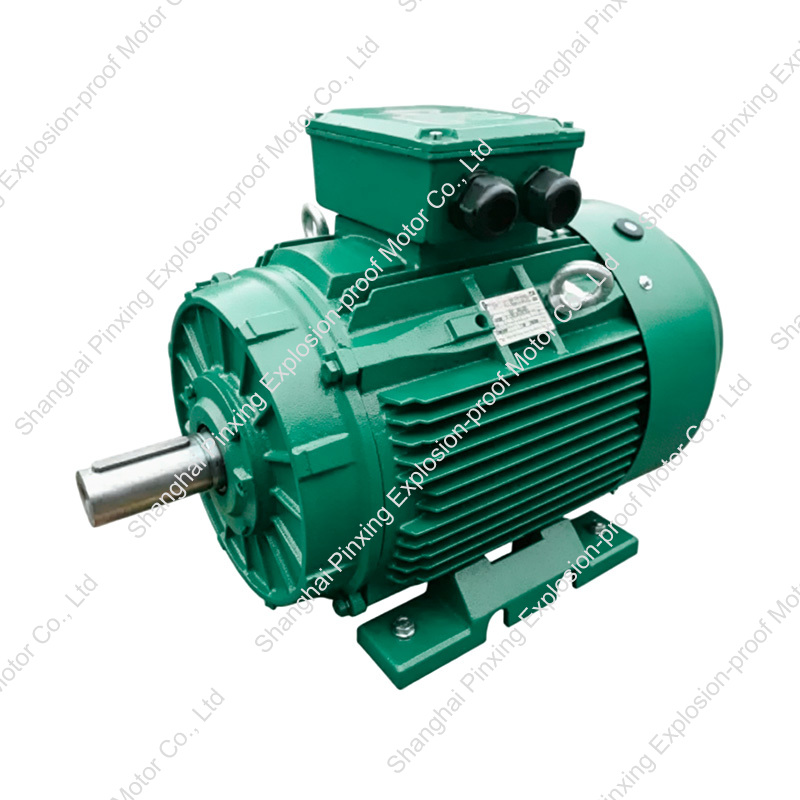 TEFC NEMA Motors for Industrial Pump Crusher and Oil Well DutyReview TEFC motor series for enclosed cooling in general industrial, pump, crusher, oil well, and braked applications where robust plant service is expected.View Product →
A cast iron TEFC 50 hp motor at 1,800 rpm typically weighs 600 to 700 lb (272 to 318 kg) depending on frame material. Aluminum frames save weight but transfer vibration differently, which is why cement, mining, and chemical plants stay with cast iron despite the penalty in handling.
Running a 50 hp Motor on a Variable Frequency Drive
A standard 50 hp motor is not automatically suitable for a variable frequency drive. Inverter duty requires insulation rated for the drive output, a shaft grounding ring to divert bearing currents, and a safe speed range agreed with the manufacturer.
Drive output is not a clean sine wave. Fast switching produces voltage overshoot at the motor terminals, and the effect grows with cable length. Above roughly 100 feet (30 m) of unshielded cable, a dv/dt filter or an output reactor becomes standard practice rather than an option.
Cooling is the second constraint. A self-cooled TEFC motor depends on a shaft-mounted fan, and that fan loses effectiveness as speed falls. Continuous operation below about 30 percent of base speed generally requires a separately powered blower or an inverter-duty motor built for a wide constant-torque range.
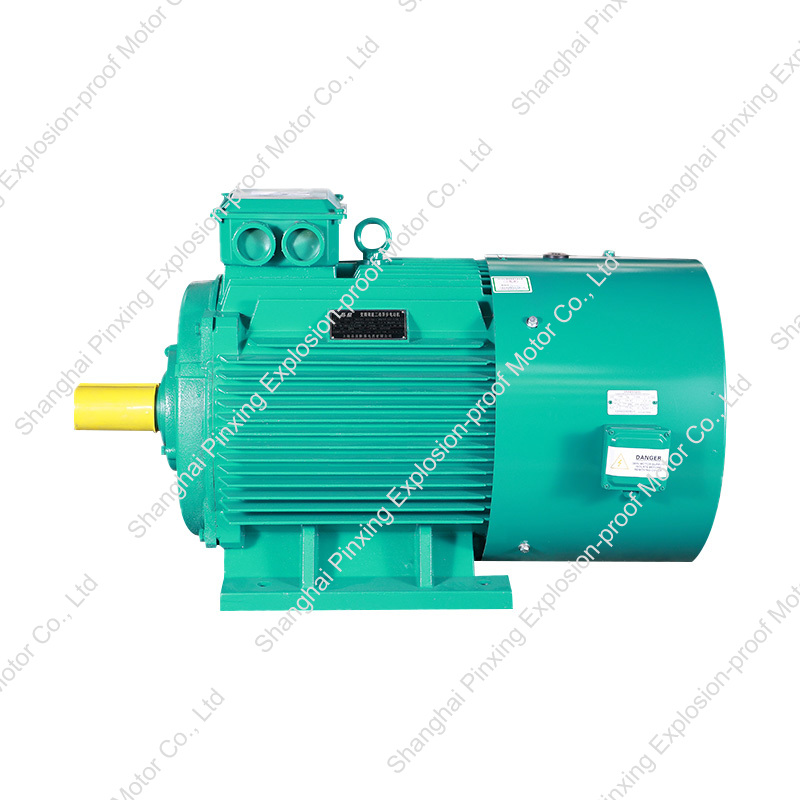 YPT Series Low-Voltage Variable-Frequency Three-Phase Induction MotorFor variable-speed drives, this YPT motor offers dual ventilation, a 5–100 Hz range, and robust protection for continuous industrial operation.View Product →
Efficiency and Payback: IE3 Versus IE4 at 4,000 Hours a Year
At 4,000 running hours a year, an IE4 50 hp motor saves roughly $360 in electricity compared with an older IE2 unit, which repays the efficiency premium in two to four years at typical industrial tariffs.
| Efficiency class | Full-load efficiency | Annual energy | Annual cost |
| IE2 | 93.0% | 119,360 kWh | $14,323 |
| IE3 | 94.1% | 117,960 kWh | $14,155 |
| IE4 | 95.4% | 116,360 kWh | $13,964 |
The percentages look unimpressive, and that is exactly why they get ignored. A 1.1-point gain between IE2 and IE3 is 1,400 kWh a year on a single 50 hp machine, or about $168. Small on its own, but real when a plant runs twenty of them on three shifts.
Load point matters just as much as class. A motor running at 40 percent load loses more to fixed losses and poor power factor than one running at 75 to 85 percent. Starting method adds another cost: across-the-line starting pulls six to eight times full-load current, which can trigger demand charges or voltage dip complaints from neighbouring equipment. A practical efficiency and protection guide for low-voltage motors is worth reading before you finalize the specification.
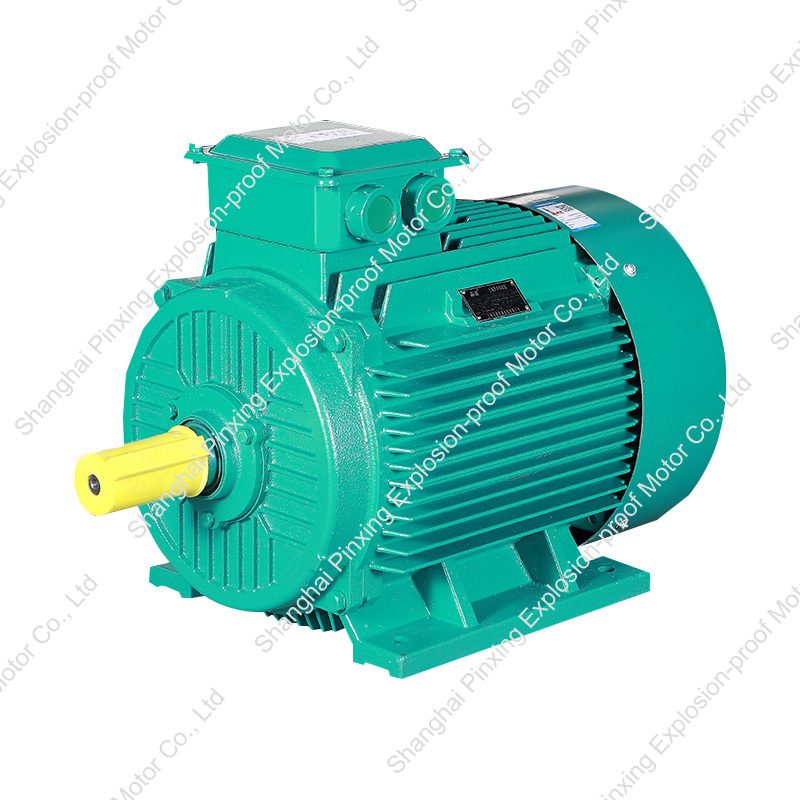 IE4 Series High-Efficiency Three-Phase Induction MotorFor energy-conscious low-voltage drives, this IE4 motor combines high efficiency, robust enclosure options, and reliable winding insulation for continuous industrial duty.View Product →
What to Verify Before You Order a 50 hp Motor
Most 50 hp motor problems at commissioning trace back to a specification detail rather than a manufacturing defect. A short check against the nameplate and the driven equipment prevents nearly all of them.
- Compare nameplate full-load amps against the overload relay range, not just the horsepower.
- Confirm frame number, shaft diameter, and keyway against the existing coupling or pulley.
- Verify supply voltage and frequency, and whether the plant runs 50 Hz or 60 Hz.
- Check that the enclosure matches the area classification drawing.
- Ask for tested efficiency and power factor at 75 percent load, not only the nominal class.
- Confirm whether the motor is inverter-duty rated if a drive is planned now or later.
- Establish delivery lead time and whether spare bearings and terminal box gaskets ship with the order.
Lead time is the hidden variable. Cast iron 50 hp frames in non-standard voltages can run eight to sixteen weeks, which is why plants with critical duty keep a spare on the shelf. Reviewing how comparable motors are deployed in similar plants helps set a sensible spare policy, and installed motor applications in cement, mining, and chemical service show how often those spares are actually needed.
Frequently Asked Questions About 50 hp Electric Motors
How many amps does a 50 hp electric motor draw?
A 50 hp motor draws 65 A at 460 V, 130 A at 230 V, and 52 A at 575 V at full load, following NEC Table 430.250. Actual nameplate current can vary by about 5 percent, so overload protection should always be set from the nameplate rather than the table.
Is a 50 hp motor the same as 37 kW?
Yes. One horsepower equals 0.746 kW, so 50 hp is 37.3 kW, and manufacturers label the equivalent metric rating as 37 kW. NEMA and IEC nameplates describe the same shaft output in different units.
What NEMA frame is a 50 hp motor?
A 50 hp, 1,800 rpm motor is typically a NEMA 326T with a 2.125-inch shaft, while 3,600 rpm versions use a 284TS or 324TS frame and 1,200 rpm versions use a 364T. The IEC equivalents for the same 37 kW rating are usually 225M or 250M.
Can a standard 50 hp motor run on a variable frequency drive?
Only if it is rated for inverter duty. Standard motors may tolerate drive operation with short cable runs and a moderate speed range, but insulation stress, shaft currents, and reduced self-cooling at low speed make an inverter-duty or separately ventilated motor the safer choice for continuous duty.

Get in Touch
Related Products
 Shanghai Pinxing
Explosion-proof Motor Co., Ltd.
-
 cai@pinxingmotor.com
-
 +86-21-57566731
-
 +86-21-57566967
-
 No.699, Pinxing Rd., Qinggang Industrial Zone, Fengxian District, Shanghai, China.(East Gate)
-
No. 168, Qingling Rd, Qinggang Industrial Zone, Qingcun Town, Fengxian District, Shanghai, China (South Gate)
Copyright@ 2024 Shanghai Pinxing Explosion-proof Motor Co., Ltd. All Rights Reserved.
Privacy