- 中文网站请点击 http://www.pinxinggroup.com
-
 +86-21-57566731
-
 cai@pinxingmotor.com
-
 DOWNLOAD


 English
 русский
 Français
 عربى

Choosing an Electric Motor vs DC Motor: Torque, Maintenance and Efficiency Costs
Content
- 1 DC Motor Speed Control: Torque Comes From the Armature, Not From a Converter
- 2 Where a DC Motor Beats an Electric Motor on the Plant Floor
- 3 Brush and Commutator Maintenance Is the Real Operating Cost
- 4 How to Choose: Electric Motor or DC Motor in Four Checks
- 5 Efficiency Standards: Why a DC Motor Sits Outside IEC 60034-30-1
- 6 Frequently Asked Questions
A wire-drawing line needed 55 kW at 400 rpm with roughly 2.5 times rated torque at start. Two quotations arrived: a DC motor with a thyristor drive, and a standard AC induction motor with a variable frequency drive. The two motors differed in price by less than 15 percent. The installed cost differed by close to 40 percent, and most of that gap sat in the control cabinet, the cable and the maintenance calendar.
Choosing between an electric motor and a DC motor for an industrial drive comes down to four variables: the torque the load needs at zero and low speed, the speed range the process demands, the maintenance hours the plant can spare, and the area classification where the machine will sit. Everything else, including the purchase price, follows from those four.
DC Motor Speed Control: Torque Comes From the Armature, Not From a Converter
A DC motor controls speed by adjusting the DC voltage across its armature, and its torque output tracks armature current almost linearly, so it delivers controllable torque at standstill without any inverter at all. That single property kept DC machines at the centre of variable-speed drive engineering for most of the last century.
The physics behind it is direct. Speed follows armature voltage, and torque follows the product of field flux and armature current. Weakening the field raises the speed at a given armature voltage, which is how a DC machine reaches constant-power operation above its base rating. An AC electric motor has no equivalent shortcut: its rotor turns at line frequency minus slip, so any speed change requires a variable frequency drive, plus the cabinet, the harmonic filter and the shielded cable that come with it.
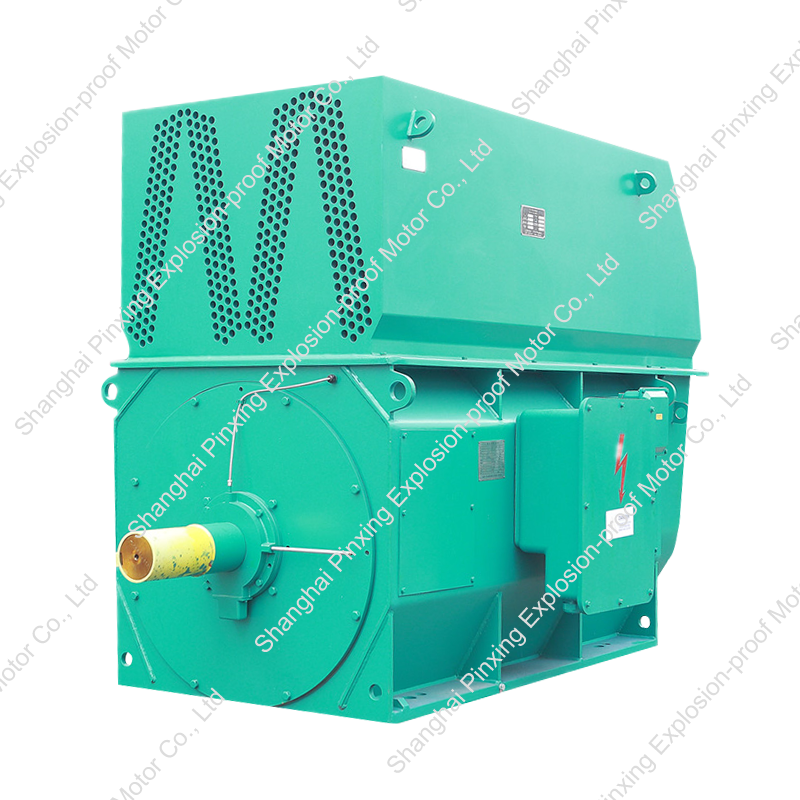
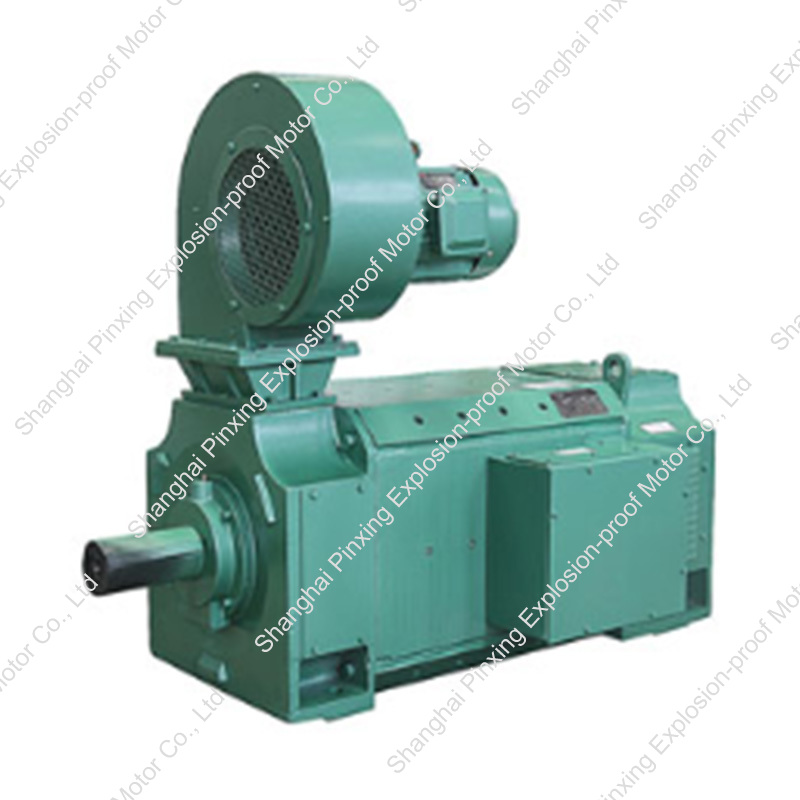 DC Motor Range: Custom, Z4, and Z SeriesExplore the company's DC motor lines, including Custom DC Motor, Z4 Series DC Motors, and Z Series Medium-Sized DC Motors.View Product →
A DC motor sets torque with current and speed with voltage. An AC motor has to convert the supply first if it wants to do the same.
| Attribute | DC motor with thyristor drive | AC induction motor with VFD |
| Speed control | Armature voltage below base speed, field weakening above it | Stator frequency, volts per hertz or closed-loop vector control |
| Torque at zero speed | Full torque for short periods | Full torque with closed-loop vector control |
| Breakaway torque | 2.0 to 4.0 times rated | 1.5 to 2.5 times rated without oversizing |
| Efficiency at 75 kW | 85 to 92 percent | 95.4 percent minimum at IE3, four-pole |
| Routine maintenance | Brushes, commutator film, carbon dust removal | Bearings and insulation checks |
| Hazardous areas | Not accepted in Zone 1 or Zone 21 without special measures | Ex d, Ex e and Ex de designs are standard |
Where a DC Motor Beats an Electric Motor on the Plant Floor
A DC motor still wins on loads that need very high breakaway torque, a speed range wider than about 4:1, or simple single-quadrant control with no converter at all.
Cranes, hoists and wire-drawing benches are the classic cases. A series-wound DC machine can pull three to five times its rated torque from a standing start, which the operator feels as a controlled lift rather than a lurch. Extruder screws, paper machine reels and mine haulage share the same profile: heavy inertia, a loaded start, and a speed command that changes under the operator's hand.
- Cranes and hoists: high breakaway torque with frequent starts
- Wire drawing and extrusion: constant tension over a wide speed range
- Paper and film reels: fast acceleration under controlled tension
- Mine and port haulage: high inertia started under full load
Brush and Commutator Maintenance Is the Real Operating Cost
Every DC motor in continuous service carries a maintenance calendar that an AC machine simply does not have.
Carbon brushes last roughly 2,000 to 6,000 running hours, depending on current density, cooling air quality and ambient temperature, so a two-shift plant replaces them between every four months and every eighteen months. Commutators need resurfacing and undercutting once the bar edges round over. Carbon dust migrates into the windings and must be vacuumed on a schedule, because conductive dust plus humidity is a flashover risk.
A 75 kW DC machine on two-shift duty absorbs roughly 30 to 50 maintenance hours a year. The equivalent AC motor on a drive absorbs closer to six. Run that difference through your own downtime cost and a drive retrofit usually pays back inside three years.
Area classification closes the door completely in some plants. Because the brush-to-commutator interface arcs every time the shaft turns, a brushed DC machine is not accepted in a Zone 1 gas atmosphere or a Zone 21 dust atmosphere. Explosion-proof machines for coal, petrochemical and pharmaceutical duty are therefore built on AC designs, protected by flameproof enclosures, increased safety construction or a combination of both.
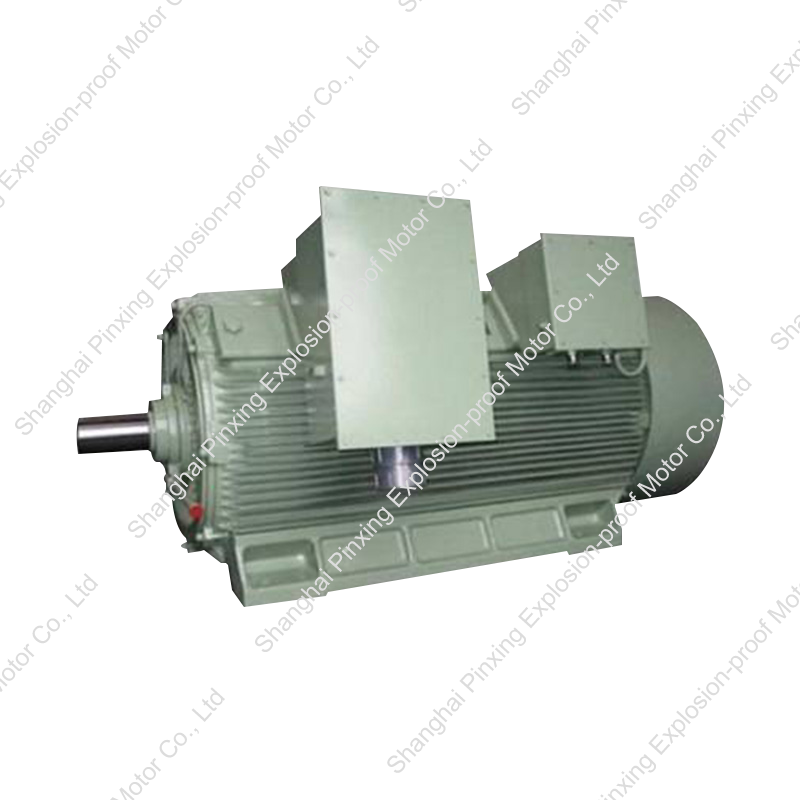
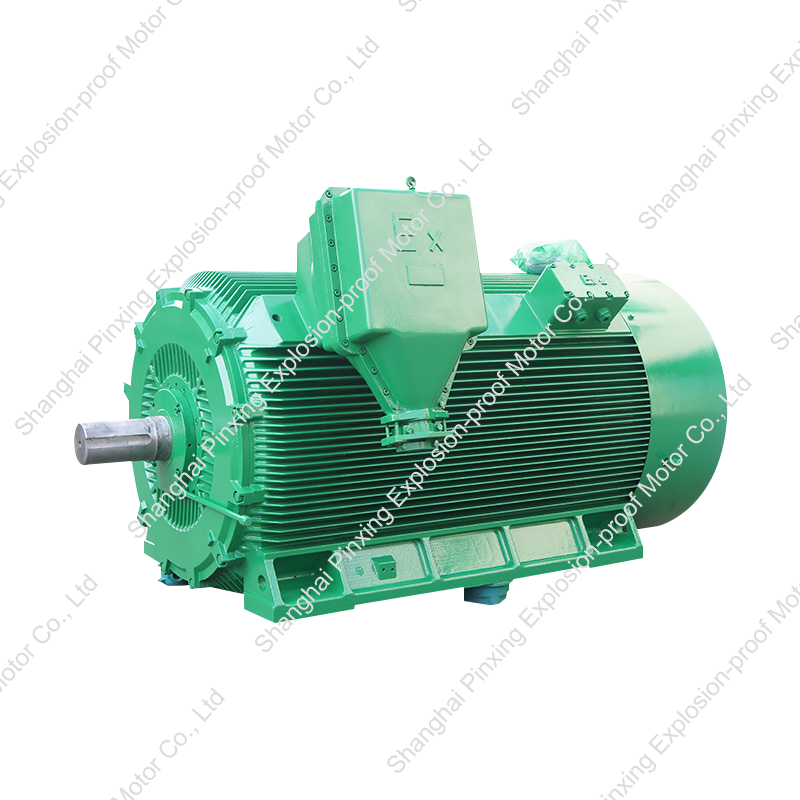 Explosion-Proof Motors for Hazardous Gas and Dust AreasReview flameproof motor series including YBX4, YBX3, and VFD models for chemical, oil and gas, pharmaceutical, and mining environments.View Product →
How to Choose: Electric Motor or DC Motor in Four Checks
Four questions settle the selection before anyone requests a quotation.
- Write down the load curve. Record breakaway torque, running torque and the speed range. If the machine starts fully loaded and breakaway exceeds 2.5 times rated torque, a DC or wound-rotor machine becomes competitive on price and control.
- Check the constant-power range. If the process needs more than 2:1 speed range above base speed, specify field weakening on a DC machine or closed-loop vector control on an AC drive.
- Count the maintenance hours. Brushes, commutator service and dust removal have to be staffed. A plant without a winding shop should price that work into the comparison.
- Confirm the area classification and the market standard. Zone 1 and Zone 21 rule out brushed DC. For North American installations, frame, shaft and mounting dimensions follow NEMA practice rather than IEC.
Keep the DC machine
- Lower cabinet cost, no converter
- Full torque at standstill without an encoder
- Simple field-weakening speed range
Retrofit to AC with a VFD
- IE3 or IE4 efficiency and regulatory compliance
- Six to eight times less routine maintenance
- Accepted in Zone 1 and Zone 21 areas
Efficiency Standards: Why a DC Motor Sits Outside IEC 60034-30-1
IEC 60034-30-1 defines the IE1 to IE4 efficiency classes for line-operated AC induction motors and does not cover DC machines at all, which means a DC motor cannot be certified to an IE class no matter how well it is built.
Regulation (EU) 2019/1781 sets minimum efficiency levels for three-phase induction motors and, since July 2021, for variable speed drives. A plant that replaces a DC drive with an IE4 induction motor and a compliant VFD can demonstrate that conformity in an audit. A plant that keeps its DC machines documents performance in the maintenance file instead.
Shanghai Pinxing Explosion-proof Motor Co., Ltd. builds both sides of that comparison from its base in Shanghai, with more than 1,000 motor variants across high voltage, low voltage, explosion-proof, NEMA and DC lines, exported to more than 40 countries. Motor project case studies cover the industrial duty behind those numbers.
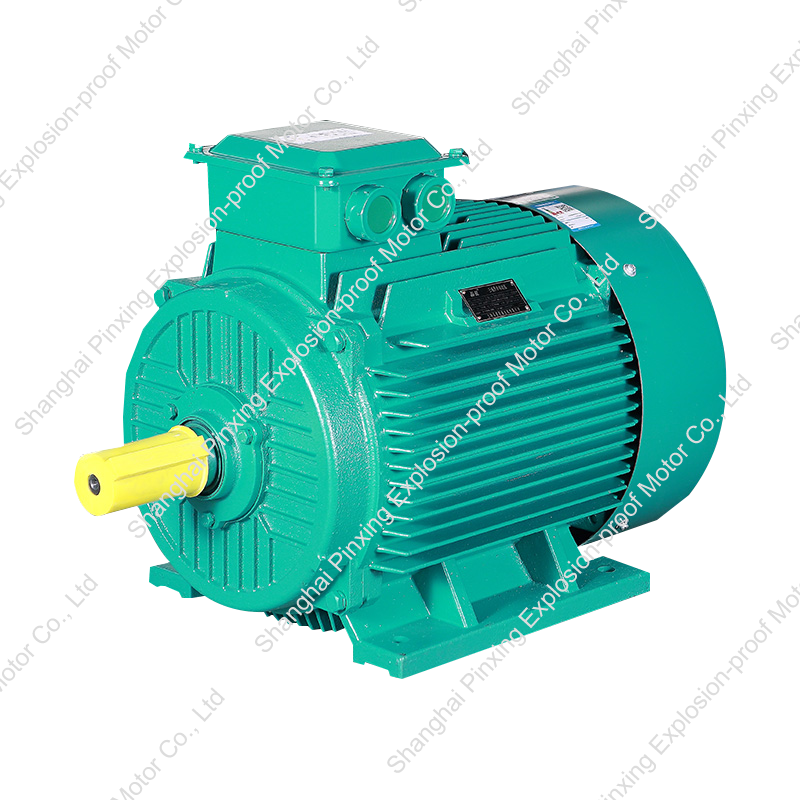
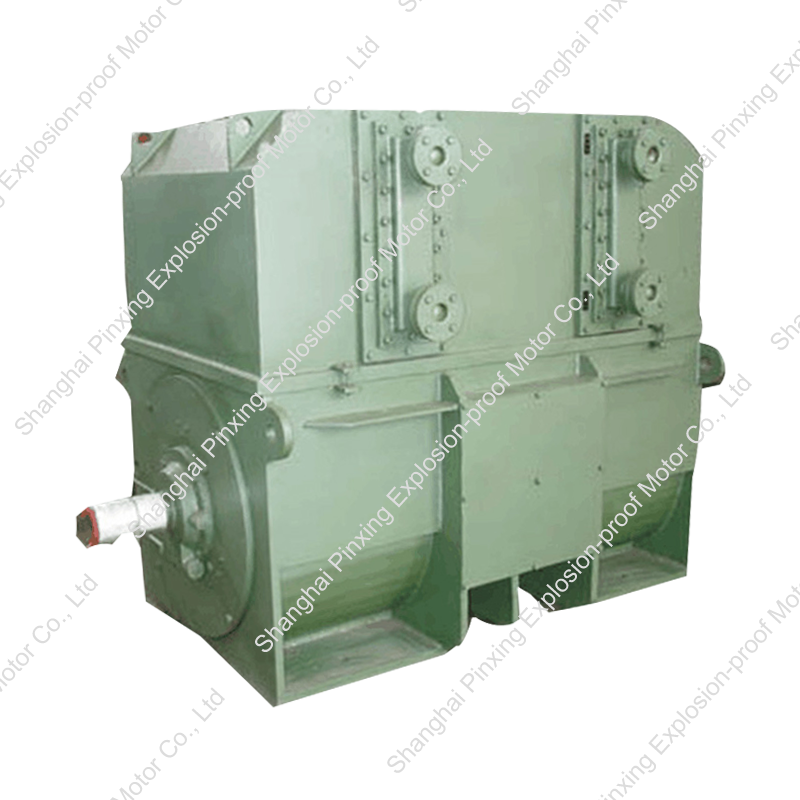
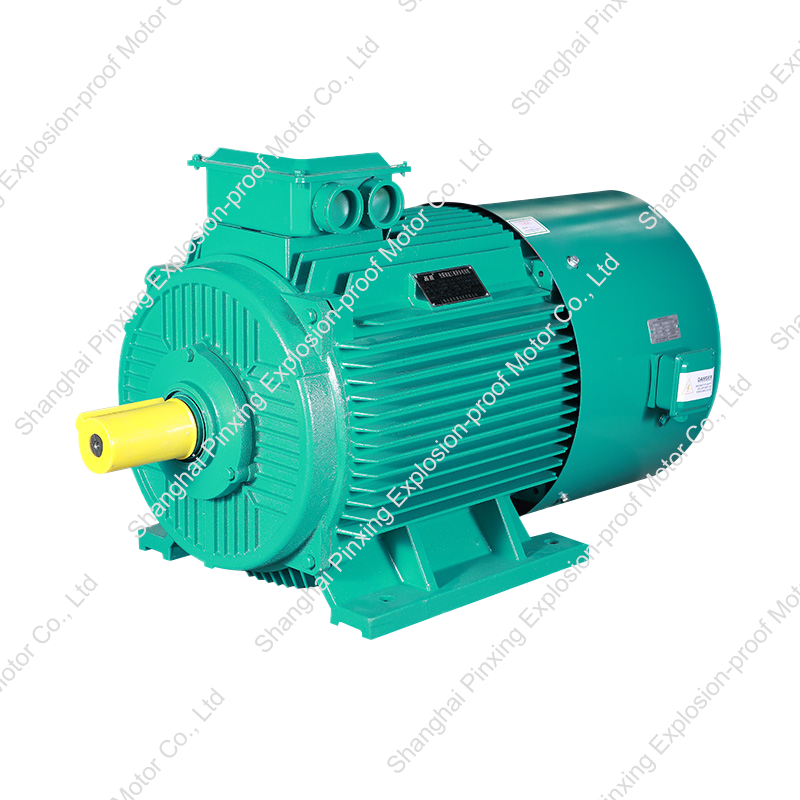 Low Voltage Variable Frequency Motors for Industrial Speed ControlReview low-voltage variable frequency motors, including YPT Series Three Phase Induction Motor (H80-355MM), for speed control of fans, pumps, and compressors.View Product →
Frequently Asked Questions
Can a DC motor be installed in a hazardous area?
Not in the common brushed form. The brush-to-commutator interface arcs on every rotation, so a standard DC machine cannot sit in a Zone 1 gas or Zone 21 dust atmosphere. Explosion-proof motors for coal, oil, gas and chemical plants are built on AC designs using flameproof, increased safety or combined Ex de protection.
Is a DC motor more efficient than an AC motor?
No. An industrial DC motor typically runs at 85 to 92 percent efficiency, while a 75 kW four-pole IE3 induction motor must reach 95.4 percent and an IE4 unit of the same frame is higher. The DC advantage is controllability at low cost, not efficiency.
What does a DC to AC conversion cost, and when does it pay back?
The motor alone is often within 15 percent of the DC unit. The drive, shielded cable, harmonic filter and commissioning add 20 to 40 percent of the motor price. Payback comes from maintenance: a two-shift DC machine consumes around 30 to 50 service hours a year against roughly six for a driven AC motor.
Does a DC motor need an encoder for speed control?
Rarely. Armature voltage feedback holds speed within about 1 to 2 percent of set point on a thyristor drive, which is sufficient for cranes, extruders and most haulage duty. Add a tachogenerator when regulation must be tighter, and an encoder only where the process needs position control or speed holding better than 0.1 percent.

Get in Touch
Related Products

 Shanghai Pinxing
Explosion-proof Motor Co., Ltd.
-
 cai@pinxingmotor.com
-
 +86-21-57566731
-
 +86-21-57566967
-
 No.699, Pinxing Rd., Qinggang Industrial Zone, Fengxian District, Shanghai, China.(East Gate)
-
No. 168, Qingling Rd, Qinggang Industrial Zone, Qingcun Town, Fengxian District, Shanghai, China (South Gate)
Copyright@ 2024 Shanghai Pinxing Explosion-proof Motor Co., Ltd. All Rights Reserved.
Privacy