- 中文网站请点击 http://www.pinxinggroup.com
-
 +86-21-57566731
-
 cai@pinxingmotor.com
-
 DOWNLOAD


 English
 русский
 Français
 عربى

Direct Current Electric Motor Guide: Selection, Specs and Retrofit Decisions
Content
- 1 What a Direct Current Electric Motor Actually Is
- 2 Where a Direct Current Electric Motor Still Beats an AC Drive
- 3 The Numbers That Decide a DC Motor Specification
- 4 How a DC Motor Fails, and What It Costs
- 5 How to Specify and Source a DC Motor Without Getting Burned
- 6 Frequently Asked Questions About Direct Current Electric Motors
A 400 kW direct current electric motor on a paper machine wet end holds speed within 0.1% across a 20:1 range, because armature voltage sets the speed while field current sets the torque. That split is why DC machines are still ordered for rewinds, hoists, extruders and reversing mill stands, even though variable frequency AC drives win nearly every greenfield project. The narrow question most plants face is different: is a DC motor still the right answer for one specific driven machine, and what belongs in the specification to keep it running for another fifteen years?
Retrofit duty dominates this end of the market. When a frame, coupling, gearbox and foundation were all dimensioned around a DC machine, swapping in an AC motor plus a drive usually means re-machining the mechanical interface, re-routing cable trays and re-validating the torque model on a process that cannot afford a long outage. Keeping the existing motor and replacing the converter, field supply and feedback device is often the shorter route back to production.
The rest of this guide covers what a DC motor is, where it still beats an AC drive, which numbers decide the specification, how these machines fail, and how to buy one without inheriting another plant's problems.
What a Direct Current Electric Motor Actually Is
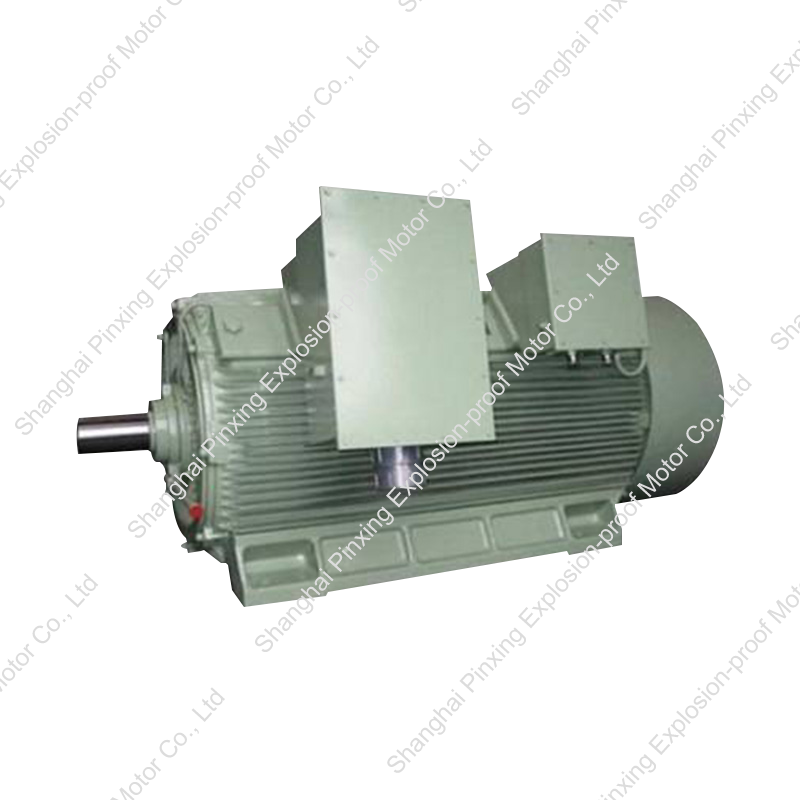
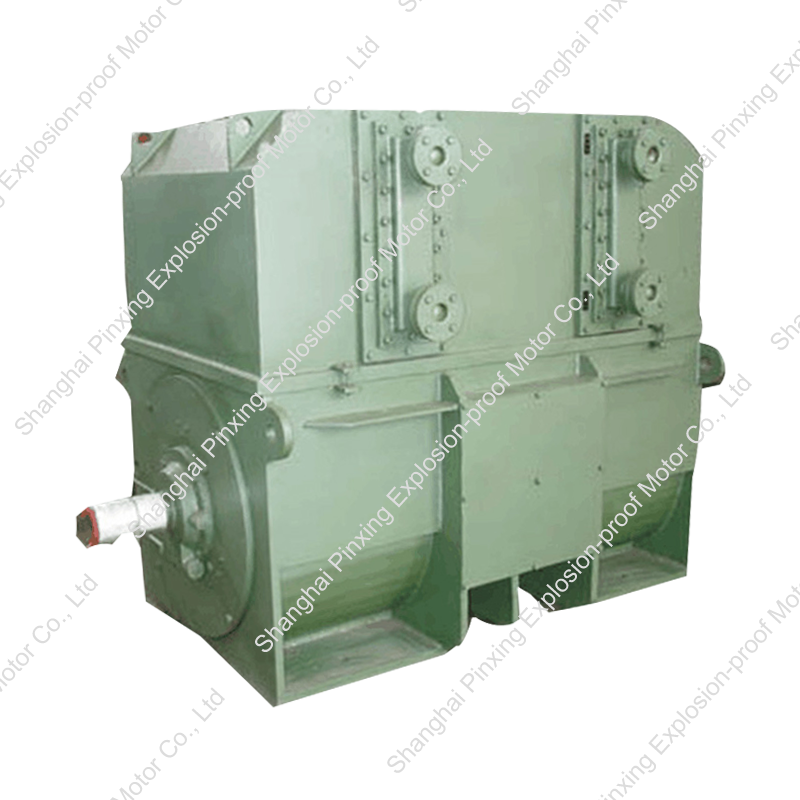
A direct current electric motor is a rotating machine that converts DC electrical energy into mechanical torque by feeding current through a commutator and brush set into the armature winding while a separately supplied field winding establishes the magnetic flux. Torque is proportional to armature current multiplied by field flux; speed rises with armature voltage and falls as field flux increases. Because those two variables come from independent power sources, the machine delivers rated torque at standstill and holds a set speed without a rotor model.
A direct current electric motor is an electromechanical converter in which a DC field winding produces a stationary magnetic field and a commutator-fed armature produces torque; the commutator and brush gear act as a mechanical rectifier that reverses armature current at the correct instant.
Five assemblies carry everything that matters in service:
- Frame and field poles, which carry the main flux and, on larger frames, a compensating winding that cancels armature reaction under the pole face.
- Interpoles, wired in series with the armature, which reverse current in a coil as it passes the brush and keep commutation free of sparking.
- The laminated armature, whose winding converts current into torque.
- Commutator and brush gear, the only parts that wear in normal duty.
- The cooling circuit, commonly IC06 separately ventilated or IC17 air-to-air on large frames, and IC411 on smaller ones.
| Excitation type | Field connection | Behaviour | Typical duty |
| Separately excited | Independent DC source | Full flux control, torque independent of speed | Mill stands, paper sections, mine hoists |
| Shunt | Field parallel to armature | Nearly constant speed from no load to full load | Machine tools, pumps, legacy retrofits |
| Series | Field in series with armature | Very high starting torque, speed rises sharply at light load | Cranes, traction, starter duty |
| Compound | Shunt plus series field | Starting torque with a stable no-load speed | Presses, shears, lifts |
| Permanent magnet | No field winding | Simple control, no field-loss failure mode | Small pumps, fans, conveyors, battery equipment |
Separately excited machines need a stiff field supply: a field current that sags during a plant voltage dip changes flux, changes speed, and can push the brush edge into sparking within a few cycles. Static excitation hardware that holds field current steady under supply variation is what keeps commutation and speed stability predictable over a long service life.
 Custom and Standard Excitation Cabinets for Motor ControlCustomizable excitation cabinets regulate field current to maintain stable flux, speed and commutation for separately excited motor systems.View Product →
Where a Direct Current Electric Motor Still Beats an AC Drive
A DC motor is the better choice in four specific situations: full torque is required at zero speed, the constant-torque range is wider than 10:1, an existing mechanical interface must be preserved down to the shaft keyway, or the load needs very high breakaway torque without a gearbox. Outside those cases, an induction motor with a vector-controlled drive is cheaper to buy, cheaper to maintain and more efficient to run.
DC motor with thyristor converter
- Torque at standstill without encoder tuning
- True mechanical drop-in replacement
- Field weakening extends the constant-power range
- Brush and commutator upkeep is unavoidable
AC induction motor with a VFD
- No wearing parts in the power path
- Higher full-load efficiency at the same rating
- Requires mechanical re-work and drive commissioning
- Longer lead time and a longer retrofit outage
On the shop floor, the DC duties that survive follow a predictable pattern:
| Application | Typical rating | Why DC holds the slot |
| Reversing rolling mill stand | 300 to 1500 kW | Overload torque plus fast reversal, with flux control for tension |
| Paper machine section drive | 15 to 400 kW | Tight speed holding and load sharing between sections |
| Mine hoist and winch | 200 to 2000 kW | Controlled lowering at low speed with high starting torque |
| Extruder screw drive | 30 to 250 kW | Constant torque across a wide speed range at low base speed |
| Crane hoist and travel | 5 to 100 kW | Fine inching control and high breakaway torque |
None of these duties are chosen for efficiency. They are chosen because the driven machine, the process window or the outage budget leaves no cheaper way to hold the same performance.
The Numbers That Decide a DC Motor Specification
Five values decide most DC motor specifications: armature voltage, field voltage, base speed, top speed and the torque required at zero speed. Cooling, insulation class, enclosure rating and feedback type all follow from the duty cycle and the environment around the machine.
Armature voltage is normally fixed by the converter that will feed the motor, so it is the first constraint to confirm rather than the last. Ripple matters as much as the nominal value: high ripple from a light-load converter raises armature heating and shortens commutator film life, which is why the duty cycle and the converter rating are specified together.
Those points are real, but they rarely decide the project on their own. A retrofit that reuses the existing motor avoids mechanical work, commissioning time and process risk; the energy penalty is recovered only across years of continuous running. Where a machine runs 8000 hours a year, the arithmetic changes and a full life-cycle calculation belongs in the business case.
How a DC Motor Fails, and What It Costs
A DC machine rarely dies at the winding; it dies at the commutator. Brush wear, film breakdown, sparking and flashover account for most unplanned DC motor downtime, and each of them develops slowly enough to be caught by a scheduled inspection.
- Commutator film breakdown. The wrong brush grade, low humidity or contaminated cooling air strips the oxide film, and sparking follows within weeks.
- Brush wear and chattering. Lost spring pressure, an oval commutator or machine vibration accelerate wear and leave uneven brush tracks.
- Flashover. A sudden overload or a field loss arcs across the brush arms and usually ends with a commutator skim on site or in a workshop.
- Interpole and compensating winding faults. A loose connection or a shorted turn shows up as heavy sparking under load rather than at no load.
- Insulation aging. Cyclic duty and thermal cycling embrittle armature insulation long before the bearings complain.
- Contamination. Carbon dust, oil mist and moisture in the cooling air attack both the insulation and the film, and on paper or food lines carbon dust becomes a product quality problem.
Pull a brush and read the film: colour, texture and edge sparking tell you more about remaining life than any date code on the nameplate.
This is also the reason a rebuild is a legitimate answer. Rewinding, skimming and re-banding a DC armature, then re-fitting brush gear to the original drawings, often costs a fraction of a new motor and keeps the mechanical interface untouched. The decision hinges on the condition of the commutator risers and on whether the original core and shaft are still within tolerance.
How to Specify and Source a DC Motor Without Getting Burned
Start from the driven machine, not from the old nameplate. A replacement that matches the nameplate but ignores the coupling, the duty cycle and the ambient conditions is the most expensive kind of correct.
- Record the mechanical interface: shaft diameter and extension, keyway, flange or foot pattern, centre height, and any brake or tacho mounted on the non-drive end.
- Write the duty cycle down: continuous or intermittent, starts per hour, reversing cycles, ambient temperature, altitude, and how long the machine runs below base speed.
- Fix the electrical envelope before requesting prices: armature voltage available from the converter, field voltage, feedback device type, and whether the converter is retained or replaced.
- Set thermal and protection requirements: insulation class F with class B rise as a minimum, an IP rating matched to dust and washdown, space heaters, RTDs and a winding temperature trip.
- Agree the spares and documentation package: brush grade and set, springs, holders, a commutator servicing procedure, the factory test report and a dimensional drawing.
Hazardous-area duty adds one more layer. A DC machine with brush gear in a Zone 1 area is normally supplied in a flameproof enclosure, and the certification scope has to cover the terminal box, the space heaters and the tacho as well as the motor itself. Buying the motor, the field supply and the starting equipment as a matched package removes most of the integration risk; Shanghai Pinxing Explosion-proof Motor Co., Ltd. builds high voltage, low voltage and explosion-proof motor ranges as well as the DC and control hardware around them, and its documented project installations show what the equipment faces in coal, petrochemical and metallurgy plants.
Retrofits rarely stop at the motor. If the plant DC control supply is older than the drive it feeds, replacing the distribution hardware in the same outage prevents a second shutdown later in the same year.
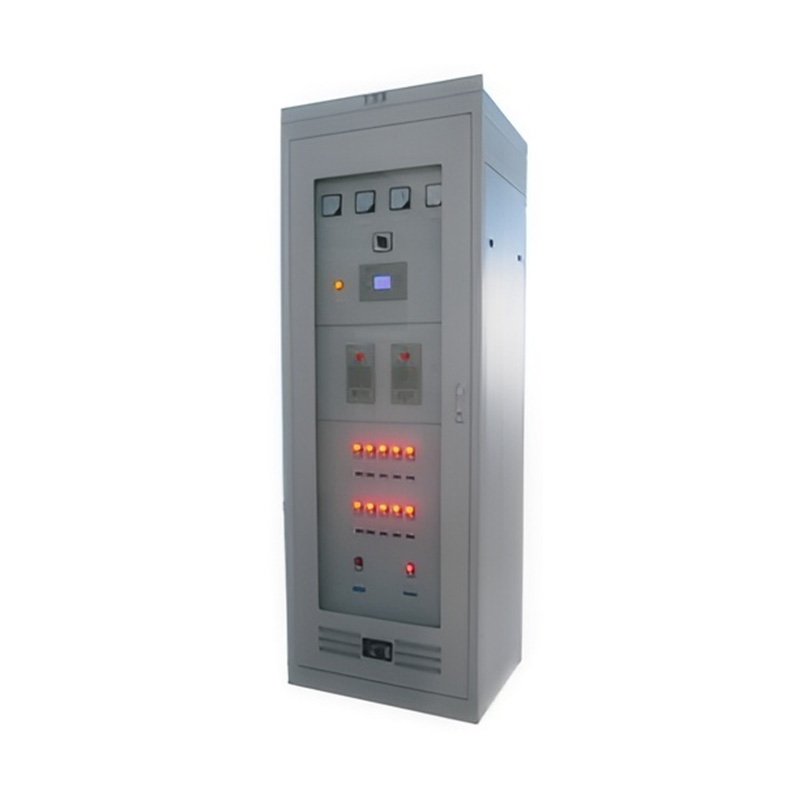 Custom DC Power Panels for Motor Starting and ControlDC power panels for motor starting and control, relevant when retrofits require replacing aging DC control supply distribution hardware.View Product →
Frequently Asked Questions About Direct Current Electric Motors
Short answers first: DC motors survive where torque at standstill, a wide speed range and mechanical fit matter more than efficiency.
What is a direct current electric motor used for?
It drives loads that need full torque at zero speed or a very wide constant-torque range: reversing mill stands, paper machine sections, mine hoists, extruders, crane hoists and small permanent magnet drives in battery-powered equipment.
Is a DC motor better than an AC motor with a VFD?
For new installations, no. An AC motor with a vector drive is more efficient and needs no brush maintenance. For an existing DC machine inside a fixed mechanical interface, keeping the DC motor is often faster and cheaper than re-machining the drive train.
How long does a DC motor last?
Fifteen years or more is normal with scheduled brush inspection, film checks and periodic commutator skimming. The limiting factor is usually commutator and insulation condition, not bearing life.
Can a DC motor be used in a hazardous area?
Yes, normally in a flameproof enclosure with certified brush gear, terminal box and accessories. The certification scope must cover every component added to the machine, including space heaters and speed feedback devices.
Decide DC versus AC on the driven machine, not on the technology trend. Where standstill torque, speed holding and a fixed mechanical interface drive the process, a properly specified direct current electric motor remains a sound investment for another fifteen years of service.

Get in Touch
Related Products
 Shanghai Pinxing
Explosion-proof Motor Co., Ltd.
-
 cai@pinxingmotor.com
-
 +86-21-57566731
-
 +86-21-57566967
-
 No.699, Pinxing Rd., Qinggang Industrial Zone, Fengxian District, Shanghai, China.(East Gate)
-
No. 168, Qingling Rd, Qinggang Industrial Zone, Qingcun Town, Fengxian District, Shanghai, China (South Gate)
Copyright@ 2024 Shanghai Pinxing Explosion-proof Motor Co., Ltd. All Rights Reserved.
Privacy