- 中文网站请点击 http://www.pinxinggroup.com
-
 +86-21-57566731
-
 cai@pinxingmotor.com
-
 DOWNLOAD


 English
 русский
 Français
 عربى

Electric Motor Grease Guide: Grades, Viscosity and Relubrication Intervals
Content
- 1 What Electric Motor Grease Really Is
- 2 Matching Consistency, Base Oil and Thickener to the Bearing
- 3 Temperature Sets the Relubrication Clock
- 4 Quantity and Interval Without Guesswork
- 5 Explosion-Proof and High-Voltage Motors Add Constraints
- 6 Mixing, Compatibility and Storage
- 7 Practical Answers for Maintenance Teams
What Electric Motor Grease Really Is
Electric motor grease is a thickener-stabilised blend in which base oil makes up 80–90% of the mass and performs all of the lubricating, while the thickener only holds that oil in place. The oil film separates rolling elements from raceways; the thickener is a delivery structure. This distinction explains most lubrication failures, because a stiff, dry-looking grease and a soft, oily grease can carry the same NLGI number while behaving completely differently inside a bearing.
Three properties decide performance. Base oil viscosity at 40 °C sets film thickness and typically falls between 68 and 220 mm²/s for rolling bearing greases; a 100–150 mm²/s base oil covers the majority of horizontal industrial motors. The thickener type sets the dropping point, water washout behaviour under ASTM D1264 and the maximum continuous service temperature. The additive package handles oxidation life by ASTM D942, rust protection and, where roller bearings carry heavy loads, extreme pressure chemistry.
A grease that has stopped bleeding oil is finished, regardless of how much remains in the housing. That is why relubrication intervals are calculated in operating hours and temperature, not judged by appearance.
Matching Consistency, Base Oil and Thickener to the Bearing
A horizontal foot-mounted motor running at 1,500 rpm in 20–40 °C ambient is served by an NLGI 2 grease with 100–150 mm²/s base oil viscosity at 40 °C and either a lithium complex or a polyurea thickener. Everything beyond that is refinement for speed, load, vertical mounting or extreme ambient.
| NLGI grade | Worked penetration, 0.1 mm | Consistency | Typical motor use |
| 1 | 310–340 | Soft | Large shafts, low speed, ambient below 0 °C |
| 2 | 265–295 | Standard | Most horizontal TEFC motors, 750–3,600 rpm |
| 3 | 220–250 | Firm | Vertical shaft motors, sealed-for-life bearings |
Short designations make cross-supplier comparison faster. A DIN 51825 code such as KP2K-30 states that the product is a rolling bearing grease with EP additives, NLGI class 2, upper temperature class K and a lower service limit of -30 °C. The ISO 6743-9 equivalent, for example L-XBCEB 2, carries the same information in a different format. Both tell you more in one line than a marketing datasheet does in four pages.
- Dropping point 260 °C and above
- Good water resistance and mechanical stability
- Stocked widely, lowest cost per kilogram
- Not compatible with polyurea thickeners
- Dropping point 250 °C and above
- Long life in continuous 120–150 °C duty
- Low oil bleed in vertical shafts
- Requires a full purge on changeover
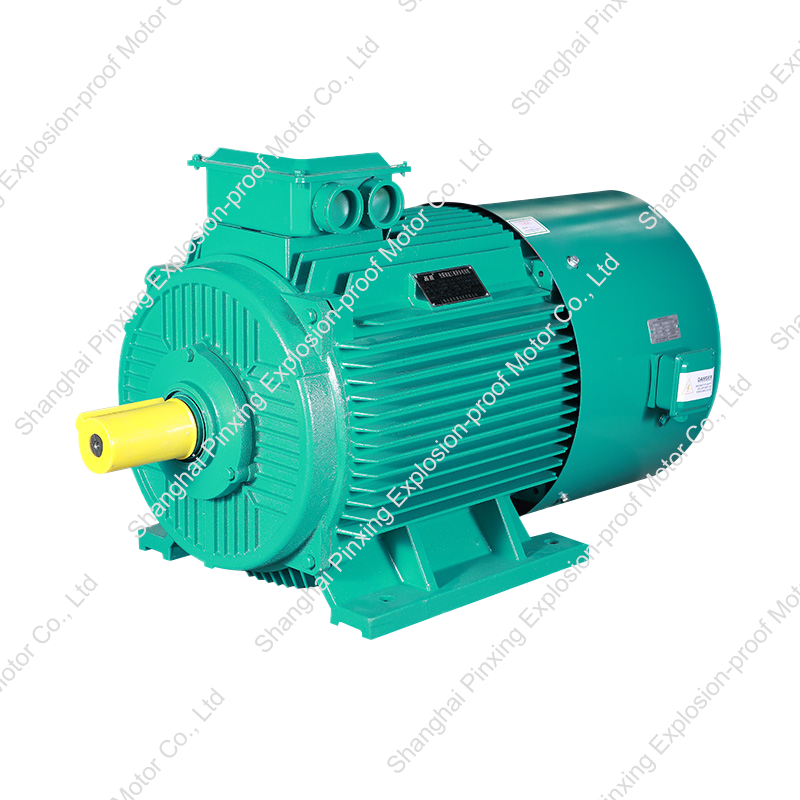
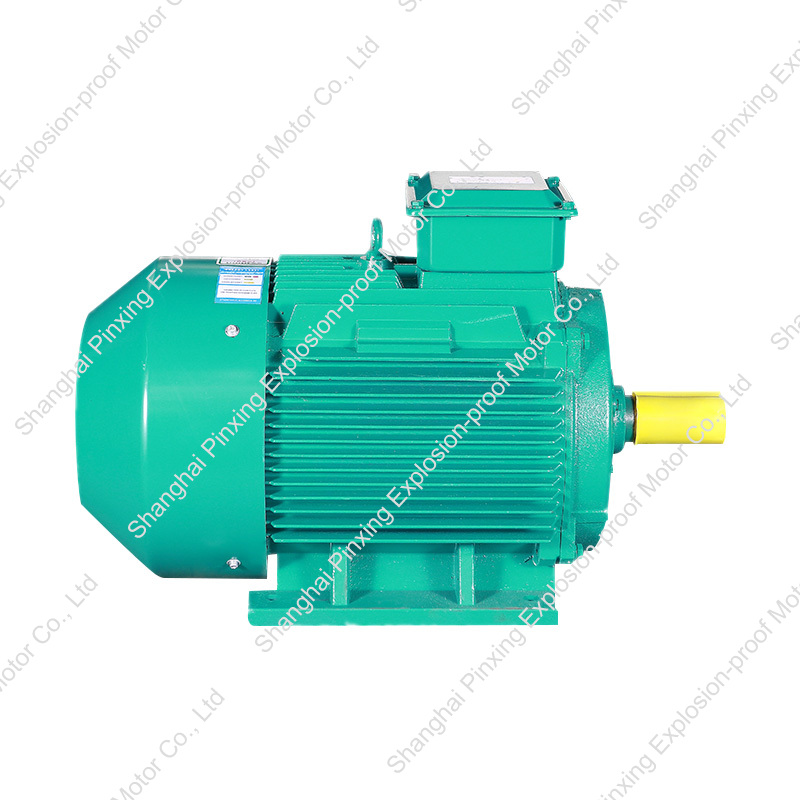 IE3 Three-Phase Induction Motor, H80–355 mmHigh-efficiency three-phase induction motor in H80–355 mm frames, with IP54/IP55 protection and outputs from 0.75 kW to 355 kW for industrial drives.View Product →
On standard low-voltage industrial motors the bearing housing volume and drain position usually dictate the grade more than the load does. A housing with a single drain plug at the bottom suits NLGI 2; a sealed-for-life bearing on a small frame cannot be regreased at all, so the factory fill determines the whole service life.
Temperature Sets the Relubrication Clock
Grease life roughly halves for every 15 K increase in bearing temperature above 70 °C, so a bearing running at 100 °C needs relubrication about four times as often as an identical bearing at 70 °C. This rule of thumb, used across the bearing industry, is the single most useful planning figure available to a maintenance engineer.
Measure at the housing surface over the loaded zone, at steady state, after at least 30 minutes at operating load. A reading above 90 °C on a TEFC motor is a signal to check alignment, belt tension, grease quantity and cooling airflow before it is a signal to buy a higher-temperature grease. Temperature also drives insulation ageing, and the relationship between motor temperature, insulation life and total motor life follows the same halving logic inside the winding.
Quantity and Interval Without Guesswork
The working quantity per relubrication is G = 0.005 × D × B grams for ball bearings and G = 0.002 × D × B for roller bearings, where D is the bearing outside diameter in millimetres and B is the bearing width in millimetres. A 6309 ball bearing with D = 100 mm and B = 25 mm therefore takes 12.5 g per service.
Explosion-Proof and High-Voltage Motors Add Constraints
Ex d motors run their bearings inside a flameproof enclosure with restricted airflow, so grease for these units should carry a dropping point above 250 °C and a base oil that resists oxidation at 100 °C. In a hazardous area the bearing cannot be opened for inspection on a whim, which pushes the entire lubrication decision back onto the specification stage.
Shanghai Pinxing Explosion-proof Motor Co., Ltd. manufactures the YBX4 low-voltage Ex d range and the YBX3 high-voltage Ex d range among a catalogue of more than 1,000 product variants, and exports to more than 40 countries. On the larger frames the bearing housings are fitted with grease nipples and drain plugs so that relubrication can be carried out without breaking the flameproof joint; on smaller frames the bearings are life-lubricated and sealed, which makes the factory fill the decisive choice.
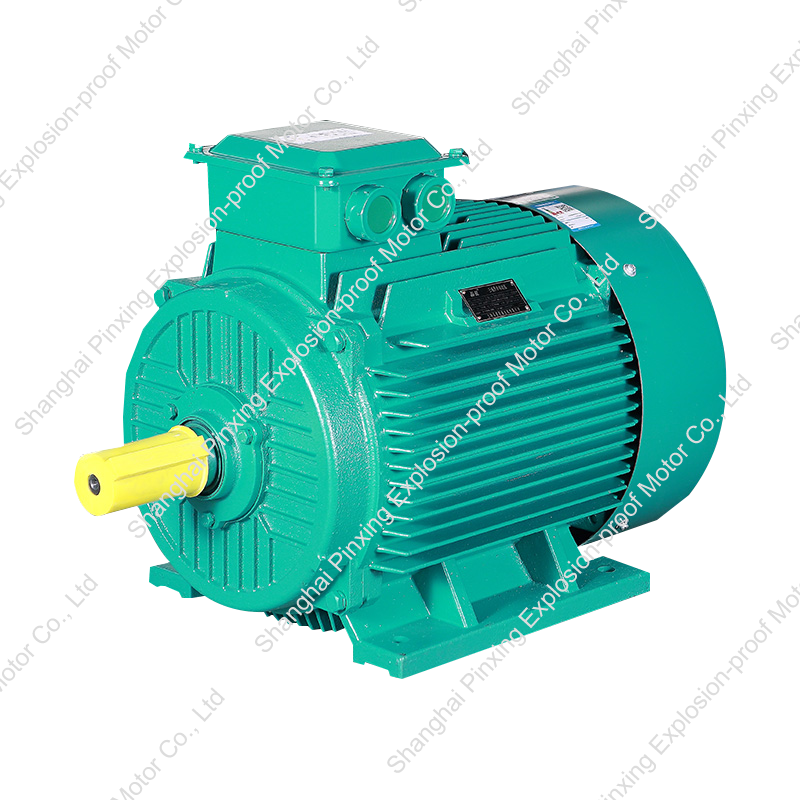
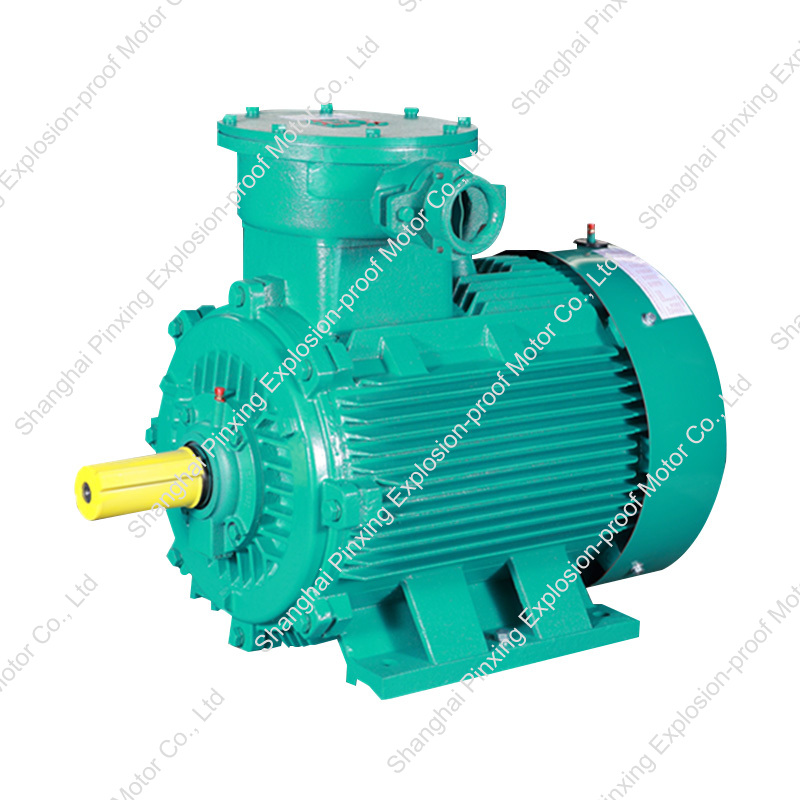 YBX4 Low-Voltage Explosion-Proof Motor, H80–355 mmFlameproof three-phase asynchronous motor for hazardous gas or dust areas, covering 0.75–355 kW and H80–355 mm frames with IP55 protection.View Product →
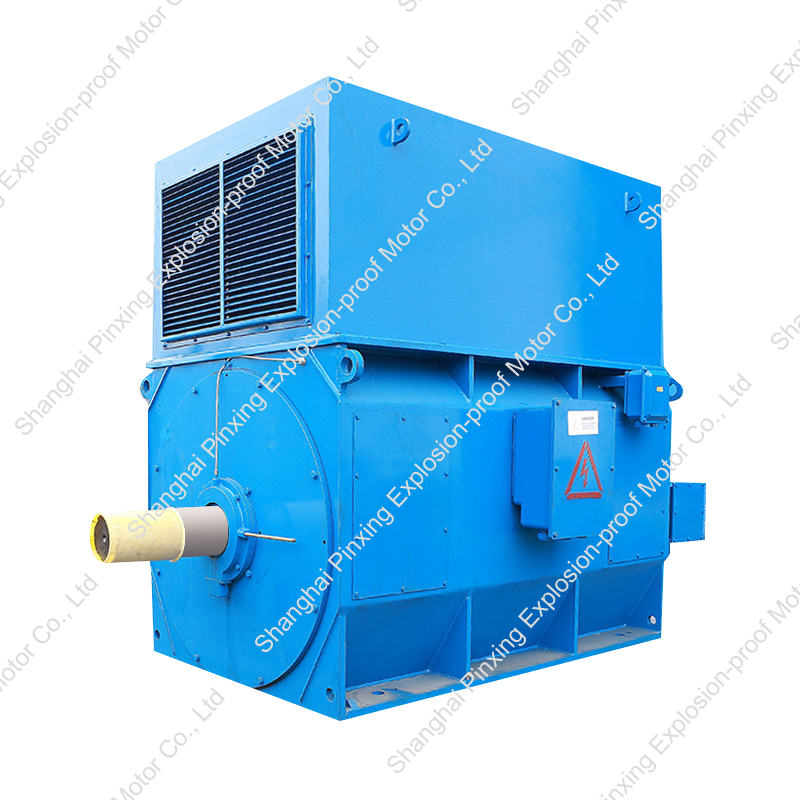
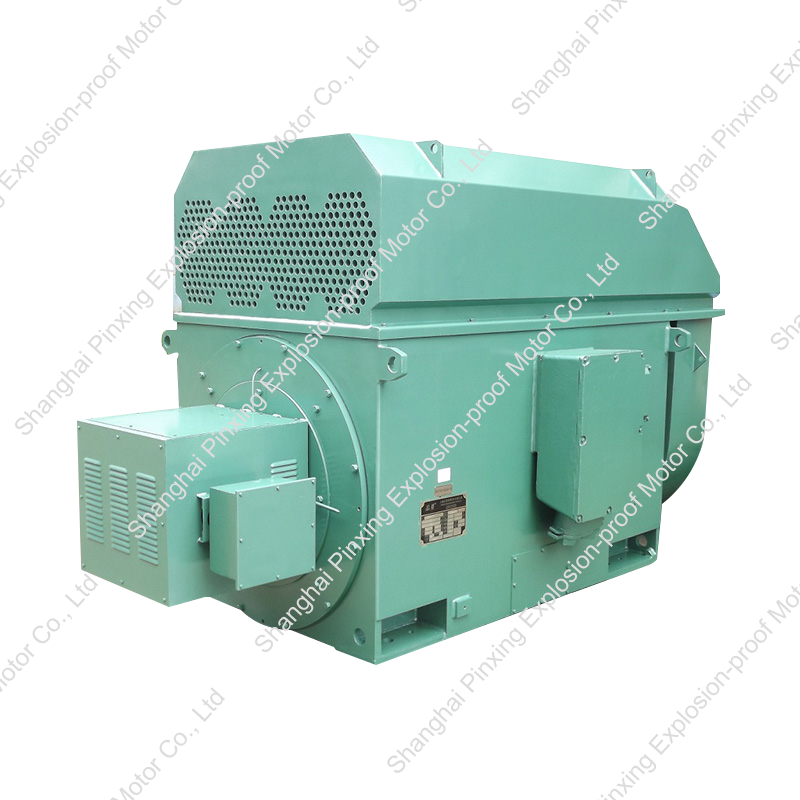
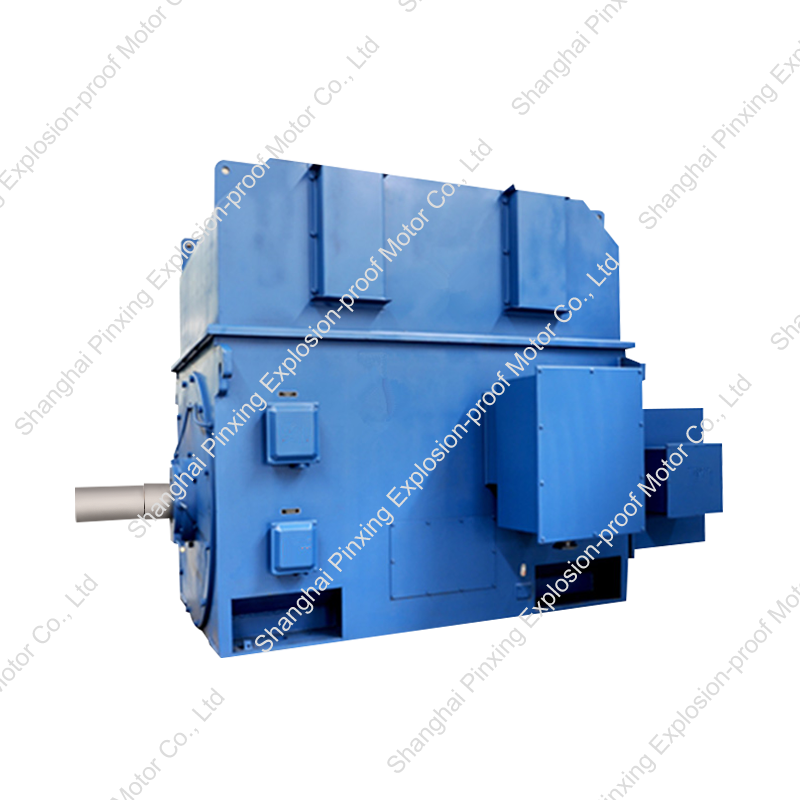
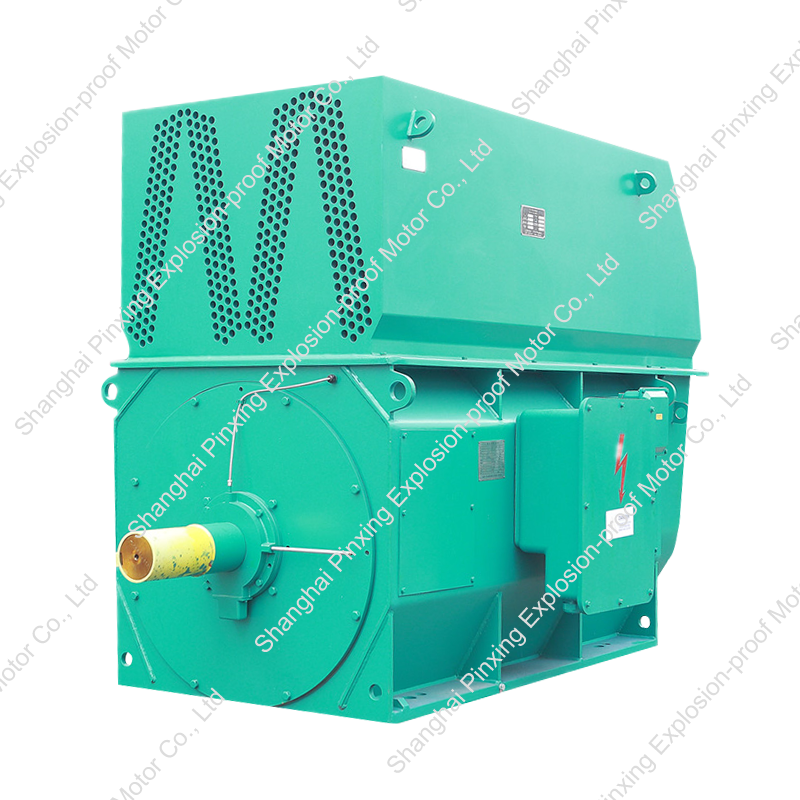
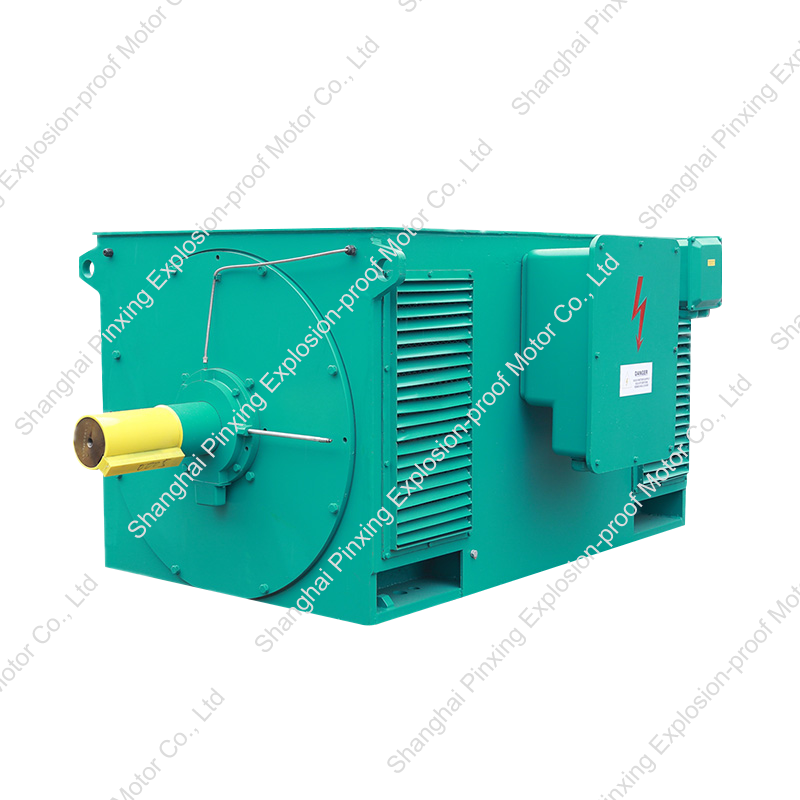 High-Voltage Squirrel Cage Induction Motor SeriesCategory page listing Y, YKK, Y2, and YKS high-voltage three-phase squirrel cage induction motor series across stated voltage and H355–1000 mm frame ranges.View Product →
The same logic applies across coal, metallurgy, chemical and power installations; documented industrial motor projects show that lubrication scheduling, not grease brand, separates a five-year bearing from an eighteen-month one.
Mixing, Compatibility and Storage
Two greases with different thickener bases must never be assumed compatible; lithium and polyurea thickeners can form a hard, oil-starved mass at the interface, and the bearing then runs on a soap rather than an oil film. ASTM D6185 exists specifically to test whether two greases can be blended without that outcome, and most suppliers will not guarantee compatibility across thickener families without it.
Store grease sealed, below 25 °C and away from vibration, and use the date of manufacture rather than the purchase date. A five-year shelf life is typical for lithium-based products; polyurea grades are often shorter. A thin film of oil at the rim of an opened pail is normal bleed, but a separated, cracked surface means the structure has failed and the product should not go into a bearing.
Practical Answers for Maintenance Teams
What is the best grease for an electric motor bearing?
For most horizontal industrial motors, an NLGI 2 lithium complex grease with 100–150 mm²/s base oil viscosity at 40 °C and a dropping point above 260 °C covers the duty. Specify polyurea only when the bearing runs continuously above 120 °C, and then commit to a full purge on changeover.
How much grease does a motor bearing need?
Fill 30–50% of the bearing free space at assembly. For relubrication, use G = 0.005 × D × B grams on ball bearings and G = 0.002 × D × B on roller bearings, purging through the drain until clean grease appears.
Can lithium and polyurea greases be mixed?
No. Different thickener bases can thicken or separate at the interface, and ASTM D6185 is the test that quantifies the risk. If a change is unavoidable, purge until clean grease exits the drain and re-check the bearing temperature within one week.
Does ambient temperature change the relubrication interval?
Yes. Every 15 K above 70 °C halves expected grease life, and ambient below -10 °C calls for an NLGI 1 grade or a lower-viscosity base oil so that starting torque stays inside the motor's capability.

Get in Touch
Related Products
 Shanghai Pinxing
Explosion-proof Motor Co., Ltd.
-
 cai@pinxingmotor.com
-
 +86-21-57566731
-
 +86-21-57566967
-
 No.699, Pinxing Rd., Qinggang Industrial Zone, Fengxian District, Shanghai, China.(East Gate)
-
No. 168, Qingling Rd, Qinggang Industrial Zone, Qingcun Town, Fengxian District, Shanghai, China (South Gate)
Copyright@ 2024 Shanghai Pinxing Explosion-proof Motor Co., Ltd. All Rights Reserved.
Privacy