- 中文网站请点击 http://www.pinxinggroup.com
-
 +86-21-57566731
-
 ccc@pinxingmotor.com
-
 DOWNLOAD


 English
 русский
 Français
 عربى

High Efficiency DC Electric Motors: Efficiency Bands, Losses and Selection
Content
- 1 What High Efficiency Means for a DC Motor
- 2 The Loss Map: Where Efficiency Is Won or Lost
- 3 Efficiency Bands by DC Motor Type
- 4 Matching the Motor to the Duty Point
- 5 When the Area Is Hazardous, the Enclosure Decides
- 6 The Converter Can Give Back What the Motor Gains
- 7 Verification: Six Checks Before Sign-Off
- 8 The Payback Arithmetic
- 9 Practical Questions Buyers Ask
A 90 kW DC motor at 88% full-load efficiency rejects 12.3 kW of every 102.3 kW it draws. Lift the same frame to 92% and the rejection falls to 7.8 kW: 4.4 kW that never reaches the shaft, or roughly 26,400 kWh across 6,000 operating hours.
That arithmetic is why buyers of high efficiency dc electric motors read the specification sheet line by line, and why the catalogue figure so often fails to match the test bench figure. Efficiency is a measured result, tied to a test method, an ambient condition and a tolerance clause.
The sections below cover what the measurement actually means, where the losses sit, which topologies reach which bands, and the two places where a gain most often disappears: hazardous-area certification and converter selection.
What High Efficiency Means for a DC Motor
A high efficiency DC motor is one whose losses have been segregated and measured to a recognised method, and whose full-load efficiency sits at the top of its frame band: for industrial machines between 55 kW and 200 kW, that means 90% or better at rated torque and speed.
Efficiency is shaft output divided by electrical input. The loss sum behind that ratio covers armature copper, field copper, iron, brush contact, stray load and mechanical losses, segregated under IEC 60034-2-1 or IEEE 112 Method B.
No IE class covers DC machines. IEC 60034-30-1 defines IE1 through IE4 for line-operated AC induction motors from 0.12 kW to 1,000 kW in 2, 4, 6 and 8 pole versions, which leaves DC motors outside that framework. A DC machine is compared on measured data, never on a label.
Read the tolerance before the headline figure. IEC 60034-1 permits a measured efficiency up to 15% of (1 minus efficiency) below the declared value for machines up to 150 kW, and 10% above 150 kW. A 92% declaration can therefore test at 90.8% and still comply. Ask for the tested figure at the duty point, not the catalogue peak.
The Loss Map: Where Efficiency Is Won or Lost
About half of the loss in a 55 kW to 200 kW industrial DC machine is resistive, which is why conductor cross-section, slot fill, brush grade and cooling airflow move efficiency further than any other design decision.
- Armature copper loss. Resistance loss in the armature winding rises with the square of load current, so a machine that looks efficient at 100% load can fall several points at 130% overload.
- Field copper loss. Shunt and separately excited machines pay a continuous excitation bill; permanent-magnet designs remove it entirely but give up electrical field weakening.
- Iron loss. Hysteresis and eddy-current loss in the armature core track speed and flux density; 0.35 mm to 0.50 mm silicon-steel laminations are the standard lever.
- Brush contact loss. A brush pair drops roughly 1.5 V to 2 V whatever the current. At 440 V that is under 0.5% of input; on a 48 V system it exceeds 4%.
- Stray load and mechanical loss. Bearing friction, windage and stray load are modest individually but become a measurable share at high shaft speed.
Brush drop splits DC design into two disciplines. A 400 V industrial machine can absorb it; a 48 V machine has to engineer it out, which is why brushless topologies dominate low-voltage work.
Efficiency Bands by DC Motor Type
Full-load efficiency clusters into a handful of bands, and the band a design reaches depends more on excitation method and commutation than on frame size.
Two readings matter. Rare-earth magnets in brushless DC designs lose remanence above their maximum operating temperature, between 80 °C and 150 °C depending on grade, so a hot enclosure can force a lower grade and a longer frame. Wound-field machines stay competitive past 200 kW because excitation can be trimmed at commissioning and brushes can be replaced in the field.
Efficiency belongs to a duty point, not to a product. A 93% brushless motor oversized by 40% for a light load can run below the 88% machine it replaced.
Matching the Motor to the Duty Point
The right high efficiency DC motor is the one whose efficiency is declared at the torque and speed the process actually uses, not at nameplate rating.
| Duty profile | Preferred DC type | Lock down in the specification | Common failure |
| Continuous, 1,500-3,000 h per year | Wound-field or PMDC with forced ventilation | Class F winding with Class B rise, S1 duty at 40 °C ambient | Derating ignored at 50 °C ambient |
| Speed range wider than 1:10 | BLDC with encoder or resolver feedback | Back-EMF constant, torque constant, field-weakening limit | Magnet grade overheated in a hot enclosure |
| Frequent starts, high breakaway torque | Separately excited or series wound | Thermal limit class and permitted starts per hour | Brush and commutator wear overlooked |
| Zone 1 or Zone 21 area | Ex d flameproof construction | Temperature class T4 at 135 °C, IP55 to IEC 60034-5 | Increased safety Ex e assumed to be acceptable |
| Four-quadrant, regenerative duty | Drive-matched DC machine | Armature inductance and permitted ripple current | Ripple heating not included in the derating |
Oversizing is the most frequent error in the table. A frame running at 40% load gives back 2 to 4 points of efficiency and pays for a larger converter at the same time. For a frame matched against a comparable installation, the project case library is a practical starting point before the enquiry stage.
When the Area Is Hazardous, the Enclosure Decides
In a Zone 1 or Zone 21 area the enclosure certificate, not the efficiency figure, determines whether a DC motor can be installed at all.
A brushed DC machine arcs at the commutator on every revolution. IEC 60079-1 requires that arcing part to sit inside a flameproof enclosure able to contain an internal explosion and stop it from transmitting, which is the Ex d route. Increased safety Ex e under IEC 60079-7 assumes no arcing or sparking in normal operation, so it cannot be applied to a commutator machine.
Ex d flameproof
Required for any brushed DC motor. The certificate must state the temperature class, the ambient range and the enclosure group. Efficiency figures on the open-frame version do not transfer, because the enclosure restricts heat rejection and forces derating.
Ex tb dust protection
Relevant to Zone 21 and Zone 22 dust atmospheres in grain, cement and coal handling. Enclosure sealing to IP6X carries more weight than the motor's full-load efficiency, and dust layers lower the permitted surface temperature further.
Temperature class drives the rest of the specification. T4 caps surface temperature at 135 °C and is the usual petrochemical requirement; T3 at 200 °C needs documented justification. Shanghai Pinxing Explosion-proof Motor Co., Ltd. builds explosion-proof machines for coal, petrochemical and metallurgical plants, and lists DC motors as a separate family alongside its low-voltage and high-voltage ranges.
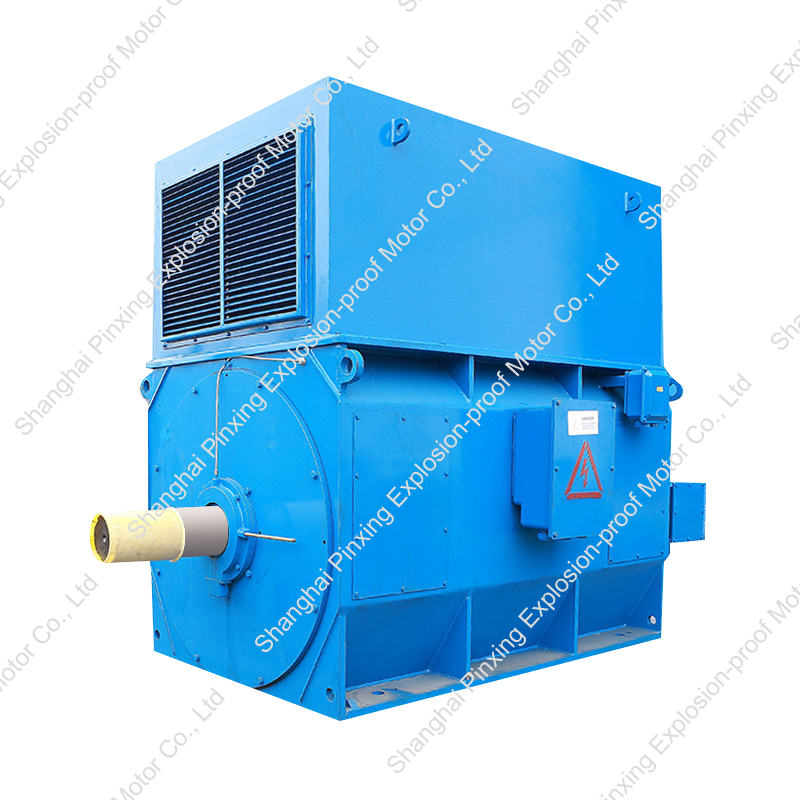
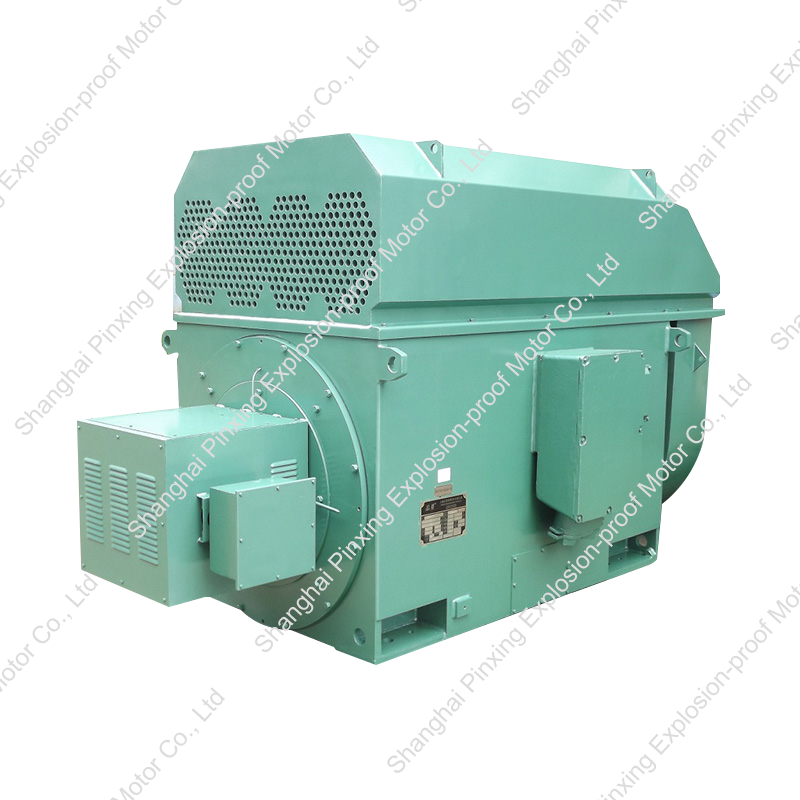
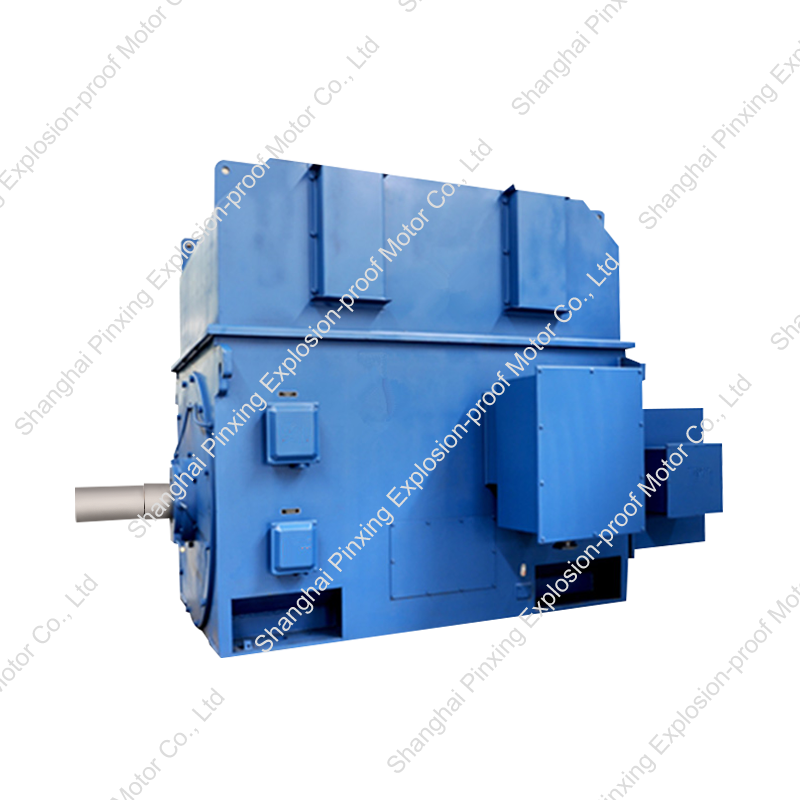
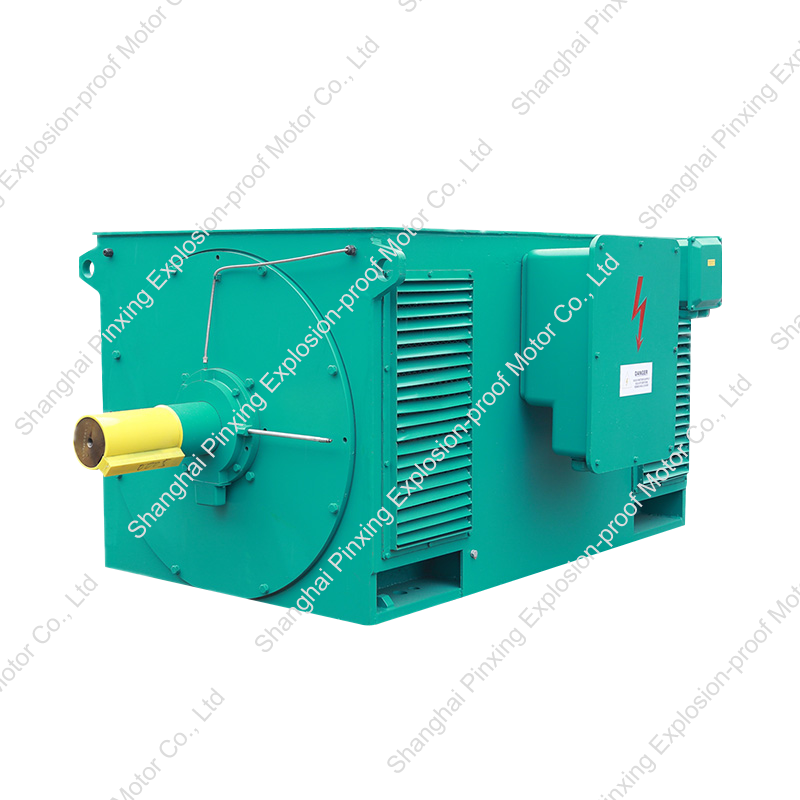
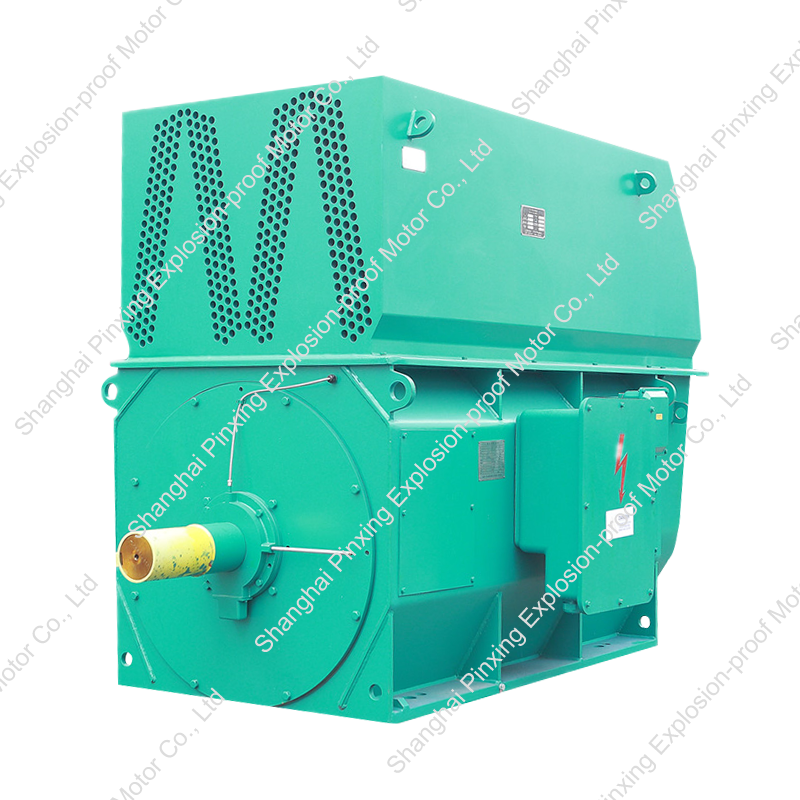
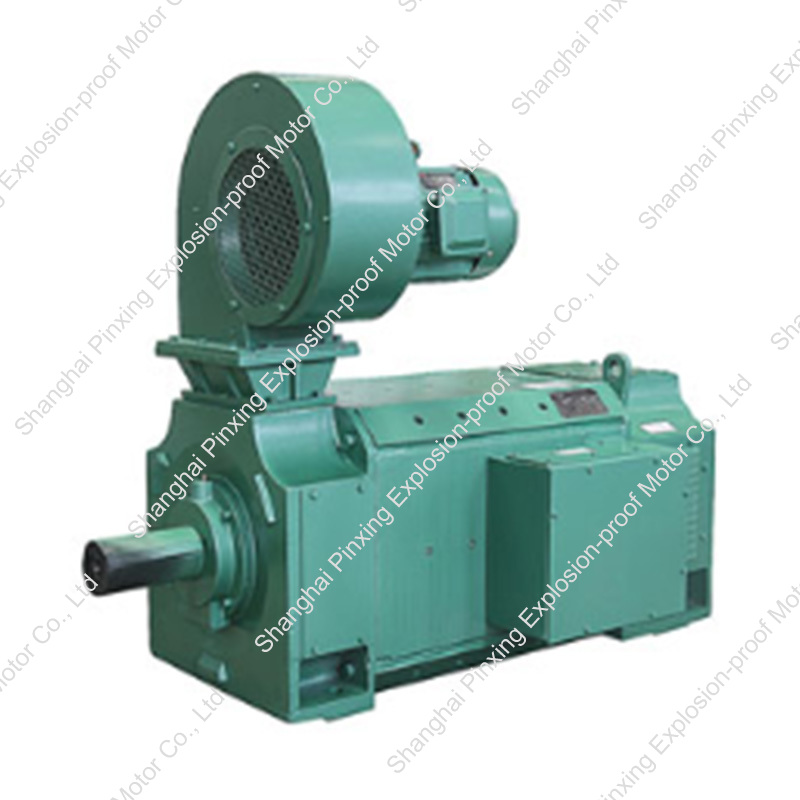 Custom, Z4 and Z Series DC MotorsBrowse custom DC motors plus Z4 and Z series medium-sized options for industrial drive specifications, where motor and converter losses both affect the package.View Product →
The Converter Can Give Back What the Motor Gains
A three-point gain in the machine disappears if the converter adds three points of its own, and converter losses of 2% to 4% are normal on DC drives.
- Thyristor phase control. Armature current ripple heats the winding without producing torque, so a form factor much above 1.1 usually requires derating of the motor.
- PWM from a DC bus. Switching between 4 kHz and 16 kHz produces terminal voltage overshoot that can approach twice the bus voltage on long cable runs, which loads the insulation and calls for a dv/dt filter.
- Field weakening. Rated speed range depends on how far the field can be reduced; past the design limit, commutation deteriorates and efficiency falls sharply.
Specify motor and converter as one package. Armature inductance, ripple limits and feedback arrangement are interface values, and a mismatch shows up as extra heat long before it shows up as a fault.
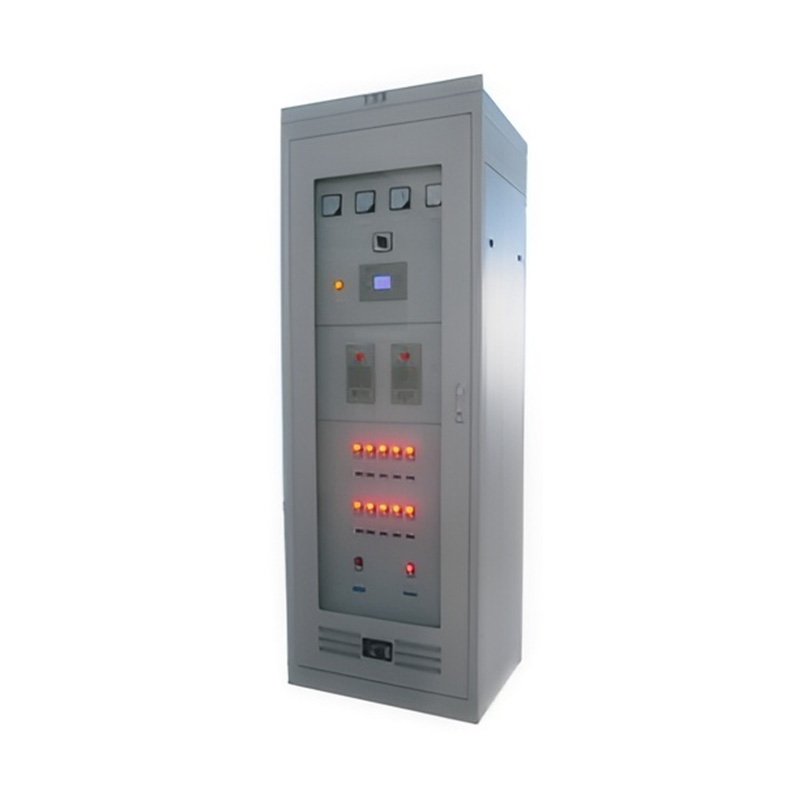 Custom DC Power Panel for Motor Starting and ControlConsider this customizable DC power panel when specifying motor and converter as one package, with interface values and drive-train efficiency reviewed together.View Product →
Ask for the drive-train efficiency, not the motor efficiency. A 2% converter loss against a 4-point motor gain nets 2 points, and the payback calculation changes with it.
Verification: Six Checks Before Sign-Off
Every efficiency claim should trace to a document that names the method, the ambient and the tolerance applied.
- Rating plate and standard. Confirm IEC 60034-1, duty S1, 40 °C ambient and 1,000 m altitude; a machine rated for 50 °C ambient carries less output in the same frame.
- Declared efficiency at the duty point, with the IEC 60034-1 tolerance stated in numbers rather than implied.
- Test method. IEC 60034-2-1 or IEEE 112 Method B loss segregation; a report that lists only input and output wattage cannot separate brush and stray losses.
- Thermal margin. Class F insulation rated 155 °C with Class B rise limited to 130 °C leaves 25 K of headroom for overload and for a hot plant room. Windings consolidated by vacuum pressure impregnation, a process covered in Pinxing's VPI process notes, hold that margin through thermal cycling.
- Mechanical limits. Vibration to IEC 60034-14 grade A or B, and an IP rating to IEC 60034-5 that matches the washdown or dust environment.
- Serviceability. Brush life, commutator access and spare-part lead time decide the real cost of ownership as much as the efficiency figure does.
The Payback Arithmetic
On a 90 kW machine running 6,000 hours a year at 0.10 USD per kWh, four efficiency points are worth about 26,400 kWh, or roughly 2,640 USD annually.
Set that against the frame premium and the answer is usually clear within two years. Two adjustments keep the calculation honest: include demand charges where the utility bills them, and check whether the more efficient machine needs a smaller converter, which offsets part of the price difference.
Compare drive-train efficiency, verify the test method, and confirm the certification. Those three steps decide whether a high efficiency DC motor actually delivers the number printed on its sheet.
Practical Questions Buyers Ask
What efficiency should a high efficiency DC motor reach?
For an industrial DC machine between 55 kW and 200 kW, expect 88% to 93% at the rated point; brushless designs between 1 kW and 30 kW reach the same band. Anything under 85% in those frame sizes should be treated as standard efficiency.
Do IE efficiency classes apply to DC motors?
No. IEC 60034-30-1 covers line-operated AC induction motors from 0.12 kW to 1,000 kW. DC machines are compared on measured data segregated under IEC 60034-2-1 or IEEE 112 Method B, together with the IEC 60034-1 tolerance.
Can a brushed DC motor be used in a hazardous area?
Yes, but only inside an Ex d flameproof enclosure certified to IEC 60079-1, because the commutator arcs in normal operation. Verify that the certificate names the temperature class, typically T4 at 135 °C, and the ambient range for the site.
What erases an efficiency gain fastest?
A mismatched converter. Armature ripple, voltage overshoot and field weakening each add heat without adding torque, and a drive train that loses 3 points cancels a 3-point motor improvement before the first maintenance interval.

Get in Touch
Related Products
 Shanghai Pinxing
Explosion-proof Motor Co., Ltd.
-
 ccc@pinxingmotor.com
-
 +86-21-57566731
-
 +86-21-57566967
-
 No.699, Pinxing Rd., Qinggang Industrial Zone, Fengxian District, Shanghai, China.(East Gate)
-
No. 168, Qingling Rd, Qinggang Industrial Zone, Qingcun Town, Fengxian District, Shanghai, China (South Gate)
Copyright@ 2024 Shanghai Pinxing Explosion-proof Motor Co., Ltd. All Rights Reserved.
Privacy