- 中文网站请点击 http://www.pinxinggroup.com
-
 +86-21-57566731
-
 cai@pinxingmotor.com
-
 DOWNLOAD


 English
 русский
 Français
 عربى
عربى
High Voltage Motor: A Complete Guide for Industrial Applications
Content
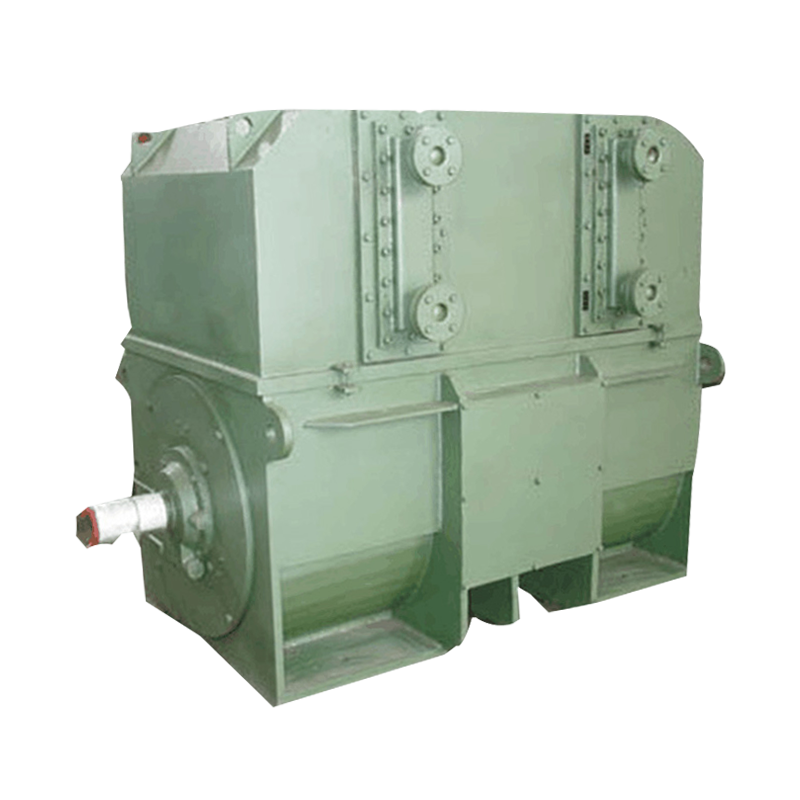
A high voltage motor is an electric motor designed to operate at voltages typically above 1,000 V, commonly 3 kV, 6 kV, 10 kV, or higher. These motors are the workhorses of heavy industry, powering compressors, pumps, fans, crushers, and conveyors in sectors ranging from oil and gas to mining and power generation.
With power ratings from 200 kW to over 10,000 kW, high voltage motors deliver the torque and reliability required for continuous, demanding industrial operations. Their robust construction and advanced cooling systems ensure long service life even in harsh environments.
What Is a High Voltage Motor
A high voltage motor is an alternating current (AC) electric motor designed for operation at supply voltages of 3 kV and above. These motors are typically used in large-scale industrial applications where high power output and operational efficiency are required.
Unlike low-voltage motors (typically rated below 1,000 V), high voltage motors are engineered with robust insulation systems, specialized cooling mechanisms, and heavy-duty bearings to withstand the electrical and mechanical stresses of continuous heavy-load operation. They are available in both synchronous and asynchronous (induction) designs, with configurations including squirrel cage, wound rotor, and salient pole types.
Key Features and Benefits
High voltage motors are designed to deliver exceptional performance in demanding industrial environments. The key features that distinguish these motors include:
High voltage motors typically achieve efficiency levels of 96% to 98%, significantly reducing energy consumption and operating costs over the motor's service life.
By operating at higher voltages, these motors deliver greater power output relative to their physical size, making them ideal for space-constrained industrial installations.
Built with heavy-duty frames, high-grade insulation systems (Class F or H), and precision-machined components to withstand continuous industrial operation.
Multiple cooling options including air-to-air, air-to-water, and closed-loop systems ensure reliable temperature management in high-ambient environments.
Available in explosion-proof and increased safety configurations for hazardous environments such as oil refineries, chemical plants, and coal mines.
High ingress protection ratings (IP55, IP56, IP65) ensure reliable operation in dusty, wet, and corrosive industrial settings.
Synchronous vs Induction Motors
- Rotor rotates at synchronous speed with the stator magnetic field
- Higher efficiency at rated load (up to 98.5%)
- Can operate at leading or lagging power factor
- Requires excitation system or permanent magnets
- Ideal for constant-speed applications and power factor correction
- Rotor speed is slightly lower than synchronous speed (slip)
- Simple and rugged construction with no brushes or slip rings
- Lower maintenance requirements
- Self-starting without external excitation
- Ideal for variable-speed and general-purpose industrial applications
Typical Applications
High voltage motors are essential components in a wide range of heavy industries, including:
Compressors, pumps for crude oil and gas transmission, and refinery processing equipment.
Crushers, conveyors, mill drives, and ventilation fans for underground and open-pit operations.
Pumps, fans, and auxiliary drives in thermal, hydroelectric, and nuclear power plants.
Reactor drives, centrifugal pumps, and process equipment in chemical manufacturing facilities.
Large pumps for water distribution, irrigation, and treatment plant operations.
Mill drives, rolling mill motors, and furnace fans in steel and aluminum production.
Frequently Asked Questions
Motors designed for operation at voltages above 1,000 V AC are generally classified as high voltage motors. Common ratings include 3 kV, 6 kV, 10 kV, and 11 kV.
High voltage motors typically achieve efficiencies between 96% and 98%. Premium efficiency designs can achieve up to 98.5%, significantly reducing energy costs over the motor's service life.
Low voltage motors operate below 1,000 V and are typically used for smaller loads. High voltage motors operate at 3 kV and above and are designed for heavy industrial applications requiring high power output.
Synchronous motors operate at a constant speed locked to the supply frequency and require an external excitation source. Induction motors have a slight speed reduction (slip) and are simpler in construction. The choice depends on the application requirements.
High voltage motors use various cooling methods including air-to-air heat exchangers, air-to-water cooling, and closed-loop cooling systems. The choice depends on the operating environment and power rating.
These motors are used in oil and gas compressors, mining crushers, power plant pumps, chemical processing equipment, and large industrial fans and conveyors.
Looking for reliable high voltage motors for your industrial application?
Shanghai Pinxing Explosion-proof Motor Co., Ltd. offers a comprehensive range of high voltage motors with 3 kV to 11 kV ratings, power outputs up to 10,000+ kW, and configurations including synchronous, induction, and explosion-proof designs. With over 1,000 models and AAA manufacturing certification, we deliver quality and reliability for demanding industrial environments.

Get in Touch
Related Products
 Shanghai Pinxing
Explosion-proof Motor Co., Ltd.
-
 cai@pinxingmotor.com
-
 +86-21-57566731
-
 +86-21-57566967
-
 No.699, Pinxing Rd., Qinggang Industrial Zone, Fengxian District, Shanghai, China.(East Gate)
-
No. 168, Qingling Rd, Qinggang Industrial Zone, Qingcun Town, Fengxian District, Shanghai, China (South Gate)
Copyright@ 2024 Shanghai Pinxing Explosion-proof Motor Co., Ltd. All Rights Reserved.
Privacy