- 中文网站请点击 http://www.pinxinggroup.com
-
 +86-21-57566731
-
 cai@pinxingmotor.com
-
 DOWNLOAD


 English
 русский
 Français
 عربى
عربى
How to Maintain and Troubleshoot THREE PHASE WOUND ROTOR MOTORS for Long-Term Reliability?
Content
- 1 Routine Inspection and Maintenance Protocols
- 2 Starting Mechanisms and Speed Control Issues
- 3 Electrical Faults and Thermal Management
- 4 Common Failures in Specific Applications
- 5 Conclusion
- 6 FAQ
- 6.1 What are the signs that the slip rings need resurfacing?
- 6.2 How does a liquid rheostat improve motor starting?
- 6.3 Can a wound rotor motor run with the slip rings shorted?
- 6.4 Why is vibration monitoring critical for wound rotor motors?
- 6.5 What causes a wound rotor motor to overheat at low speeds?
In the complex landscape of industrial power transmission, THREE PHASE WOUND ROTOR MOTORS hold a distinctive position due to their unique ability to handle high-inertia loads and provide adjustable speed characteristics. Unlike standard squirrel cage induction motors, these machines utilize a wound rotor circuit connected via slip rings to external resistance, allowing for precise control over starting torque and speed. This mechanical advantage makes them indispensable in heavy-duty sectors such as mining, metallurgy, cement manufacturing, and marine propulsion, where equipment reliability is synonymous with operational continuity. However, the very features that grant these motors their superior performance—specifically the slip ring and brush gear assembly—also introduce complex maintenance challenges. Ensuring the longevity of these motors requires a deep understanding of electromechanical systems and a proactive approach to troubleshooting.
Shanghai Pinxing Explosion-proof Motor Co., Ltd. is a high-tech enterprise specializing in the design, research and development, manufacturing, and service of advanced motors and motor control products. As a AAA manufacturer of electrical equipment in China, Shanghai Pinxing produces a vast portfolio of over 1000 varieties of motors, including large and medium-sized high-voltage flameproof motors, synchronous units, and specialized THREE PHASE WOUND ROTOR MOTORS. Our products are exported to more than 40 countries and regions, serving critical industries such as coal mining, petroleum, chemical processing, and shipbuilding. We are committed to moving towards energy conservation, efficiency, and environmental protection, striving to make "Pinxing" a leading motor technology solution provider and manufacturer in the global motor industry.
The global market for electric motors is currently undergoing a significant transformation driven by efficiency mandates and the integration of smart monitoring technologies. According to the 2024 Energy Efficiency Standards Report by the International Electrotechnical Commission (IEC), the adoption of premium efficiency motor designs (IE4 and IE5 levels) is accelerating globally, necessitating stricter maintenance protocols to preserve efficiency gains over the motor's lifecycle. For wound rotor motors, which are often retrofitted with modern variable frequency drives (VFDs) or liquid rheostats, adhering to updated insulation standards and bearing maintenance guidelines is crucial to meet these evolving regulatory requirements.
Source: International Electrotechnical Commission (IEC)
Routine Inspection and Maintenance Protocols
The foundation of long-term reliability for THREE PHASE WOUND ROTOR MOTORS lies in a rigorous routine inspection schedule. Because these motors utilize carbon brushes to conduct current to the rotating rotor, they generate conductive dust that can compromise insulation. A proactive maintenance program must prioritize the cleanliness of the slip ring compartment and the condition of the brush gear. Inspectors should look for signs of uneven brush wear, excessive sparking, or grooving on the slip rings, which indicate misalignment or improper brush grade selection. Furthermore, the integrity of the external resistor banks or liquid rheostats must be checked to ensure smooth acceleration.
- Inspect slip rings for surface condition, checking for scoring, pitting, or discoloration.
- Check carbon brushes for length and flexibility; replace if worn to less than one-third of original size.
- Verify brush holder tension to ensure consistent contact pressure without excessive drag.
- Clean the brush rigging area using low-pressure, dry air to remove carbon dust accumulation.
- Inspect the insulation resistance of both the stator and rotor windings regularly.
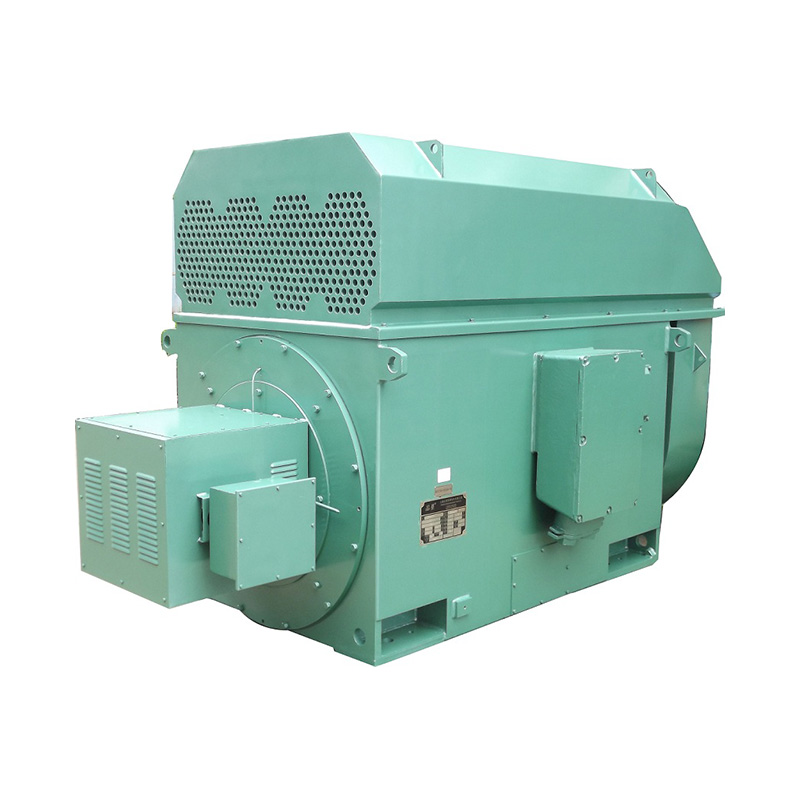
Maintaining Liquid Rheostat Systems
In many heavy-duty wound rotor induction motor applications, a liquid rheostat is used to provide step-less acceleration. This system uses an electrolyte solution (typically soda ash and water) to vary resistance. Troubleshooting this system involves monitoring the electrolyte level and specific gravity. If the resistance fluctuates unexpectedly, it may be due to electrode corrosion or a change in fluid concentration. Unlike solid-state resistors, liquid rheostats require attention to cooling systems to prevent boiling or evaporation of the electrolyte.
| Maintenance Aspect | Liquid Rheostat | Solid-State Resistor Bank |
| Cooling Requirement | Requires heat exchanger or cooling tank to manage electrolyte temperature. | Relies on passive airflow; fans may be used for high-duty cycles. |
| Fluid Maintenance | Must monitor specific gravity and fluid level; periodic replacement needed. | No fluids; maintenance is purely electrical (checking connections). |
| Wear Components | Electrodes degrade over time and require resurfacing or replacement. | Resistance elements can fail due to thermal cycling or vibration. |
Starting Mechanisms and Speed Control Issues
The primary reason for selecting THREE PHASE WOUND ROTOR MOTORS is their ability to develop high slip ring motor starting torque while drawing low starting current from the line. This is achieved by inserting external resistance into the rotor circuit. However, if the secondary circuit is not properly maintained, the motor may fail to start or may accelerate too sluggishly, causing thermal stress. Troubleshooting starting issues involves verifying the continuity of the rotor circuit and the operation of the contactors that step out the resistance. If the motor starts but immediately trips on overload, it may indicate that the resistance steps are not shorting out, effectively leaving the motor in a high-slip, low-speed state.
- Test rotor continuity by measuring resistance across the slip rings with brushes lifted.
- Check the operation of secondary contactors or shorting contactors for timing issues.
- Inspect terminal connections in the resistor bank for oxidation or looseness.
- Monitor the stator current during start-up to ensure it drops predictably as resistance is removed.
- Ensure the liquid rheostat wound rotor motor electrodes move smoothly without binding.
Troubleshooting Speed Control Problems
While wound rotor motor speed control is less common in modern VFD-dominated applications, it is still achieved by varying the rotor resistance. Issues in this area often manifest as the motor unable to reach full speed or running unstable at specific resistance settings. This can be caused by a broken resistor grid or a shorted winding turn within the rotor itself. In older systems utilizing magnetic amplifiers or regulators, component drift can lead to hunting or oscillation in motor speed. Diagnosing these faults requires isolating the external resistance to determine if the fault lies in the control gear or the motor windings.
| Symptom | External Circuit Fault | Internal Motor Fault |
| Motor fails to reach full speed | Open resistor in the secondary circuit or contactor failing to close. | High resistance connection in the rotor leads or broken rotor bars. |
| Speed instability (hunting) | Controller feedback error or worn contacts causing resistance fluctuation. | Intermittent short in rotor winding or fluctuating brush contact. |
| Overheating at reduced speed | Incorrect resistance selection leading to high slip losses. | Insufficient ventilation or blocked cooling passages internally. |
Electrical Faults and Thermal Management
A high slip wound rotor motor operates with significant slip (difference between synchronous and actual speed) when resistance is in the circuit. This operation generates substantial heat within the rotor windings. Thermal management is therefore a critical aspect of troubleshooting. Excessive heat can degrade insulation, leading to ground faults or short circuits between turns. It is vital to monitor the temperature of the rotor and bearing assemblies. Additionally, vibration analysis serves as a key diagnostic tool; high vibration levels can damage the insulation systems over time and lead to premature bearing failure.
- Perform regular insulation resistance (IR) and polarization index (PI) tests on stator and rotor.
- Monitor bearing temperatures using embedded RTDs or thermocouples if available.
- Conduct vibration analysis to detect imbalance, misalignment, or bearing wear.
- Check for signs of shaft current or grounding issues which can damage bearings.
- Ensure ventilation ducts are clear of obstructions to facilitate heat dissipation.
Vibration Analysis and Mechanical Integrity
Mechanical faults often manifest as electrical issues in large motors. For THREE PHASE WOUND ROTOR MOTORS, the unique slip ring assembly located at the non-drive end adds mass to the rotor shaft. Any imbalance here can lead to significant vibration. Technicians must distinguish between vibration caused by electrical faults (e.g., loose rotor bars) and mechanical faults (e.g., bearing looseness or coupling misalignment). A phase analysis (turning the motor on and off to see if vibration disappears instantly) is a standard technique to differentiate these causes.
| Vibration Characteristic | Electrical Origin | Mechanical Origin |
| 1X RPM Frequency | Could indicate soft foot or static eccentricity. | Common indication of unbalance or misalignment. |
| 2X Line Frequency (100/120Hz) | Strong indicator of air gap irregularity or static eccentricity. | Looseness (mechanical) often shows harmonics, but not specifically 2x line freq. |
| Passband/Sidebands | Presence of pole pass sidebands suggests broken rotor bars. | Wear in rolling element bearings generates specific high-frequency harmonics. |
Common Failures in Specific Applications
In the field, wound rotor induction motor applications present unique challenges based on the environment. In cement plants, for instance, dust ingress can clog the cooling fins and contaminate the slip rings, leading to flashovers. In marine environments, saltwater corrosion can attack the slip ring contacts and terminal boxes. Troubleshooting in these contexts requires not only fixing the immediate electrical fault but also mitigating the environmental root cause. This may involve upgrading ingress protection (IP) ratings, installing positive ventilation systems, or switching to sealed brushless designs where applicable.
- Assess environmental contaminants (dust, moisture, chemicals) affecting motor performance.
- Review maintenance logs for recurring failures to identify systemic issues.
- Evaluate if the load characteristics match the motor's torque-speed curve.
- Consider modernization options such as converting to a VFD-driven squirrel cage motor for improved efficiency.
- Ensure proper grounding of the rotor circuit to prevent bearing fluting.
Conclusion
Maintaining THREE PHASE WOUND ROTOR MOTORS for long-term reliability requires a holistic approach that combines electrical expertise with mechanical diligence. From the precise maintenance of the slip ring brush gear to the careful management of secondary resistance and thermal loads, each component plays a vital role in the motor's performance. By adhering to strict inspection protocols and utilizing modern diagnostic tools like vibration analysis and insulation testing, operators can prevent catastrophic failures. As the industry moves towards higher efficiency standards, companies like Shanghai Pinxing Explosion-proof Motor Co., Ltd. continue to innovate, ensuring that these robust machines meet the rigorous demands of modern industrial applications while delivering exceptional longevity and reliability.
FAQ
What are the signs that the slip rings need resurfacing?
Signs that slip rings require resurfacing include visible grooving or scoring on the surface, excessive sparking at the brushes that persists despite brush replacement, or a noticeable rise in brush temperature during operation. Uneven wear patterns often indicate that the rings have become eccentric or conical. Resurfacing restores the concentricity and smooth surface finish necessary for optimal electrical contact.
How does a liquid rheostat improve motor starting?
A liquid rheostat wound rotor motor uses a liquid electrolyte solution to provide variable resistance in the rotor circuit. As the motor accelerates, the electrodes are gradually lifted or the concentration changes, smoothly reducing resistance. This allows the motor to develop maximum slip ring motor starting torque while limiting the starting current to a very low value, reducing stress on the power supply and mechanical drive train.
Can a wound rotor motor run with the slip rings shorted?
Yes, once the motor has reached full speed and the external resistance has been removed, the slip rings are typically shorted together via a contactor. This allows the motor to run similarly to a squirrel cage induction motor with full efficiency and minimal slip. However, running with shorted rings means the motor loses its ability to produce high starting torque on subsequent starts without re-introducing resistance.
Why is vibration monitoring critical for wound rotor motors?
Vibration monitoring is critical because the addition of slip rings and brushes adds mass to the rotor shaft, potentially creating imbalance. Moreover, the high slip ring motor starting torque and heavy loads in typical applications put significant stress on couplings and bearings. Vibration analysis helps detect issues such as rotor imbalance, bearing wear, or misalignment early before they lead to catastrophic insulation failure or shaft fracture.
What causes a wound rotor motor to overheat at low speeds?
When a high slip wound rotor motor operates at reduced speeds (due to inserted resistance), it dissipates a significant amount of energy as heat in the rotor resistors and the rotor windings themselves. If the motor operates in this high-slip state for too long without adequate cooling, the temperature will rise rapidly. Troubleshooting involves checking if the resistance is being removed properly as the motor accelerates and ensuring the cooling fan is moving sufficient air.

Get in Touch
Related Products
 Shanghai Pinxing
Explosion-proof Motor Co., Ltd.
-
 cai@pinxingmotor.com
-
 +86-21-57566731
-
 +86-21-57566967
-
 No.699, Pinxing Rd., Qinggang Industrial Zone, Fengxian District, Shanghai, China.(East Gate)
-
No. 168, Qingling Rd, Qinggang Industrial Zone, Qingcun Town, Fengxian District, Shanghai, China (South Gate)
Copyright@ 2024 Shanghai Pinxing Explosion-proof Motor Co., Ltd. All Rights Reserved.
Privacy