- 中文网站请点击 http://www.pinxinggroup.com
-
 +86-21-57566731
-
 cai@pinxingmotor.com
-
 DOWNLOAD


 English
 русский
 Français
 عربى
عربى
Low Voltage Motors Guide: Efficiency, Selection and Applications 2026
Content
- 1 Efficiency Standards and the Global Regulatory Landscape
- 2 Calculating Motor Power Requirements: The R.I.S.E Approach
- 3 Brushed Versus Brushless DC Motors for Low-Voltage Applications
- 4 Five Trends Driving Ultra-Low Voltage Motor Demand
- 5 Bearing Selection and Mechanical Considerations
- 6 Selection Decision Matrix by Application
- 7 Key Takeaways for Low Voltage Motor Selection
Conclusion first: For industrial applications, selecting an IE3 or IE4 premium-efficiency low voltage motor is the optimal path forward, delivering energy loss reductions of up to 40% compared to older-generation motors. The EU Ecodesign Regulation (EU) 2019/1781 now mandates IE4 for motors from 75 kW to 200 kW, and IE3 for a broad range from 0.75 kW to 1000 kW. When selecting a motor, do not default to old nameplate ratings; recalculate load torque characteristics and duty cycle to avoid oversizing, a common cause of efficiency waste. For emerging automation applications below 60V such as mobile robots and semiconductor wafer handling, ultra-low voltage brushless DC motors offer compact precision that induction motors cannot match.
Efficiency Standards and the Global Regulatory Landscape
Low voltage motors, defined as those operating below 1000 V, are subject to increasingly stringent Minimum Energy Performance Standards (MEPS) worldwide. The EU Ecodesign Regulation (EU) 2019/1781 represents the comprehensive framework, implemented in two steps: Step 1 from July 2021, and Step 2 from July 2023, which expanded scope and tightened requirements for 50 Hz and 60 Hz three-phase single-speed motors rated up to 1000 V operating in continuous duty (S1, S3 ≥ 80%, S6 ≥ 80%).
From July 1, 2023, IE4 efficiency class became mandatory for 2, 4, and 6-pole motors with rated output from 75 kW to 200 kW, while IE3 is mandatory for motors from 0.75 kW to 1000 kW (excluding the 75-200 kW range covered by IE4), as well as for 8-pole motors up to 1000 kW, increased safety motors (Ex eb), flameproof motors (Ex ec, Ex d, Ex de, Ex t), brake motors with external brake, and Totally Enclosed Air Over (TEAO) designs.
Many countries outside the EU have implemented their own MEPS aligned with IE-classifications, enabling straightforward efficiency comparisons between manufacturers .
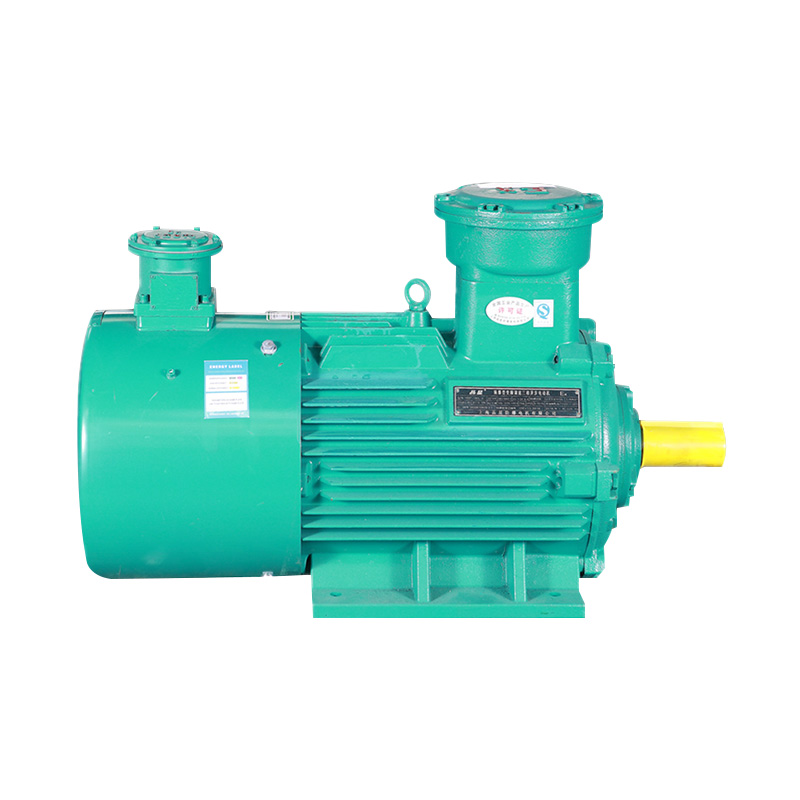
What Distinguishes IE3 and IE4 Motor Design
IE3 and IE4 motors achieve higher efficiency through optimized internal design and improved conductive materials. This higher efficiency reduces rated motor current for any given kilowatt rating. For applications requiring direct-on-line (DOL) starting, the AC-3e utilization category was specifically developed for IE3/IE4 premium-efficiency motors, providing higher performance than the standard AC-3 category to accommodate potentially increased inrush and starting current characteristics .
| IE Class | Efficiency Level | EU Ecodesign 2023 Status |
|---|---|---|
| IE1 | Standard Efficiency | Phased out for new installations |
| IE2 | High Efficiency | Limited use; only with Variable Speed Drive |
| IE3 | Premium Efficiency | Mandatory for 0.75-1000 kW (excluding 75-200kW IE4 range) |
| IE4 | Super Premium Efficiency | Mandatory for 75-200 kW (2,4,6 pole) |
Calculating Motor Power Requirements: The R.I.S.E Approach
Before selecting a motor, you must determine speed and load torque characteristics of the application. Induction motors are typically single-speed machines where the synchronous speed depends on supply frequency and stator pole count, calculated as: Speed (rpm) = Frequency (Hz) x 60 / Pole pairs. For example, a four-pole motor on a 50Hz supply yields a synchronous speed of 1500 rpm, with actual full-load speed typically 2-4% lower due to slip [citation:8].
When variable-speed drives (VSDs) are used, both operating speeds must be considered, as these affect cooling arrangements and bearing selection. Once speed parameters are defined, power can be calculated using: Power (kW) = Speed (rpm) x Torque (Nm) / 9550 [citation:8].
Three Fundamental Load Torque Characteristics
- Constant Torque: The load requires relatively fixed torque after starting and accelerating to running speed. Typical applications include elevators, hoists, conveyors, and positive displacement pumps. Sizing is based on the continuous torque requirement at running speed.
- Linear Torque: Torque varies proportionally with speed. Applications include paper processing, textile rolling, and extruders. Sizing is based on the continuous load, which typically occurs at speed.
- Variable (Quadratic) Torque: Torque increases with the square of speed. This occurs where gas or liquid friction is involved, such as blowers, fans, and centrifugal pumps. In these applications, significant energy savings can be achieved by adjusting motor speed with a VSD rather than using a throttle or slide valve to control flow .
Duty Cycle Classification According to IEC 60034-1
IEC 60034-1 defines ten duty types from S1 to S10. S1 (continuous duty) indicates operation at constant load for sufficient time to reach thermal equilibrium. S3 (intermittent periodic duty), included in the Ecodesign scope when ≥80%, involves operation with starting and braking periods that do not significantly affect heating. Accurately classifying duty cycle prevents oversizing and ensures thermal capacity matches operational reality .
Brushed Versus Brushless DC Motors for Low-Voltage Applications
For low-power applications below 60V, the choice between brushed and brushless DC motors affects service life, maintenance requirements, and control complexity.
Brushed DC Motor Characteristics
Brushed DC motors use permanent field magnets in the stator and armature windings on the rotor, with commutation achieved through brushes sliding on commutator segments. This system requires only DC voltage to operate and connects directly to a battery. However, brush-type motors have key limitations: service life typically ranges from 1000 to 5000 hours, and speed is generally below 10,000 rpm . Higher speeds accelerate brush and commutator wear through increased friction, brush bounce, and arcing that erodes contact surfaces .
Brushless DC Motor Advantages
Brushless motors reverse the configuration: permanent magnets rotate on the rotor while windings remain stationary. An electronic controller continuously varies stator current based on rotor position, sensed via Hall-effect devices, encoders, or back-EMF detection. Service life and speed are limited primarily by bearings, with 20,000 hours of operation and 50,000 rpm being common specifications . Two commutation methods exist: block commutation, which has lower cost but higher torque ripple; and sinusoidal commutation, which provides smooth operation even at low speeds, suitable for precision positioning and servo applications .
Five Trends Driving Ultra-Low Voltage Motor Demand
Ultra-low voltage (ULV) motors, defined as those operating at ≤60V, represent a growing segment driven by automation advances in mobile robotics, warehouse systems, and precision manufacturing. Analysis from industry researchers indicates market expansion driven by five converging factors .
- Growth of Mobile Robotics: AGVs and AMRs deployed across logistics, warehousing, and industrial environments rely on compact, battery-powered motion systems balancing efficiency, torque, and safety in human-centric settings .
- Warehouse Automation Recovery: Following a short-term investment downturn, warehouse automation is projected to rebound from 2026, driven by AS/RS, automated sortation, and mobile robotics that increasingly depend on ULV motion components for safety compliance and compact integration .
- Semiconductor Manufacturing Expansion: Wafer handling and photolithography applications require the precision, reliability, and compact footprint that ULV motors and drives deliver. Products optimized for cleanroom compliance and ultra-low vibration are critical for these applications.
- Increasing Automation of Small Axes: OEMs are automating small subsystems previously left manual, particularly in packaging and electronics assembly. ULV motors offer modular, cost-effective solutions for adding automated secondary axes .
- Replacement of Pneumatic Systems: Pneumatic limitations in energy efficiency, precision, and maintenance are shifting the business case toward ULV electric alternatives in viable applications .
Bearing Selection and Mechanical Considerations
Axial and radial forces directly affect bearing lifetime. For high radial force applications, shaft dimensioning must also be verified. The two primary bearing types offer distinct characteristics.
| Bearing Type | Cost | Speed Capability | Load Handling | Temperature Range |
|---|---|---|---|---|
| Sintered Sleeve | Lower | Moderate | Low radial/axial loads only | Not below -20°C; not for vacuum |
| Ball Bearing | Higher | High (up to 10,000+ rpm) | High axial and radial loads | -20°C to +100°C (standard lubrication) |
Sintered sleeve bearings are economical and suited for continuous operation with low bearing loads, but should not be used with reversing duty, in vacuum environments, or with rotating loads. Ball bearings accommodate low-speed, high-speed (up to 10,000 rpm), continuous, reversing, and start-stop operation [citation:3].
Selection Decision Matrix by Application
The following matrix correlates typical low voltage motor applications with recommended motor types based on load characteristics and operational requirements.
| Application | Recommended Motor Type | Key Consideration |
|---|---|---|
| Centrifugal Pump or Fan | IE3/IE4 Induction + VSD | Quadratic torque; large energy savings from speed control |
| Conveyor or Hoist | IE3 Induction (Constant Torque) | Constant torque characteristic; check duty cycle (S1/S3) |
| Mobile Robot (AGV/AMR) | Brushless DC (≤60V ULV) | Battery-powered; requires compact integrated safety functionality |
| Semiconductor Wafer Handling | ULV Brushless Servo | Precision, low vibration, cleanroom compliant, absolute encoder |
| Small Axis Automation (Packaging) | ULV Integrated Motor-Drive | Modular, lower cost, easy integration for secondary axes |
Key Takeaways for Low Voltage Motor Selection
Selecting the correct low voltage motor requires systematic evaluation beyond simply matching nameplate ratings. Three principles should guide the process. First, efficiency class compliance is non-negotiable: verify that the motor meets regional MEPS requirements for your power range. Second, match motor characteristics to load behavior: calculate actual torque requirements across the speed range rather than defaulting to oversizing. Third, consider the entire lifecycle: the higher initial cost of an IE4 motor or brushless DC system is frequently offset by energy savings over the operational lifetime. For new automation projects involving mobile equipment or precision axes, ultra-low voltage brushless motors represent the direction of industry development. For fixed industrial loads, IE3 and IE4 induction motors paired with variable-speed drives provide the robust path to efficiency and regulatory compliance.

Get in Touch
Related Products
 Shanghai Pinxing
Explosion-proof Motor Co., Ltd.
-
 cai@pinxingmotor.com
-
 +86-21-57566731
-
 +86-21-57566967
-
 No.699, Pinxing Rd., Qinggang Industrial Zone, Fengxian District, Shanghai, China.(East Gate)
-
No. 168, Qingling Rd, Qinggang Industrial Zone, Qingcun Town, Fengxian District, Shanghai, China (South Gate)
Copyright@ 2024 Shanghai Pinxing Explosion-proof Motor Co., Ltd. All Rights Reserved.
Privacy