- 中文网站请点击 http://www.pinxinggroup.com
-
 +86-21-57566731
-
 ccc@pinxingmotor.com
-
 DOWNLOAD


 English
 русский
 Français
 عربى

Lubricating Electric Motor Bearings: Grease Grade, Quantity and Intervals
Content
- 1 Bearing Temperature Sets Grease Life, Not the Service Calendar
- 2 Select Grease by Thickener, Base Oil Viscosity and NLGI Grade
- 3 Grease Quantity: The 0.005 x D x B Rule and the 50 Percent Ceiling
- 4 Over-Greasing Causes More Failures Than Under-Greasing
- 5 A Relubrication Procedure That Keeps Contamination Out
- 6 Grease Strategy by Motor Type and Duty
- 7 Direct Answers to Common Field Questions
A 90 kW two-pole motor driving a cement mill separator fan was greased every 2,000 hours, yet its drive-end bearing still failed inside 14 months. The grease grade was correct. The quantity was not: roughly 180 g went into a cavity that needed about 60 g, and the churning that followed lifted the housing temperature from 68 °C to 91 °C.
Lubricating electric motor bearings comes down to four separate decisions: grease family, base oil viscosity, fill mass and service interval. Three out of four is not a pass. SKF's published bearing failure analysis, widely quoted across the reliability industry, attributes roughly one third of premature bearing failures to lubrication problems, whether the lubricant is the wrong type, missing, excessive or contaminated. On an industrial motor, each of those four decisions can be pinned to a number rather than a habit.
Bearing Temperature Sets Grease Life, Not the Service Calendar
Grease life in an electric motor bearing halves for every 10 °C rise in bearing temperature above 70 °C, so a machine running at 90 °C needs about four times the relubrication frequency of the same machine at 70 °C.
The mechanism is oxidation. Base oil reacts with oxygen roughly twice as fast for each additional 10 °C, and the thickener structure collapses once enough oil has bled away. A mineral-oil lithium grease that delivers 6,000 running hours at 70 °C delivers about 3,000 at 80 °C, 1,500 at 90 °C and 750 at 100 °C. Lithium-complex, polyurea and calcium sulfonate greases rated for 150 °C continuous shift the whole curve upward, but the slope does not change.
Read the temperature in the right place. A contact probe on the housing 10 mm from the bearing seat reads 5 to 10 °C below the outer ring, while an embedded PT100 reads the ring itself. Industrial motor datasheets commonly set a bearing alarm at 90 °C and a trip at 100 °C, which leaves very little margin for a grease whose continuous limit is 120 °C.
Select Grease by Thickener, Base Oil Viscosity and NLGI Grade
An NLGI 2 lithium-complex grease with a base oil viscosity of 100 to 150 cSt at 40 °C and a dropping point above 250 °C covers most horizontal industrial motors running with bearing temperatures below 90 °C.
Base oil viscosity follows the speed factor dm x n, the bearing bore in millimetres multiplied by shaft speed in rpm. Below 100,000, a 150 to 220 cSt oil keeps the rolling elements separated under load. Between 100,000 and 350,000, 100 to 150 cSt is the working band. Above 350,000, grease lubrication runs out of road and the application moves to oil mist or oil circulation.
| Thickener family | Continuous bearing temperature | Water resistance | Mixing rule |
| Lithium 12-hydroxystearate | 120 °C | Fair | Miscible with lithium complex |
| Lithium complex | 150 °C | Good | Miscible with simple lithium soap |
| Polyurea | 150 °C | Good | Not miscible with any lithium soap |
| Calcium sulfonate complex | 160 °C | Excellent | Generally not miscible with lithium |
Read the DIN 51825 designation before ordering. In KP2K-30, KP marks a rolling bearing grease with extreme pressure additives, 2 is the NLGI class, K is the water resistance class and -30 is the lowest service temperature in °C. The ISO 6743-9 code L-XBCHA2 carries the same information in a different order.
Grease Quantity: The 0.005 x D x B Rule and the 50 Percent Ceiling
The starting mass for a ball bearing is G = 0.005 x D x B grams, where D is the bearing outside diameter and B the width in millimetres, and the fill must stay at or below 50 percent of the free space in the bearing and housing combined.
A technician who pumps 100 g into the same nipple has tripled the specification without changing the grease grade, and the bearing will run hotter for it. The calculation is not an estimate to be rounded up; it is the ceiling for the cavity.
- Initial fill of an open bearing and housing: 30 to 50 percent of free space, which is 33 g for the 6316 example.
- Re-greasing through a nipple: the same calculated mass, delivered slowly, with displaced grease allowed to purge.
- Vertical shaft motors: half the horizontal mass, because gravity carries surplus grease toward the winding end.
- 2RS and 2Z bearings: sealed for life, no nipple, replace the bearing rather than lubricate it.
Over-Greasing Causes More Failures Than Under-Greasing
Over-greasing raises bearing temperature by 10 to 15 °C immediately after the grease is applied and is the more common cause of failure on motors with scheduled or automatic lubrication.
Excess grease cannot escape the cage area, so the rolling elements churn it instead of rolling through it. The pressure that builds can push past labyrinth seals and V-rings, and on an open motor the surplus lands on the winding. Grease held hot for weeks oxidises into a hard varnish that blocks the drain path, so the next service makes the problem worse rather than better.
Under-greasing signs
- Metallic whine that rises with load
- Temperature climbing slowly across weeks
- Dry, dark or glazed raceway on inspection
- Failure at the calculated interval, not before
Over-greasing signs
- Temperature spike of 10 to 15 °C right after service
- Grease weeping from seals and V-rings
- Fresh grease on windings or in the terminal box
- Hard, carbonised deposits around the drain
A Relubrication Procedure That Keeps Contamination Out
Relubricate with the motor at normal operating temperature where the plant permits it, add the calculated mass slowly over 30 to 60 seconds while the shaft turns, and judge the result after 30 minutes of running rather than after 3.
- Isolate and lock out the drive. On Ex d motors, confirm gas clearance and follow the certificate conditions before opening any plug.
- Wipe the grease nipple and the gun coupler with a lint-free cloth. One grain of grit at the nipple ends up in the raceway.
- Confirm the grease in the gun matches the label on the motor and the compatibility column in the table above.
- Add the calculated mass in slow strokes and stop when pressure rises or the relief plug shows fresh grease.
- Remove the relief or drain plug before greasing on motors that have one, and refit it after the purge.
- Run for 30 minutes and record housing temperature. A rise above 15 °C over the pre-service value means the cavity is overfilled.
- Log date, grease grade, mass and running hours, then set the next interval from the temperature trend rather than the calendar.
- Clean the nipple and refit the cap before the motor returns to service.
Lubrication sits inside a wider maintenance schedule that also covers insulation resistance and cooling airflow; the electrical side of the same programme is set out in these preventive maintenance routines for AC induction motors.
Grease Strategy by Motor Type and Duty
Two-pole machines, variable frequency drive motors and vertical-shaft units need shorter intervals and often a different grease than a standard four-pole horizontal motor.
Two-pole and high-speed machines
At 3,000 rpm a 6316 bearing reaches a dm x n value of 510,000, above the practical grease limit. Machines in this band run on oil mist, or on a low-viscosity NLGI 1 grease with intervals halved against the four-pole figure.
Variable frequency drive duty
A drive adds harmonic heating of 10 to 20 °C at the bearing and, at 400 V and above, shaft voltage high enough to pit a raceway. Grease choice does not stop electrical discharge; a hybrid bearing with ceramic balls, or one insulated bearing per shaft, does.
Standard low voltage frames
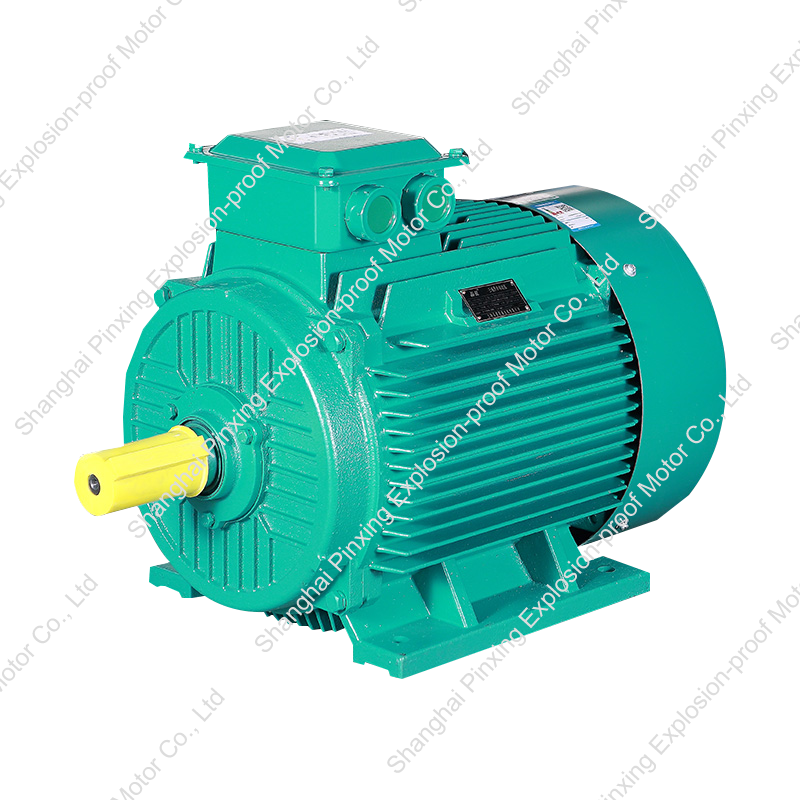
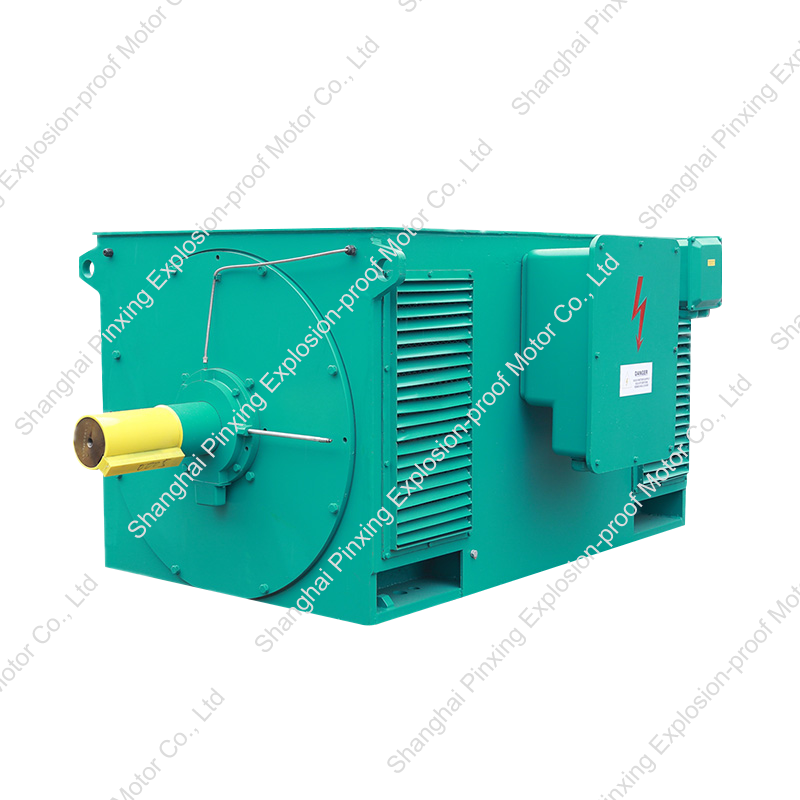
Frames built for continuous duty, such as the YE4 series, publish the grease grade and relubrication interval on the nameplate and in the manual, so the plant standard can be checked against the source document rather than inherited from a previous motor.
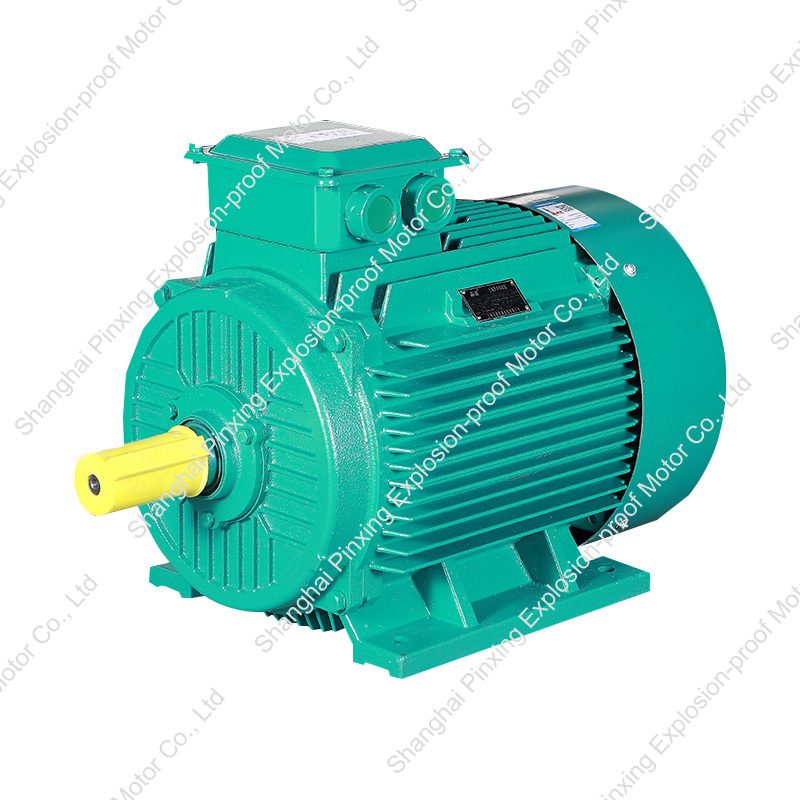 IE4 Series High Efficiency Three Phase Induction MotorThis IE4 motor series covers efficiency class, output range, voltages, protection and mounting options for comparing documented plant standards.View Product →
Explosion-proof machines
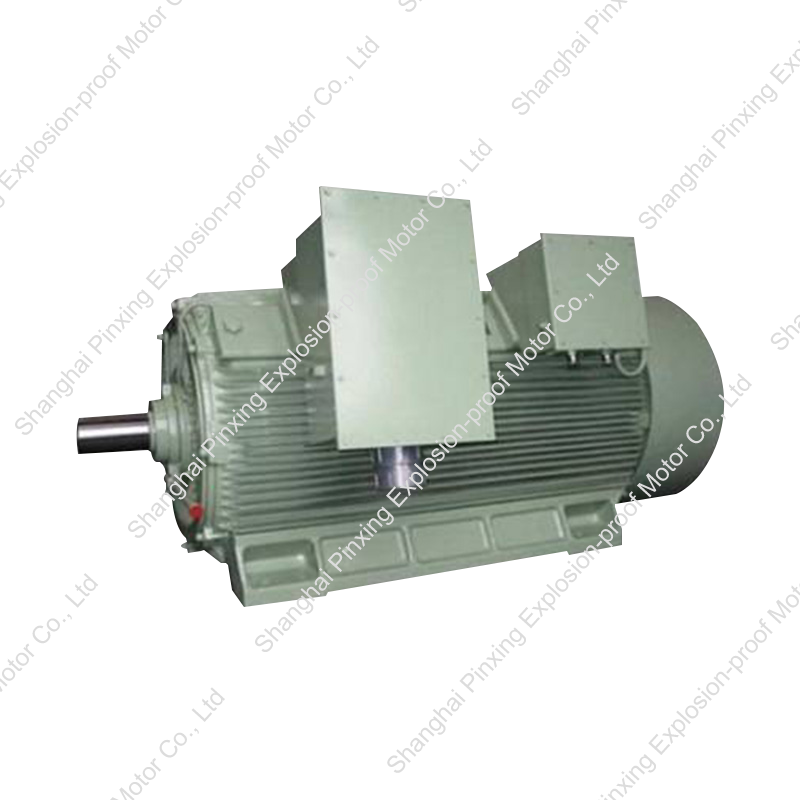
On Ex d motors certified to IEC 60079-1, regreasing devices form part of the certification: only the grease named in the certificate may be used, surplus grease must not enter the flameproof enclosure, and lubrication is carried out with the machine isolated. Low voltage Ex d frames such as the YBX4 series carry drain arrangements designed for exactly this sequence.
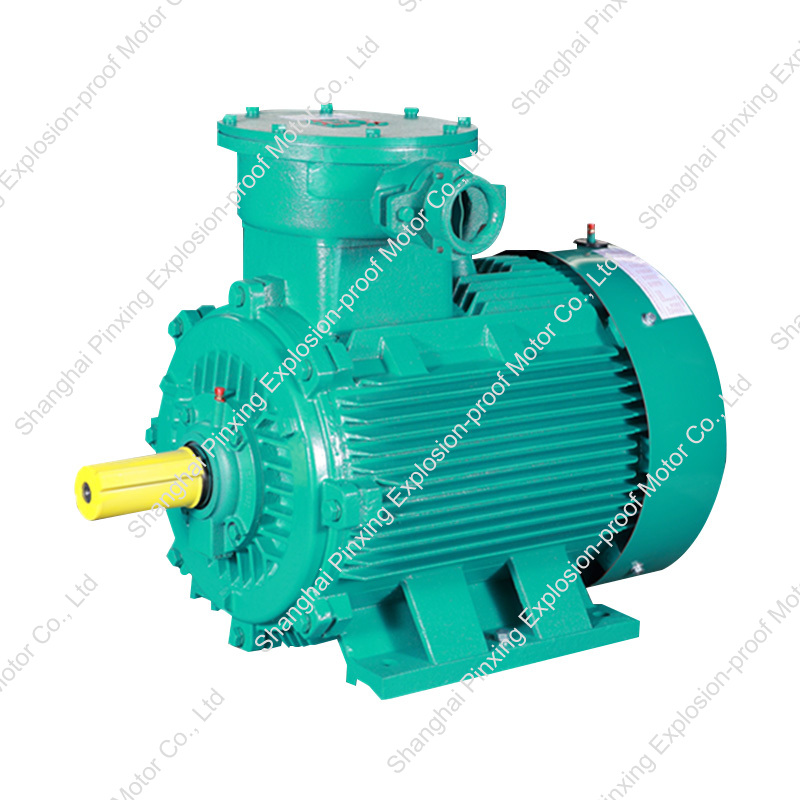 YBX4 Series Low Voltage Explosion-Proof MotorThis low-voltage explosion-proof motor is intended for hazardous gas or dust locations, with frame sizes 80–355 mm and outputs 0.75–355 kW.View Product →
High voltage and large frame machines
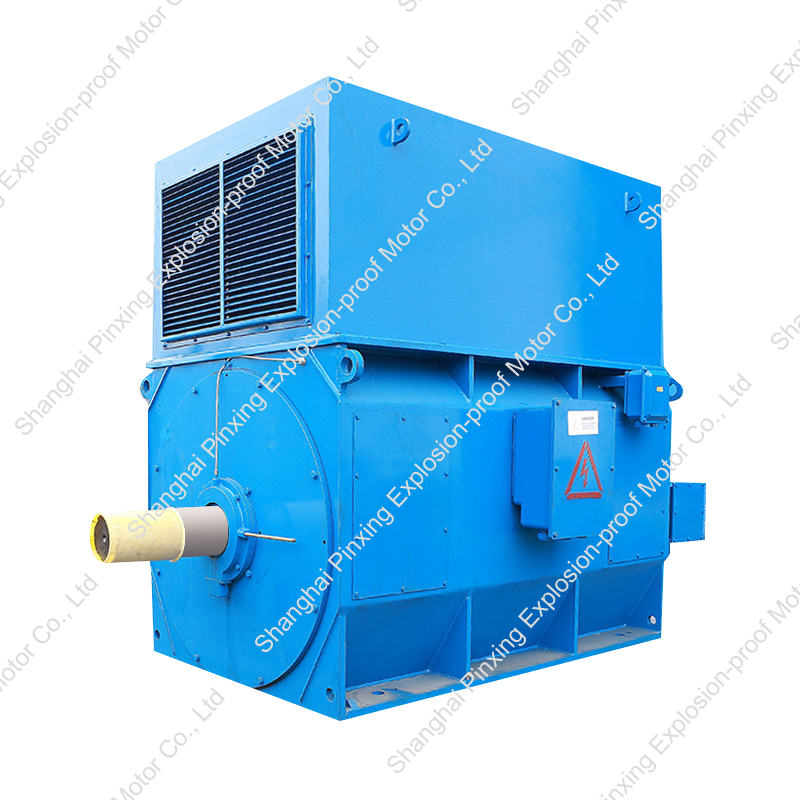
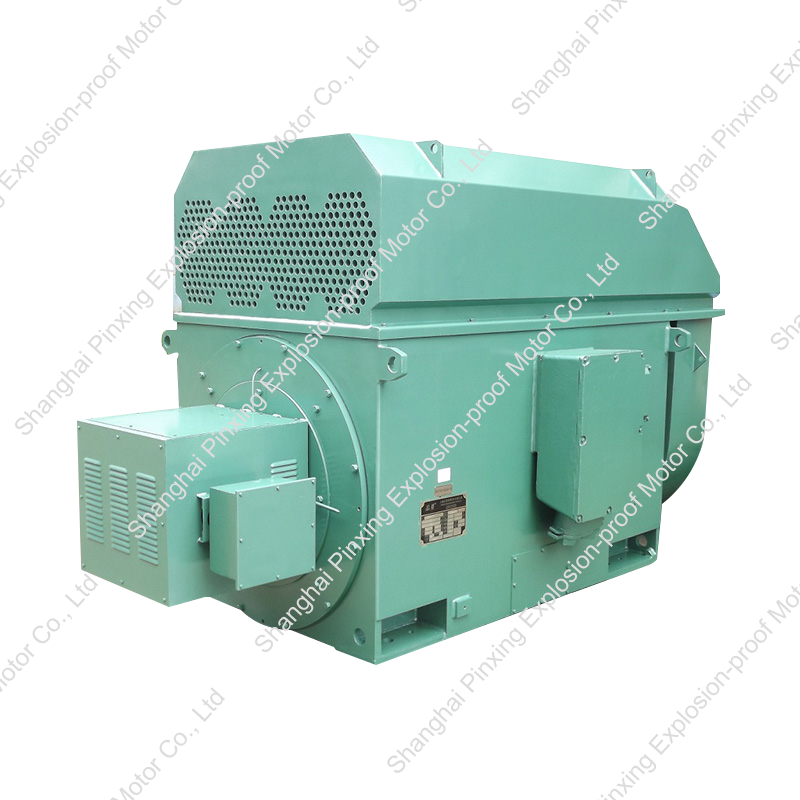
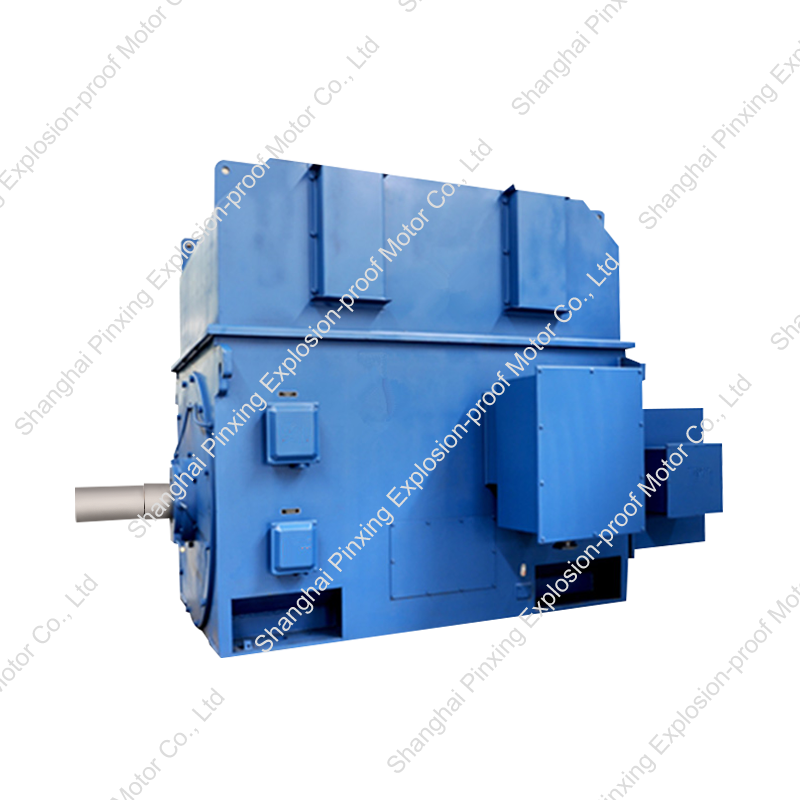
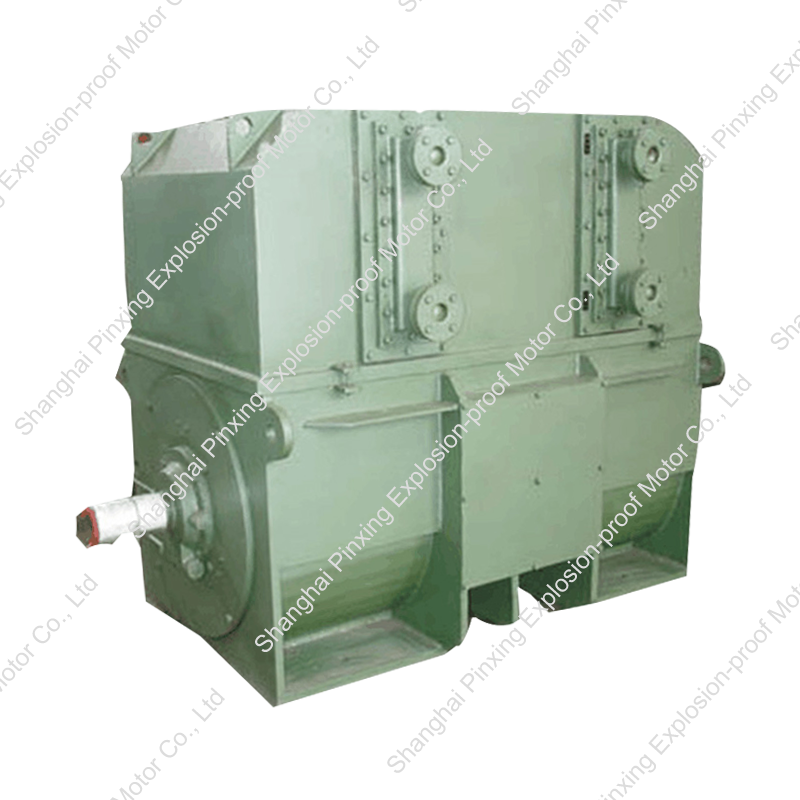
Above roughly 1,000 kW, many high voltage machines move to oil-lubricated sleeve bearings with forced circulation, where the grease rules above no longer apply and oil flow, filtration and water content take over. Large squirrel cage machines such as the YKK series are specified either way depending on frame size and speed.
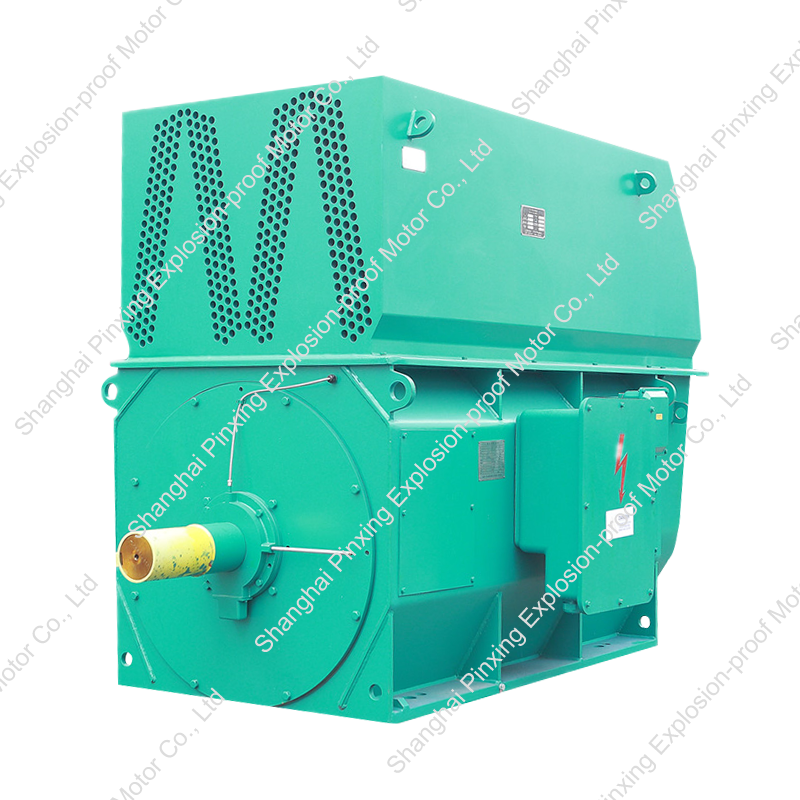 YKK Series High Voltage Squirrel Cage Induction MotorThis high-voltage squirrel cage motor suits fans, compressors, pumps and crushers, with outputs from 185 to 4000 kW and frame heights to 1000 mm.View Product →
Documented field cases from process plants show the same pattern repeatedly: the failures cluster on machines where the interval was set by calendar and never adjusted for measured bearing temperature.
Direct Answers to Common Field Questions
How often should electric motor bearings be greased?
Start from 4,000 to 6,000 running hours for a four-pole horizontal motor at 70 °C bearing temperature, halve that figure for each additional 10 °C, halve it again for a vertical shaft, and cap the interval at 12 months regardless of running hours. Confirm the result against the motor datasheet before changing a plant standard.
Can lithium and polyurea greases be mixed?
No. Lithium complex and polyurea thickeners are incompatible, and a 50/50 blend can soften by one or two NLGI grades while losing 30 to 50 °C of dropping point, so the mixture runs straight out of the housing. Purge the entire grease line and the bearing cavity when switching families.
How much grease goes into a 6316 bearing?
33 g for an initial fill, calculated as 0.005 x 170 x 39. The same mass applies at each re-greasing, delivered slowly with the drain plug open so displaced grease can escape.
Which is worse, too little or too much grease?
Too much. Overfilling raises bearing temperature by 10 to 15 °C, pushes seals out and carbonises into varnish, while under-greasing fails slowly and audibly, usually with enough warning to schedule a repair. On motors with automatic lubricators, the overfill risk is the one to control first.
The four decisions behind lubricating electric motor bearings, grade, viscosity, mass and interval, are all measurable, and every one of them can be recorded on a label. Once the mass is written in grams and the interval is tied to a measured bearing temperature, lubrication stops being a habit and becomes a specification that a new technician can follow correctly on the first attempt.

Get in Touch
Related Products
 Shanghai Pinxing
Explosion-proof Motor Co., Ltd.
-
 ccc@pinxingmotor.com
-
 +86-21-57566731
-
 +86-21-57566967
-
 No.699, Pinxing Rd., Qinggang Industrial Zone, Fengxian District, Shanghai, China.(East Gate)
-
No. 168, Qingling Rd, Qinggang Industrial Zone, Qingcun Town, Fengxian District, Shanghai, China (South Gate)
Copyright@ 2024 Shanghai Pinxing Explosion-proof Motor Co., Ltd. All Rights Reserved.
Privacy