- 中文网站请点击 http://www.pinxinggroup.com
-
 +86-21-57566731
-
 cai@pinxingmotor.com
-
 DOWNLOAD


 English
 русский
 Français
 عربى
عربى
What Are Three Phase Wound Rotor Motors?
Content
- 1 Introduction: A Powerful and Controllable Workhorse
- 2 Core Principles: How Does a Wound Rotor Motor Work?
- 3 Key Advantages and Operational Characteristics
- 4 Primary Applications Across Industries
- 5 Maintenance, Repair, and Modernization Considerations
- 6 Why Partner with a Specialist for Your Wound Rotor Needs?
- 7 Selecting the Right Motor: Is a Wound Rotor Design for You?
- 8 FAQ
- 8.1 What is the main difference between a wound rotor and a squirrel cage induction motor?
- 8.2 How does adding external resistance to a wound rotor motor improve starting torque?
- 8.3 Can wound rotor motors be used with variable frequency drives (VFDs)?
- 8.4 What are the typical maintenance tasks for slip rings and brushes?
- 8.5 Are wound rotor motors still relevant with modern motor control technology?
Introduction: A Powerful and Controllable Workhorse
In the vast landscape of industrial electrification, certain technologies stand out for their unique blend of robust performance and precise controllability. Among these is the THREE PHASE WOUND ROTOR MOTOR, a type of induction motor distinguished by its wound rotor windings connected to external slip rings. Unlike the more common squirrel cage motor with its simple, shorted rotor bars, the wound rotor design offers engineers a high degree of influence over the motor's starting torque, starting current, and operational speed. This makes it a historically significant and still highly relevant solution for driving heavy machinery that presents high inertial loads or requires smooth, controlled acceleration. From the massive hoists in shipyards to the grinding mills in cement plants, THREE PHASE WOUND ROTOR MOTORS have proven their mettle in the most demanding applications. While modern variable frequency drives (VFDs) have expanded control options for standard motors, the inherent characteristics of the wound rotor motor ensure it remains the preferred—and often irreplaceable—choice for specific industrial challenges, particularly where high starting torque is non-negotiable and electrical grid stress must be minimized. Understanding its operation, advantages, and ideal applications is key for engineers and plant managers tasked with selecting the optimal drive system.
- Defining Feature: A three-phase induction motor with rotor windings terminated to external slip rings and brushes.
- Key Advantage: Provides external access to the rotor circuit for control of torque, current, and speed.
- Historical Pillar: A classic solution for heavy-industry drives with a enduring legacy of reliability.
- Modern Niche: Remains critically important for applications where its specific starting and control characteristics are unmatched.
Core Principles: How Does a Wound Rotor Motor Work?
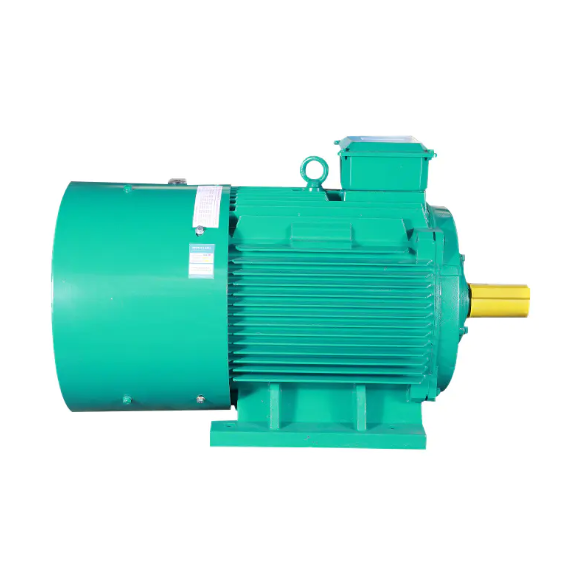
The operation of a THREE PHASE WOUND ROTOR MOTOR follows the fundamental principles of electromagnetic induction, with a crucial twist in the rotor's construction. Like all three-phase induction motors, it consists of a stationary stator with windings that create a rotating magnetic field when energized. The key difference lies in the rotor. Instead of cast-aluminum bars, the rotor is wound with a three-phase winding, similar to the stator, and the ends of these windings are connected to three slip ring three phase motor components mounted on the rotor shaft. Carbon brushes riding on these slip rings provide an electrical connection from the rotating rotor to an external, stationary circuit. During start-up, this external circuit is typically connected to a set of resistors. By inserting resistance into the rotor circuit, the rotor current's phase and magnitude are altered, which directly controls the motor's torque and limits its inrush current. This ability to manipulate the rotor circuit is the source of the motor's most celebrated trait: its capability to function as a high torque wound rotor induction motor directly from startup. As the motor accelerates, the external resistance can be gradually reduced, smoothly bringing the motor up to speed with minimal mechanical and electrical stress.
- Stator: Creates the rotating magnetic field from the three-phase AC power supply.
- Wound Rotor: Features insulated windings instead of simple bars; the heart of its controllability.
- Slip Rings & Brushes: The critical interface that allows external electrical access to the rotating rotor circuit.
- External Rotor Circuit: Typically starts as a resistor bank, enabling control over starting characteristics.
Key Advantages and Operational Characteristics
The design of the THREE PHASE WOUND ROTOR MOTOR confers several distinct operational advantages, primarily centered on start-up performance and speed control. Its most significant benefit is the ability to produce very high starting torque while drawing relatively low starting current from the line. This is achieved by inserting maximum resistance into the rotor circuit at standstill. This high torque at low speed makes it the quintessential high torque wound rotor induction motor, perfectly suited for breaking away heavy loads like those found in crushers or for precisely controlling the descent of a heavy hook on a crane and hoist wound rotor motor. Furthermore, it offers effective, albeit somewhat less efficient, wound rotor motor speed control. By varying the resistance in the rotor circuit, the motor's speed-torque curve is shifted, allowing the motor to operate at reduced speeds under load. While this method dissipates power as heat in the resistors, it is a simple and robust form of control. More advanced systems, like electronic slip recovery systems, capture this slip energy and feed it back to the supply, improving efficiency. The combination of high breakaway torque, controlled acceleration, and adjustable speed makes it a versatile solution for complex drive requirements.
| Characteristic | Wound Rotor Motor (with external resistance) | Standard Squirrel Cage Motor |
| Starting Torque | High (can exceed 200% of full-load torque) | Moderate (typically 150-200% FLT) |
| Starting Current | Low (can be limited to near full-load current) | Very High (500-800% of FLC) |
| Speed Control | Possible via rotor resistance or slip recovery. | Requires a Variable Frequency Drive (VFD). |
| Initial Cost & Complexity | Higher due to wound rotor, slip rings, and external controls. | Lower, simpler construction. |
Primary Applications Across Industries
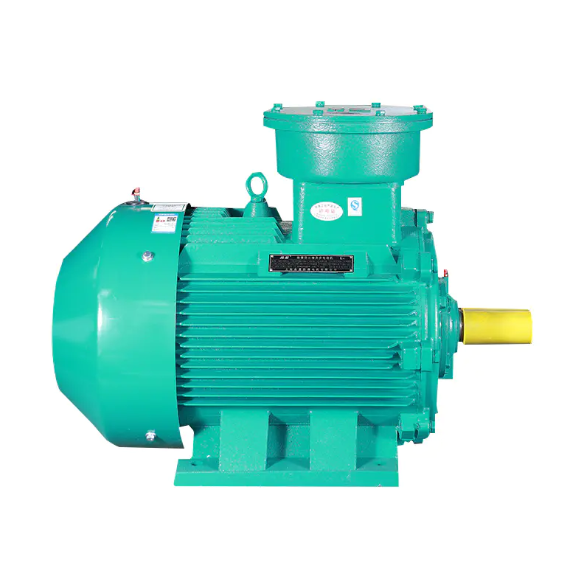
The specific advantages of THREE PHASE WOUND ROTOR MOTORS dictate their application across several heavy industries. They are synonymous with heavy-duty material handling. The precise control over torque and acceleration is critical for a crane and hoist wound rotor motor, ensuring smooth lifting, lowering, and positioning of heavy loads without jerking or swaying. They are equally vital for driving long conveyors, especially those that must start under full load. In industrial process control, they are found driving large pumps, fans, and compressors where a soft, controlled start is necessary to prevent water hammer or excessive mechanical stress. High-inertia applications like ball mills in mining and cement, crushers in aggregate processing, and large extruders in plastics manufacturing rely on the immense breakaway torque of a high torque wound rotor induction motor to get massive rotating loads into motion. In specialized environments like mines or chemical plants where explosive atmospheres exist, these motors can be manufactured with flameproof or increased-safety enclosures to ensure safe operation.
- Material Handling: Cranes, hoists, winches, and heavy-conveyor systems.
- Mineral Processing: Crushers, grinding mills (ball/rod mills), and rotary kilns.
- Process Industries: Large pumps, compressors, fans, and mixers with high-inertia starts.
- Marine & Offshore: Deck machinery such as windlasses and capstans.
Maintenance, Repair, and Modernization Considerations
While robust, the slip ring three phase motor introduces specific maintenance points not found in squirrel cage designs. The primary wear components are the slip rings and carbon brushes. Regular inspection and maintenance are crucial to prevent excessive arcing, uneven wear, and ultimately motor failure. Brushes must be checked for length, free movement in their holders, and proper spring tension. Slip rings should be kept clean and smooth; grooving or pitting may necessitate machining or replacement slip rings for wound rotor motor. Bearing maintenance and vibration monitoring are also standard. When a failure occurs, the decision between repair and modernization is key. A full rewind of the stator and rotor, along with refurbishing the slip rings, can restore the motor to like-new condition. However, for applications where energy efficiency or more precise speed control is desired, modernization projects may involve retrofitting the motor with a solid-state slip energy recovery system or even pairing a simplified wound rotor design with a modern VFD, combining the motor's excellent starting characteristics with efficient, wide-range speed control.
Why Partner with a Specialist for Your Wound Rotor Needs?
Specifying, procuring, and maintaining THREE PHASE WOUND ROTOR MOTORS requires a partner with deep engineering expertise and proven manufacturing capability. These are not commodity items but engineered solutions for critical industrial processes. An ideal partner is a high-tech enterprise specializing in the design, research and development, and manufacturing of a comprehensive range of motor technologies. Such a manufacturer brings invaluable application knowledge from sectors like mining, metallurgy, cement, shipping, and heavy machinery. Their portfolio should encompass not only standard designs but also custom-engineered solutions, including explosion-proof versions for hazardous areas. With a history of supplying motors to a global market across diverse and demanding fields, a specialist manufacturer understands the nuances of torque curves, duty cycles, and environmental challenges. They move beyond mere supply to act as a solution provider, focusing on energy conservation, efficiency, and integrated automation to deliver not just a motor, but a reliable, optimized drive system tailored for longevity and performance in your specific application, whether it requires a standard wound rotor motor speed control setup or a complex, modernized drive solution.
- Deep Application Engineering: Expertise tailored to heavy-industry challenges like high inertia and controlled starting.
- Comprehensive Product Range: Ability to provide the right motor, from high-voltage to explosion-proof variants.
- Global Performance Standards: Products designed and tested for reliability in the world's most demanding environments.
- Forward-Looking Solutions: A partner invested in efficiency and modernization, not just basic repair.
Selecting the Right Motor: Is a Wound Rotor Design for You?
Choosing a THREE PHASE WOUND ROTOR MOTOR involves a careful analysis of your drive requirements. Consider a wound rotor design if your application has: 1) Very high inertia, requiring breakaway torque that would stall a standard motor; 2) A need for controlled, smooth acceleration to protect mechanical systems; 3) Limitations on permissible inrush current from the power supply; or 4) A requirement for modest speed control under load with a simple, robust method. It is particularly dominant in applications like a crane and hoist wound rotor motor. For applications with constant speed and lower starting torque needs, a squirrel cage motor with a soft starter may be more economical. For applications requiring wide-range, efficient speed control, a squirrel cage motor with a VFD might be preferable. The decision matrix balances performance needs against initial cost, maintenance considerations, and long-term operational efficiency.
FAQ
What is the main difference between a wound rotor and a squirrel cage induction motor?
The fundamental difference lies in the rotor construction. A squirrel cage motor has a rotor made of solid, shorted bars, making it simple, rugged, and low-maintenance. A THREE PHASE WOUND ROTOR MOTOR has a rotor with insulated windings connected to slip ring three phase motor components. This allows external access to the rotor circuit. This access enables control over the motor's starting and speed characteristics by connecting external resistors or electronic controls, which is not possible with a squirrel cage rotor.
How does adding external resistance to a wound rotor motor improve starting torque?
At startup, adding resistance to the rotor circuit improves the phase relationship between the rotor current and the stator's magnetic field. This maximizes the torque produced at zero speed, creating a high torque wound rotor induction motor. Simultaneously, it limits the magnitude of the current drawn from the supply. As the motor accelerates, the resistance is gradually reduced to zero, allowing the motor to reach its full operating speed smoothly and efficiently.
Can wound rotor motors be used with variable frequency drives (VFDs)?
Yes, modern applications often combine the two technologies, but careful configuration is required. A VFD can be applied to the stator windings to provide efficient, wide-range wound rotor motor speed control. In such setups, the rotor windings are often short-circuited (bypassing the slip rings) after start-up, or they may be used with a specialized VFD that also manages the rotor circuit. This combination can offer the high starting torque of a wound rotor with the efficient speed control of a VFD.
What are the typical maintenance tasks for slip rings and brushes?
Regular maintenance for a slip ring three phase motor focuses on the brush gear. Inspect brushes for wear, ensuring they are not worn down to the minimum length. They should move freely in their holders with consistent spring pressure. Check for excessive sparking. The slip rings should be visually inspected for cleanliness, grooving, or discoloration. They may require periodic cleaning with a non-conductive abrasive cloth and, if worn, machining by a specialist to restore a smooth, concentric surface to prevent brush bounce and arcing.
Are wound rotor motors still relevant with modern motor control technology?
Absolutely. While VFDs offer excellent control for squirrel cage motors, the THREE PHASE WOUND ROTOR MOTOR retains unique advantages. For applications requiring extremely high breakaway torque with very low inrush current—such as a crane and hoist wound rotor motor or a large ball mill—the wound rotor design is often more effective and robust. Its ability to handle these severe starting conditions directly and reliably ensures its continued relevance in heavy industry, especially where the cost or complexity of an oversized VFD is prohibitive.

Get in Touch
Related Products
 Shanghai Pinxing
Explosion-proof Motor Co., Ltd.
-
 cai@pinxingmotor.com
-
 +86-21-57566731
-
 +86-21-57566967
-
 No.699, Pinxing Rd., Qinggang Industrial Zone, Fengxian District, Shanghai, China.(East Gate)
-
No. 168, Qingling Rd, Qinggang Industrial Zone, Qingcun Town, Fengxian District, Shanghai, China (South Gate)
Copyright@ 2024 Shanghai Pinxing Explosion-proof Motor Co., Ltd. All Rights Reserved.
Privacy