- 中文网站请点击 http://www.pinxinggroup.com
-
 +86-21-57566731
-
 cai@pinxingmotor.com
-
 DOWNLOAD


 English
 русский
 Français
 عربى
عربى
What Is a High Voltage Slip Ring Motor?
Content
- 1 1. How Does a High Voltage Slip Ring Motor Work?
- 2 2. High Voltage Slip Ring Induction Motor Specifications
- 3 3. Starting Methods for Heavy Load Applications
- 4 4. High Voltage Slip Ring Motor vs Squirrel Cage Motor
- 5 5. Maintenance Guide for Long Service Life
- 6 6. Industry Applications
- 7 7. Why Choose Shanghai Pinxing for High Voltage Slip Ring Motors?
- 8 8. Frequently Asked Questions (FAQ)
- 8.1 Q1: What voltage range is officially classified as "high voltage" for slip ring motors?
- 8.2 Q2: Can a high voltage slip ring motor be operated with a Variable Frequency Drive (VFD)?
- 8.3 Q3: How often should the slip rings and brushes be replaced?
- 8.4 Q4: What is the maximum number of starts per hour for a high voltage slip ring motor?
- 8.5 Q5: What maintenance interval is recommended for the insulation resistance test on a high voltage slip ring motor?
- 9 References
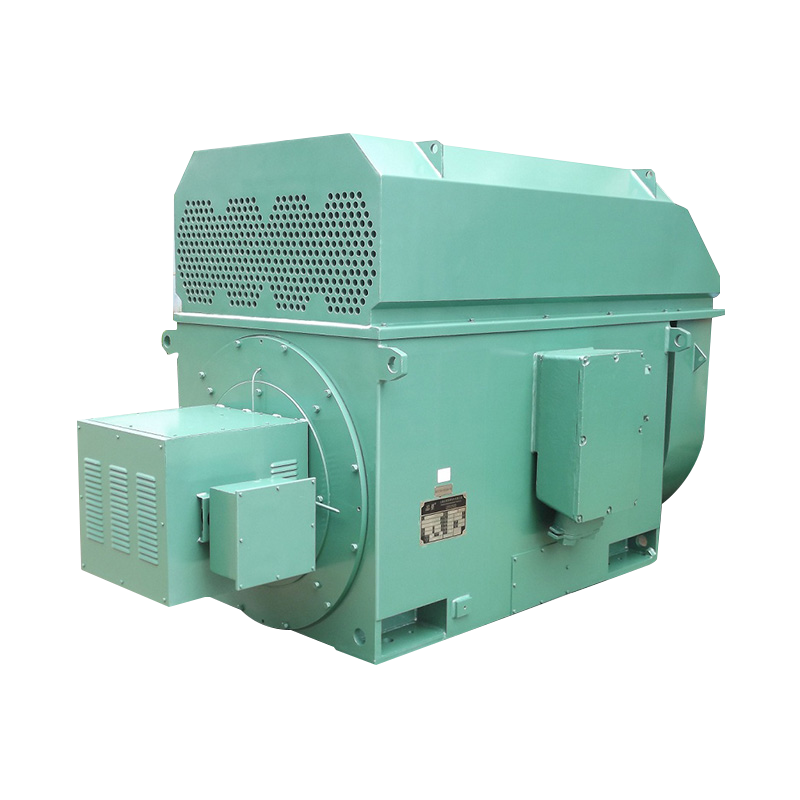
A high voltage slip ring motor is a type of wound rotor induction motor designed to operate at supply voltages typically ranging from 3 kV to 11 kV (and in some cases up to 15 kV), making it one of the most critical drive solutions for heavy industrial applications. Unlike squirrel cage motors, the slip ring motor incorporates an externally accessible rotor winding connected through slip rings and brushes, enabling precise control of starting torque, acceleration ramp, and speed regulation. This architecture addresses one of the most persistent engineering challenges in process industries: reliably starting and controlling large loads with high inertia. This guide provides a comprehensive technical reference — covering high voltage slip ring induction motor specifications, operating principles, high voltage slip ring motor starting method for heavy load, maintenance procedures, and industry comparisons — targeted at engineers, procurement specialists, and wholesale buyers who demand accuracy and depth.
1. How Does a High Voltage Slip Ring Motor Work?
Basic Working Principle
A high voltage slip ring motor working principle is grounded in Faraday's law of electromagnetic induction. When three-phase alternating current is supplied to the stator windings, a rotating magnetic field (RMF) is produced at synchronous speed (Ns), expressed as:
Ns = 120f / P
where f is supply frequency (Hz) and P is the number of poles. This RMF cuts across the rotor conductors, inducing an electromotive force (EMF) and subsequently a rotor current. The interaction between the rotor current and the stator's magnetic field generates the electromagnetic torque that drives the shaft. The motor operates at a speed slightly below synchronous speed; the difference is defined as slip (s):
s = (Ns - Nr) / Ns × 100%
At full load, slip in a high voltage slip ring motor typically ranges between 1% and 5%, depending on rotor resistance and load torque demands. The external resistance inserted via the slip ring circuit allows the engineer to directly manipulate the rotor circuit impedance, shifting the torque-speed curve and enabling full torque at reduced starting current — a characteristic not achievable with squirrel cage designs.
Role of Slip Rings and Brushes
The slip ring assembly is the defining mechanical feature of the wound rotor motor. Three metallic rings — typically made from phosphor bronze, stainless steel, or brass — are mounted concentrically on the rotor shaft and are electrically isolated from each other and from the shaft. Carbon or electrographite brushes maintain continuous sliding electrical contact with each ring, forming a live circuit path between the rotating rotor windings and stationary external resistance banks or power electronics.
- Slip ring material: Phosphor bronze or stainless steel for high-voltage, high-current environments; surface hardness and conductivity are critical selection parameters.
- Brush grade: Electrographite grades (EG) are preferred for high voltage applications due to their low contact drop (typically 0.8–1.2 V per brush) and self-lubricating properties.
- Contact pressure: Typically maintained between 150–300 g/cm² to prevent arcing without excessive wear.
- Brush lift mechanism: In modern designs, once the motor reaches full operating speed, brushes are lifted and slip rings short-circuited internally, eliminating brush wear during continuous operation — a feature known as "brush lifting and ring short-circuiting."
The condition of the slip ring surface directly influences commutation quality, electromagnetic noise, and motor longevity. A correctly maintained slip ring should display a uniform chocolate-brown patina (the "film"), which reduces friction and electrical resistance at the contact interface.
Wound Rotor vs Squirrel Cage: Key Differences
While both are induction motors, the wound rotor (slip ring) design and the squirrel cage design differ fundamentally in rotor construction, starting performance, and application suitability. In wound rotor motors, the rotor is wound with insulated copper conductors connected in a three-phase star configuration, with terminals brought out to the slip rings. In squirrel cage motors, the rotor consists of aluminum or copper bars short-circuited at both ends by end rings, with no external circuit access. The wound rotor design delivers superior starting torque control at the cost of higher mechanical complexity and maintenance requirements.
| Parameter | High Voltage Slip Ring Motor | Squirrel Cage Motor |
|---|---|---|
| Rotor Construction | Wound copper windings + slip rings | Aluminum/copper bars + end rings |
| External Circuit Access | Yes (via brushes) | No |
| Starting Torque | High (up to 250% of rated torque) | Moderate (100–150% of rated torque) |
| Starting Current | Controlled and reduced (3–4× In) | High (5–8× In) |
| Speed Control | Possible via rotor resistance | Limited (requires VFD) |
| Maintenance Requirement | Higher (brush and ring inspection) | Lower |
| Cost (Initial) | Higher | Lower |
| Best Application | High inertia, heavy load starting | Constant speed, light starting load |
2. High Voltage Slip Ring Induction Motor Specifications
Voltage and Power Range
The designation "high voltage" in motor engineering refers to supply voltages above 1,000 V AC per IEC 60038 classification. Standard voltage levels for high voltage slip ring induction motor specifications include 3.3 kV, 6 kV, 6.6 kV, 10 kV, and 11 kV, with 6 kV and 10 kV being the most prevalent in industrial markets across Asia, Europe, and the Middle East. Power ratings typically span from 200 kW to 10,000 kW (10 MW), with frame sizes scaling accordingly. Shaft output is directly correlated to stator bore diameter, stack length, and cooling method.
- Low-end HV slip ring motors: 200 kW – 1,000 kW (3.3 kV – 6 kV range)
- Mid-range: 1,000 kW – 4,000 kW (6 kV – 10 kV range)
- Large industrial drives: 4,000 kW – 10,000 kW+ (10 kV – 15 kV range)
Insulation Class and Protection Grade
Insulation class governs the maximum permissible winding temperature under continuous operation. High voltage wound rotor motors are predominantly designed with Class F insulation (155°C maximum) but rated to Class B temperature rise (80 K above 40°C ambient), a practice that extends insulation service life by reducing thermal stress. Some specialty designs — particularly those for high-ambient or tropical climates — employ Class H insulation (180°C maximum). Enclosure protection is specified according to IEC 60034-5 (IP code):
- IP23: Screen-protected, drip-proof; suitable for clean, indoor environments.
- IP44: Splash-proof; general industrial use.
- IP54/IP55: Dust and water jet protected; standard for outdoor and dusty plant environments.
- IP65: Dust-tight and water jet protected; preferred for washdown or humid environments.
- Ex d / Ex e (IECEx/ATEX): Flameproof or increased safety enclosures for explosive atmospheres.
Efficiency Standards
Energy efficiency in high voltage motors is governed by IEC 60034-30-2, which defines efficiency classes IE2, IE3, and IE4 for motors above 1 kW. For high voltage motors above 375 kW, IE3 is increasingly mandated in the EU (Regulation EU 2019/1781 effective July 2023) and recommended in international procurement specifications. IE4 (Super Premium Efficiency) motors offer additional efficiency gains of 0.4–1.0 percentage points over IE3 at full load, representing significant energy savings over the motor's lifecycle (typically 20–25 years).
Key Parameters Reference Table
| Specification | Typical Value / Range | Standard Reference |
|---|---|---|
| Rated Voltage | 3.3 kV, 6 kV, 6.6 kV, 10 kV, 11 kV | IEC 60038 |
| Power Range | 200 kW – 10,000 kW | IEC 60034-1 |
| Frequency | 50 Hz / 60 Hz | IEC 60034-1 |
| Insulation Class | Class F (155°C), rated to Class B rise | IEC 60085 |
| Enclosure Protection | IP23 to IP65 / Ex d / Ex e | IEC 60034-5 / IECEx |
| Efficiency Class | IE2 / IE3 / IE4 | IEC 60034-30-2 |
| Cooling Method | IC01, IC06, IC81W, IC86W | IEC 60034-6 |
| Duty Cycle | S1 (continuous), S2, S3, S6 | IEC 60034-1 |
| Bearing Type | Rolling element (sleeve for large frames) | ISO 281 / ABMA |
| Vibration Class | A / B per IEC 60034-14 | IEC 60034-14 |
3. Starting Methods for Heavy Load Applications
The selection of an appropriate starting method is one of the most technically consequential decisions in specifying a high voltage slip ring motor. The high voltage slip ring motor starting method for heavy load exploits the unique external rotor circuit to achieve what no other AC motor type can: maximum torque at zero speed with minimum supply-side current. This is achieved by inserting resistance in series with the rotor windings at start-up, which simultaneously limits rotor current (and thus stator current) while shifting the peak torque point toward zero speed on the torque-speed curve.
Rotor Resistance Starting Method
This is the classical and most widely used starting method for wound rotor motors driving high-inertia loads such as ball mills, crushers, hoists, and large fans. External resistance is inserted in steps (or continuously via liquid rheostats) into the rotor circuit:
- Step 1 (Start): Maximum external resistance inserted; starting current limited to 150–250% of rated current (In) while torque reaches 200–250% of rated torque (Tn). This is the key advantage over direct-on-line (DOL) squirrel cage starting.
- Step 2 (Acceleration): Resistance is reduced in stages (typically 3–7 contactors) as the motor accelerates; each step maintains near-peak torque throughout the acceleration ramp.
- Step 3 (Full speed): All external resistance is shorted out; motor operates at near-synchronous speed on its natural torque-speed characteristic.
- Liquid Rheostat Variant: Uses electrolyte solution for continuous, smooth resistance control — preferred for very large motors (above 2,000 kW) and applications requiring precise torque profiling.
The rotor resistance starting method allows full-load starting torque at only 1/3 to 1/4 of the DOL starting current, significantly reducing mechanical stress on couplings, gearboxes, and conveyor structures, as well as voltage dip on the supply bus.
Soft Starter and VFD Integration
While the rotor resistance method remains the industry standard, modern installations increasingly integrate electronic starting solutions with slip ring motors:
- Rotor-side soft starters: Electronic thyristor-based controllers modulate rotor current electronically, replacing stepped resistance banks with a continuously variable impedance. This eliminates contactor switching transients and provides smoother acceleration profiles.
- Variable Frequency Drives (VFD) on stator: Although slip ring motors can be driven by VFDs, the brush-ring assembly must be rated for the harmonic content generated by the drive. The rotor winding insulation must also withstand common-mode voltage stress. When paired with a VFD, the slip rings are typically short-circuited and lifted out of service. Refer to IEC 60034-17 for guidance on inverter-fed wound rotor motors.
- Kramer Drive / Sub-synchronous Cascade: In some high-power applications, the rotor's slip-frequency power is recovered and fed back to the grid via an inverter, achieving variable speed operation with energy recovery — a technique known as the Scherbius or Kramer drive system.
Why Slip Ring Motors Excel in High-Inertia Loads
High-inertia loads store large amounts of kinetic energy during acceleration. The moment of inertia (GD²) of equipment like ball mills, rotary kilns, and flywheel-coupled compressors can be 10–50 times the motor's own GD², resulting in extended acceleration times (30–120 seconds or more). Direct-on-line starting of squirrel cage motors under these conditions causes excessive rotor heating (I²t losses) and supply voltage depression. The slip ring motor solves both problems:
- By controlling starting current, the supply voltage dip is maintained within permissible limits (typically less than 15% of nominal).
- By directing resistive heating losses into external resistors (not the rotor windings), the motor thermal budget is preserved during extended acceleration.
- Smooth, staged torque application reduces mechanical shock on the drivetrain, extending gear and coupling service life.
4. High Voltage Slip Ring Motor vs Squirrel Cage Motor
Performance Comparison
When evaluating slip ring motor vs squirrel cage motor high voltage applications, the decision hinges on load profile, starting frequency, process requirements, and total cost of ownership. Slip ring motors deliver unambiguous advantages where high starting torque and current limitation are simultaneously required. Squirrel cage motors hold advantages in simplicity, robustness, and lower maintenance costs for continuous, low-inertia duty.
| Performance Factor | Slip Ring Motor | Squirrel Cage Motor |
|---|---|---|
| Starting Torque (% of Tn) | 200–250% | 100–160% |
| Starting Current (× In) | 3–4× | 5–8× |
| Speed Control Range | Limited (via rotor resistance); wide (via VFD) | Wide (only via VFD) |
| Full Load Efficiency | Slightly lower (brush losses) | Slightly higher |
| Power Factor | 0.85–0.90 (typical at full load) | 0.85–0.92 (typical at full load) |
| Rotor Thermal Stress at Start | Low (heat dissipated externally) | High (heat in rotor bars) |
| Maximum Starts per Hour | High (limited by external resistor rating) | Low (limited by rotor thermal capacity) |
Application Scenarios
The slip ring motor is the preferred choice when any of the following conditions exist:
- Load GD² is more than 5 times the motor GD².
- Supply transformer impedance is high, and voltage dip during DOL starting would exceed 15%.
- The process requires adjustable speed during specific phases (e.g., controlled ramping of conveyor belts).
- The motor must start against full load (e.g., loaded conveyor, filled mixing drum).
- Multiple starts per shift are required without extended cool-down periods.
Squirrel cage motors remain optimal for centrifugal pumps, lightly loaded fans, compressors with unloading valves, and applications where a VFD is already specified for continuous speed control.
Cost and Maintenance Considerations
The initial capital cost of a high voltage slip ring motor is typically 20–40% higher than an equivalent squirrel cage motor due to the additional rotor winding complexity, slip ring assembly, and brush gear housing. However, when the full system is considered — including external resistor banks, contactors, and control panels — the total installed cost difference narrows. Over a 20-year lifecycle, the primary additional maintenance costs for the slip ring design relate to brush replacement (typically every 2,000–8,000 operating hours depending on brush grade and current density) and slip ring resurfacing (every 3–7 years). These costs are predictable and can be planned into scheduled maintenance windows.
5. Maintenance Guide for Long Service Life
Daily Inspection Checklist
Proactive maintenance of a high voltage wound rotor slip ring motor maintenance program begins with structured daily and weekly visual inspections. The following checklist reflects best practices aligned with IEC 60034-23 and OEM service documentation:
- Check and record bearing temperature (limit: typically Tamb + 40°C for rolling bearings).
- Monitor stator winding temperature via embedded RTDs or thermocouples (alarm at Class B rise; trip at Class F limit).
- Listen for abnormal vibration or noise (bearing rattle, rotor unbalance, partial discharge hiss).
- Verify cooling air inlet/outlet temperature differential and airflow obstruction.
- Inspect external resistance banks for visible damage, loose connections, or discolouration.
- Check brush gear housing for smoke, carbon dust accumulation, or sparking marks.
Slip Ring and Brush Maintenance
The slip ring and brush system requires the most attention in a high voltage wound rotor slip ring motor maintenance programme. Incorrect brush maintenance is the leading cause of premature motor failure in this motor type.
- Brush wear inspection: Replace brushes when they reach the minimum length marked by the manufacturer (typically 20–25 mm remaining). Never allow brush length to reach the spring retainer, as this risks spring contact with the ring surface.
- Contact film management: The protective electrochemical film on the ring surface should be preserved. Cleaning with abrasive materials destroys this film and accelerates wear. Use only dry compressed air or approved carbon-safe cleaning agents.
- Brush seating: New brushes must be bedded in by running the motor lightly loaded for several hours, allowing the brush face to conform to the ring curvature. Pre-shaping with a grinding stone is recommended for large brushes.
- Contact pressure verification: Use a spring scale to verify individual brush pressure. Uneven pressure across the brush set causes unequal current sharing and localized ring wear.
- Slip ring surface condition: Acceptable surface: smooth, lightly brown. Warning signs: grooving (requires in-situ grinding or lathe turning), pitting (electrolytic corrosion), or eccentricity above 0.05 mm TIR.
Common Faults and Troubleshooting
| Fault Symptom | Probable Cause | Recommended Action |
|---|---|---|
| Excessive brush sparking | Damaged film, incorrect brush grade, excessive ring runout | Re-surface ring; verify brush grade selection; check mounting alignment |
| High bearing temperature | Over-greasing, contamination, misalignment, bearing wear | Re-grease per OEM schedule; check shaft alignment; inspect bearing condition |
| Motor fails to start | Open circuit in rotor or external resistance; contactor failure | Measure rotor circuit resistance; test contactor continuity; check brush contact |
| Motor starts slowly / low torque | Incorrect resistance stage sequencing; partial open circuit | Verify resistance steps and contactor timing; test rotor winding balance |
| Excessive carbon dust | Wrong brush grade, high current density, ring surface damage | Check current per brush; upgrade to harder grade; re-surface rings |
| Insulation resistance below limit | Moisture ingress, contamination, ageing insulation | Dry out windings; apply HV insulation test (PI test per IEEE 43); assess for rewinding |
6. Industry Applications
Mining and Heavy Industry
The mining sector is the largest single application domain for the high voltage slip ring motor. Ball mills and SAG mills used in ore grinding represent the most demanding drive applications in industry: rated power from 3,000 kW to 20,000 kW, GD² values of several hundred tonne·m², and the requirement to start fully loaded. The wound rotor motor with liquid rheostat provides the only technically viable solution for direct grid-connected starts of this magnitude. Additionally, hoist drives in underground mining require precise torque control at low speeds and during lowering operations, both of which are naturally addressed by the rotor resistance method.
Cement, Metallurgy, and Paper Making
In cement plants, rotary kilns (typically 1,000–5,000 kW) and raw mill drives rely on wound rotor motors for smooth, controlled starting and the ability to inch the kiln during maintenance. In steel mills, rolling mill main drives, continuous casting machines, and hot strip mill coilers use slip ring motors where precise low-speed torque control is required before synchronization or before a VFD takes over speed regulation. Paper machine drive systems historically used cascaded wound rotor motor sets (Scherbius cascades) for section speed control, though many modern installations have migrated to VFD-driven squirrel cage motors. The high voltage slip ring motor remains the preferred choice wherever network-connected operation at fixed frequency is required without a drive.
Petroleum and Chemical Industry
Large compressor trains in LNG plants, refineries, and gas processing facilities often incorporate wound rotor motors rated 5–15 MW at 10–15 kV. In these applications, the motor must start an unloaded or lightly loaded compressor but must also be capable of re-starting under partial load following a process trip. The controlled starting characteristic prevents nuisance voltage dips on islanded or weak grid supplies — a critical consideration on offshore platforms and remote industrial sites. Chemical industry applications such as large agitators, centrifuges, and extruder drives also exploit the high starting torque characteristics of the high voltage slip ring motor.
7. Why Choose Shanghai Pinxing for High Voltage Slip Ring Motors?
Company Overview and Certifications
Shanghai Pinxing Explosion-proof Motor Co., Ltd. is a high-tech enterprise specializing in the design, research and development, manufacturing, and service of motors and motor control products. Recognized as a AAA manufacturer of electrical equipment in China, Shanghai Pinxing has built a comprehensive quality management system aligned with international standards, ensuring consistent engineering excellence across its entire product portfolio. The company's manufacturing capabilities cover the full spectrum from design engineering through prototype validation, production testing, and post-sale technical support.
Product Range — Over 1,000 Varieties
Shanghai Pinxing's product portfolio includes more than 1,000 varieties of large and medium-sized motors, encompassing:
- Large and medium-sized high voltage flameproof (Ex d) and increased safety (Ex e) explosion-proof motors.
- Large and medium-sized high voltage AC motors, including asynchronous, synchronous, frequency conversion (inverter-duty), and wound rotor slip ring motors.
- Various types of small and medium-sized low-voltage explosion-proof motors and general-purpose AC motors.
This depth of range means that engineers specifying motor solutions for complex projects can source matched motor sets from a single supplier, simplifying procurement, documentation, and spare parts management.
Global Export to 40+ Countries
Shanghai Pinxing's products are exported to more than 40 countries and regions worldwide and are widely deployed in coal mining, metallurgy, cement, paper making, environmental protection, petroleum, chemical, textile, road traffic, water conservancy, power generation, shipbuilding, and other industrial sectors. This international footprint reflects the company's commitment to meeting diverse regional standards — including IEC, ATEX, IECEx, GOST, and UL — and its capability to provide localized technical support and documentation in multiple languages.
Custom Motor Solutions and Technology Direction
Shanghai Pinxing is actively advancing towards energy conservation, efficiency improvement, environmental compliance, integrated automation, and internationalization. The company aims to provide not only standard motor products but also comprehensive motor technology solutions tailored to the specific operational requirements of global industrial enterprises. The strategic goal is to establish "Pinxing" as a globally recognized motor technology solution provider and motor manufacturer within the international motor industry, serving B2B buyers and EPC contractors who require both product reliability and engineering partnership.
8. Frequently Asked Questions (FAQ)
Q1: What voltage range is officially classified as "high voltage" for slip ring motors?
Per IEC 60038, voltages above 1,000 V AC are classified as high voltage in the context of electrical equipment and motors. In industrial motor practice, the term "high voltage motor" is most commonly applied to motors rated at 3 kV and above. The most prevalent voltage levels globally are 3.3 kV, 6 kV, 6.6 kV, 10 kV, and 11 kV. Voltages between 1 kV and 3 kV are sometimes referred to as medium voltage, though this boundary is not universally standardized across all regions and industries.
Q2: Can a high voltage slip ring motor be operated with a Variable Frequency Drive (VFD)?
Yes, a high voltage slip ring motor can be used with a VFD, but specific precautions apply. When driven by a VFD on the stator side, the slip rings are typically short-circuited and the brushes lifted to eliminate brush wear during VFD operation. The motor insulation system must be specified for inverter duty (dV/dt rated insulation per IEC 60034-17 and NEMA MG1 Part 31), as PWM switching waveforms generate voltage spikes that can stress turn insulation. Additionally, bearing currents induced by common-mode voltages must be managed through insulated bearings on the non-drive end and/or shaft grounding rings.
Q3: How often should the slip rings and brushes be replaced?
Brush replacement intervals depend on current density, brush grade, ring surface condition, and ambient environment. As a general guideline, carbon brushes in well-maintained high voltage wound rotor slip ring motor applications last between 2,000 and 8,000 operating hours. Slip ring surface life before requiring re-machining or replacement is typically 3–7 years in continuous duty service. Motors equipped with brush-lifting mechanisms (rings short-circuited at full speed) have significantly extended brush life because brush wear only occurs during the start/stop cycle, not during continuous running.
Q4: What is the maximum number of starts per hour for a high voltage slip ring motor?
The maximum permissible starts per hour for a high voltage slip ring motor is primarily limited by the thermal capacity of the external resistance banks and the stator winding thermal budget, not (as with squirrel cage motors) by rotor bar heating. With properly sized external resistors, wound rotor motors can accommodate a significantly higher starting frequency than equivalent squirrel cage designs. However, the exact rating must be confirmed with the motor manufacturer for the specific load GD², acceleration time, and ambient conditions. IEC 60034-1 defines standard duty classes (S1–S10) which govern thermal cycling parameters.
Q5: What maintenance interval is recommended for the insulation resistance test on a high voltage slip ring motor?
Insulation resistance (IR) testing should be performed annually as a minimum, and before and after any rewinding or major maintenance intervention. For motors rated 6 kV and above, a Polarization Index (PI) test per IEEE Standard 43 is recommended in addition to the basic IR measurement. The PI (ratio of 10-minute IR to 1-minute IR) should be greater than 2.0 for acceptable insulation condition in Class B/F wound machines. IR values are temperature-dependent and must be corrected to a reference temperature of 40°C using correction factors before comparison with historical trending data. Insulation degradation trend analysis over multiple test intervals is more diagnostically valuable than any single measurement.
References
- IEC 60034-1:2022 — Rotating Electrical Machines — Part 1: Rating and Performance. International Electrotechnical Commission, Geneva.
- IEC 60034-5:2020 — Rotating Electrical Machines — Part 5: Degrees of Protection Provided by the Integral Design of Rotating Electrical Machines (IP Code). International Electrotechnical Commission, Geneva.
- IEC 60034-17:2006 — Rotating Electrical Machines — Part 17: Cage Induction Motors When Fed from Converters. International Electrotechnical Commission, Geneva.
- IEC 60034-30-2:2016 — Rotating Electrical Machines — Part 30-2: Efficiency Classes of Variable Speed AC Motors. International Electrotechnical Commission, Geneva.
- IEEE Standard 43-2013 — IEEE Recommended Practice for Testing Insulation Resistance of Electric Machinery. IEEE Power and Energy Society, New York.
- Chapman, S.J. (2011). Electric Machinery Fundamentals, 5th Edition. McGraw-Hill Education, New York. ISBN 978-0-07-352954-7.
- Boldea, I. & Nasar, S.A. (2010). The Induction Machine Handbook, 2nd Edition. CRC Press, Boca Raton. ISBN 978-1-4200-6668-5.
- Fitzgerald, A.E., Kingsley, C. & Umans, S.D. (2013). Electric Machinery, 7th Edition. McGraw-Hill Education, New York. ISBN 978-0-07-352954-7.
- European Commission Regulation (EU) 2019/1781 — Laying Down Ecodesign Requirements for Electric Motors and Variable Speed Drives. Official Journal of the European Union, October 2019.
- NEMA MG 1-2021 — Motors and Generators. National Electrical Manufacturers Association, Rosslyn, Virginia.

Get in Touch
Related Products
 Shanghai Pinxing
Explosion-proof Motor Co., Ltd.
-
 cai@pinxingmotor.com
-
 +86-21-57566731
-
 +86-21-57566967
-
 No.699, Pinxing Rd., Qinggang Industrial Zone, Fengxian District, Shanghai, China.(East Gate)
-
No. 168, Qingling Rd, Qinggang Industrial Zone, Qingcun Town, Fengxian District, Shanghai, China (South Gate)
Copyright@ 2024 Shanghai Pinxing Explosion-proof Motor Co., Ltd. All Rights Reserved.
Privacy