- 中文网站请点击 http://www.pinxinggroup.com
-
 +86-21-57566731
-
 cai@pinxingmotor.com
-
 DOWNLOAD


 English
 русский
 Français
 عربى
عربى
What is a Low-Voltage Variable Frequency Motor?
Content
- 1 The Comprehensive Guide to Low-Voltage VFD Motors
- 1.1 1. Core Application: The Low-Voltage Variable Frequency Motor for HVAC Systems
- 1.2 2. The Efficiency Advantage: Energy Efficient Low-Voltage Variable Frequency Motor
- 1.3 3. The Control Center: Understanding the Low-Voltage Variable Frequency Motor Speed Controller
- 1.4 4. Industrial Workhorse: The 3 Phase Low-Voltage Variable Frequency Motor
- 1.5 5. Ensuring Longevity: A Low-Voltage Variable Frequency Motor Maintenance Guide
- 2 FAQ
In the landscape of modern industrial automation, building management, and process control, the quest for precision, efficiency, and reliability in electromechanical drive systems is paramount. At the heart of this evolution lies the low-voltage variable frequency motor, a sophisticated piece of engineering that has transformed how we control machinery. Unlike traditional fixed-speed motors that run at a constant rate determined by the power supply frequency, a variable frequency motor operates in tandem with a Variable Frequency Drive (VFD) controller. This pairing allows for precise, real-time adjustment of the motor's speed and torque by varying the frequency and voltage of the power supplied to it. This capability is revolutionary, enabling systems to match output precisely to demand rather than operating at a wasteful, constant full speed. From optimizing the airflow in a massive commercial HVAC system to controlling the precise speed of a conveyor belt or a pump, these motors are the workhorses of energy conservation and operational flexibility. This guide delves into the specific applications and benefits of this technology, such as the essential low-voltage variable frequency motor for HVAC systems, the principles behind an energy efficient low-voltage variable frequency motor, the critical role of the low-voltage variable frequency motor speed controller, the robust design of a 3 phase low-voltage variable frequency motor, and essential practices from a low-voltage variable frequency motor maintenance guide. Understanding these components is key to unlocking significant performance improvements and cost savings in any application.
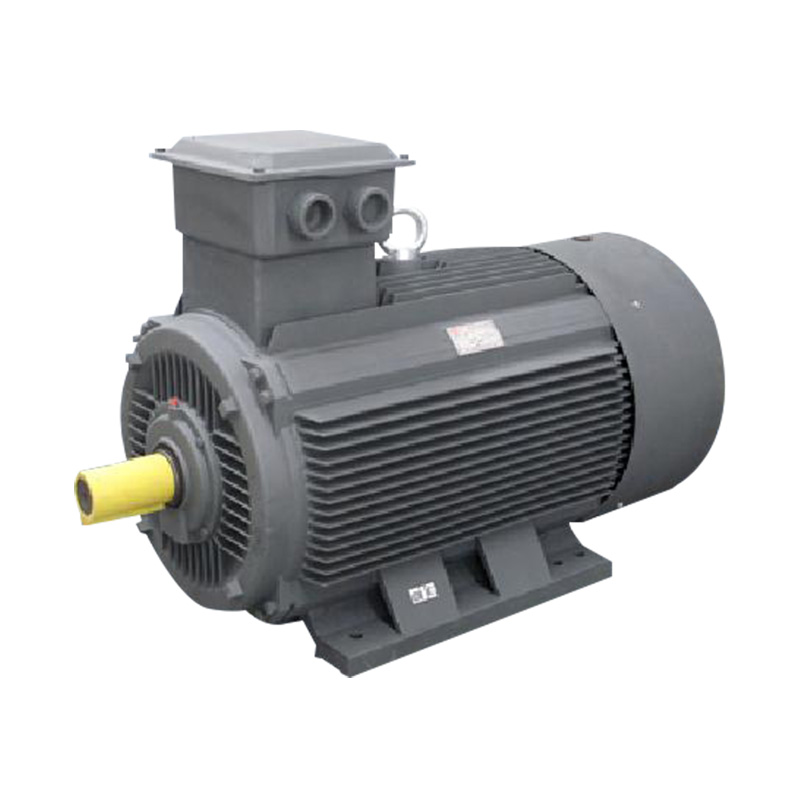
The Comprehensive Guide to Low-Voltage VFD Motors
The integration of variable frequency technology with low-voltage motors represents a leap forward in electrical drive system design. A low-voltage variable frequency motor is specifically engineered to withstand the unique electrical stresses imposed by a VFD, such as high-frequency switching pulses and potential voltage spikes, which can degrade standard motor insulation over time. These motors often feature enhanced insulation systems, specialized bearing designs to prevent electrical fluting, and optimized cooling to handle lower speed operation. The true power of this system is unlocked through the seamless interaction between the motor and its controller, allowing for soft starts that reduce mechanical stress, dynamic speed changes for process optimization, and substantial reductions in energy consumption by eliminating the losses associated with throttling valves or dampers. For engineers, facility managers, and system integrators, mastering the selection, application, and maintenance of these systems is no longer a specialty but a fundamental requirement for designing competitive, sustainable, and cost-effective industrial and commercial solutions.
1. Core Application: The Low-Voltage Variable Frequency Motor for HVAC Systems
The application of low-voltage variable frequency motor for HVAC systems is a textbook example of pairing the right technology with a clear need for efficiency. In commercial and large-scale residential HVAC, fans and pumps traditionally operated at constant speed, with output controlled by mechanically restrictive devices like dampers and valves. This method is inherently wasteful, as the motor continues to consume near-full power even when flow is reduced. A VFD-driven motor changes this paradigm entirely. By directly reducing the motor speed to match the exact cooling, heating, or ventilation demand, energy consumption drops dramatically—often following an approximate cube-law relationship where a small reduction in speed yields a large reduction in power. Beyond energy savings, these systems offer precise temperature and pressure control, reduced audible noise at lower speeds, and elimination of the high inrush current associated with across-the-line starting, which extends equipment life and reduces stress on the electrical infrastructure.
- Primary Components Controlled: Chilled water pumps, condenser water pumps, cooling tower fans, air handling unit (AHU) fans, and variable air volume (VAV) box fans.
- Key Benefits: Energy savings of 20-60% on centrifugal loads, improved comfort through precise control, reduced mechanical wear from soft starts, and lower peak electrical demand.
- System Integration: Modern VFDs integrate directly with Building Management Systems (BMS) via protocols like BACnet or Modbus, allowing for centralized, intelligent control.
| Control Method | Energy Use at 80% Flow | Control Mechanism | Typical Motor Stress |
| Outlet Damper/Valve | ~95% of Full Power | Restricts flow, motor runs full speed | High, constant mechanical stress |
| Variable Frequency Drive | ~50% of Full Power | Reduces motor speed to match flow | Low, proportional to demand |
2. The Efficiency Advantage: Energy Efficient Low-Voltage Variable Frequency Motor
When discussing an energy efficient low-voltage variable frequency motor, it's crucial to understand that efficiency is achieved through a combination of the motor's inherent design and its operational methodology. First, these motors are often built to premium efficiency standards (such as IE3 or IE4), meaning their core electrical design minimizes losses from heat, magnetism, and friction. Second, and more significantly, the VFD enables what is known as "load-proportional control." Most pumps and fans are sized for peak demand, which occurs infrequently. For the majority of their operational life, they are over-supplying flow or pressure. A fixed-speed motor on this load wastes energy. A VFD system adjusts the motor speed so its output precisely matches the required load, dramatically reducing energy consumption. Furthermore, a well-designed VFD can improve the system's power factor, reducing reactive power charges from utilities. The return on investment for upgrading to such a system is often calculated in months, not years, making it one of the most impactful energy conservation measures available.
- Two-Tiered Efficiency: 1) High-efficiency motor design (low stator/rotor losses). 2) VFD-enabled load-matching (eliminates partial-load waste).
- Quantifying Savings: The affinity laws for centrifugal loads show that power consumption is proportional to the cube of speed. Reducing speed by 20% can reduce power use by nearly 50%.
- Beyond Energy: Reduced energy consumption directly translates to lower greenhouse gas emissions, supporting corporate sustainability goals.
3. The Control Center: Understanding the Low-Voltage Variable Frequency Motor Speed Controller
The low-voltage variable frequency motor speed controller, universally known as a Variable Frequency Drive (VFD) or an Adjustable Speed Drive (ASD), is the intelligent brain of the system. Its primary function is to convert incoming fixed-frequency, fixed-voltage AC power into a variable-frequency, variable-voltage output that controls the motor's speed and torque. Modern VFDs are sophisticated digital devices featuring microprocessor control. They allow for multiple control modes (e.g., V/Hz control, sensorless vector control, closed-loop vector control) to suit different application precision needs. Key features include programmable acceleration/deceleration ramps, multiple preset speeds, fault diagnostics, and communication ports for network integration. Selecting the right controller is as important as selecting the motor itself; it must be properly sized for the motor's current and power rating, and its feature set must align with the complexity of the application to ensure stable, reliable, and efficient operation.
- Core Technology: Uses Insulated-Gate Bipolar Transistors (IGBTs) to create a Pulse-Width Modulated (PWM) waveform that simulates a variable AC sine wave for the motor.
- Selection Criteria: Motor power (kW/HP), supply voltage, control requirements (basic vs. high-performance), communication needs, and environmental rating (e.g., NEMA 1, NEMA 12).
- Essential Protection: A properly configured VFD provides comprehensive protection for the motor, including overload, overvoltage, undervoltage, phase loss, and short-circuit protection.
4. Industrial Workhorse: The 3 Phase Low-Voltage Variable Frequency Motor
The 3 phase low-voltage variable frequency motor is the standard for industrial and commercial applications due to its superior performance characteristics compared to single-phase designs. Three-phase motors are inherently more efficient, have a higher power density (more power in a smaller frame), produce smoother torque with less vibration, and are simpler in construction with no need for start capacitors or centrifugal switches. When paired with a VFD, these advantages are magnified. The three-phase input to the VFD and its three-phase output to the motor allow for precise control of the rotating magnetic field, enabling advanced control algorithms. These motors are the backbone of countless applications, from moving fluids and air in infrastructure to driving spindles and conveyors in manufacturing. Their reliability and controllability make them indispensable in processes where uptime, precision, and energy costs are critical factors.
- Why Three-Phase?: Provides a self-starting rotating magnetic field, higher efficiency, constant power delivery, and robust, maintenance-friendly design.
- Common Industrial Applications: Centrifugal pumps, axial fans, conveyor systems, mixing equipment, machine tool spindles, and extruders.
- Voltage Classes: Common low-voltage classes include 230V, 400V, 480V, and 690V AC, depending on regional electrical standards.
| Motor Type | Typical Power Range | Common Control Method | Best Suited For |
| Single-Phase Motor | Small (< 3 HP) | Fixed Speed, Basic VFDs possible | Light commercial, residential appliances |
| 3-Phase Low-Voltage VFD Motor | Wide (0.5 HP to ~500 HP) | Variable Frequency Drive | Virtually all industrial, commercial HVAC, process control |
5. Ensuring Longevity: A Low-Voltage Variable Frequency Motor Maintenance Guide
Proactive maintenance is the key to maximizing the lifespan and reliability of a VFD motor system. A comprehensive low-voltage variable frequency motor maintenance guide outlines practices that address both the electrical and mechanical aspects unique to these systems. The presence of the VFD introduces specific concerns, such as bearing currents and insulation stress from voltage spikes (dv/dt). A robust maintenance regimen includes regular inspections of the motor's physical condition, monitoring of thermal performance, and checking the VFD's parameters and connections. Electrical maintenance focuses on verifying tight connections, checking insulation resistance, and ensuring proper grounding to mitigate electromagnetic interference. Mechanical maintenance involves listening for unusual bearing noise, checking for vibration, and ensuring adequate cooling airflow, especially at low speeds where the motor's self-cooling may be reduced.
- Preventive Schedule: Implement regular quarterly and annual checklists. Quarterly: Visual inspection, thermal scan of connections, check for unusual vibrations/noise. Annual: Insulation resistance test (Megger), bearing inspection/greasing (if applicable), thorough VFD inspection and parameter verification.
- VFD-Specific Checks: Ensure cooling fans are operational, heatsinks are clean, DC bus capacitors show no signs of bulging or leakage, and all control wiring is secure.
- Common Failure Modes to Monitor: Bearing failure from electrical fluting, insulation breakdown from voltage stress, overheating from low-speed operation or clogged vents, and contamination ingress.
FAQ
Can any standard low-voltage motor be used with a VFD?
While many standard AC motors can be operated with a VFD, it is not recommended for long-term, reliable service. A motor designated as a low-voltage variable frequency motor is specifically designed for this duty. Standard motors may have insulation systems not rated for the high-frequency voltage spikes (dv/dt) produced by the VFD's switching, leading to premature insulation failure. They may also be prone to bearing currents that cause pitting and fluting. Inverter-duty or VFD-rated motors feature enhanced phase insulation, often use insulated bearings or shaft grounding rings, and are designed for adequate cooling across a wide speed range. For critical applications, always pair a VFD with a motor rated for inverter use.
How much energy can I really save with a VFD motor system?
The savings from an energy efficient low-voltage variable frequency motor system are substantial and quantifiable, especially for centrifugal loads like pumps and fans, which follow the affinity laws. As a rule of thumb, reducing a pump or fan's speed by 20% can reduce the energy required to power it by approximately 50%. In applications with highly variable demand, such as an low-voltage variable frequency motor for HVAC systems, average energy savings of 30-50% are common. The exact figure depends on your load profile—how much time the system spends at reduced flow versus full flow. A detailed energy audit or analysis of the system's operating hours at various load points is the best way to calculate a precise expected return on investment.
What is the difference between a VFD and a soft starter?
Both a low-voltage variable frequency motor speed controller (VFD) and a soft starter control motor startup, but their capabilities differ fundamentally. A soft starter is a simpler device that only reduces the voltage during start-up to limit inrush current and provide a smooth acceleration to full speed. Once at full speed, the motor runs on full line power, and no further speed control is possible. A VFD also provides a soft start, but its primary function is continuous speed and torque control. It can run the motor at any speed from zero to above its base speed (within limits) to match process requirements, enabling ongoing energy savings and precise control. For applications requiring only start-up current mitigation, a soft starter may suffice. For applications requiring variable speed operation for process or efficiency reasons, a VFD is necessary.
Do VFD motors require special maintenance compared to standard motors?
Yes, following a dedicated low-voltage variable frequency motor maintenance guide is advisable due to unique stress factors. The key additional considerations are electrical. Regular insulation resistance testing (meggering) is more critical to detect early signs of insulation degradation from voltage spikes. Bearing condition must be monitored closely for signs of electrical discharge damage (fluting), which presents as noise or excessive vibration. Thermography is useful to check for heating at connections and on the motor body, especially at low speeds where internal cooling fans are less effective. While the core mechanical maintenance (lubrication, alignment, cleaning) is similar, the electrical diagnostics are more specialized and crucial for preventing unexpected downtime in VFD-driven systems.

Get in Touch
Related Products
 Shanghai Pinxing
Explosion-proof Motor Co., Ltd.
-
 cai@pinxingmotor.com
-
 +86-21-57566731
-
 +86-21-57566967
-
 No.699, Pinxing Rd., Qinggang Industrial Zone, Fengxian District, Shanghai, China.(East Gate)
-
No. 168, Qingling Rd, Qinggang Industrial Zone, Qingcun Town, Fengxian District, Shanghai, China (South Gate)
Copyright@ 2024 Shanghai Pinxing Explosion-proof Motor Co., Ltd. All Rights Reserved.
Privacy