- 中文网站请点击 http://www.pinxinggroup.com
-
 +86-21-57566731
-
 cai@pinxingmotor.com
-
 DOWNLOAD


 English
 русский
 Français
 عربى
عربى
Why Choose a 3-Phase Squirrel Cage Motor?
Content
- 1 Understanding the Core Technology of 3-PHASE SQUIRREL CAGE MOTOR
- 2 Safety and Durability in Industrial Environments
- 3 Performance for Demanding Applications
- 4 Innovation at Shanghai Pinxing Explosion-proof Motor Co., Ltd
- 5 FAQ
- 5.1 What are the main advantages of using a 3-PHASE SQUIRREL CAGE MOTOR?
- 5.2 How do I know if I need a TEFC Squirrel Cage Induction Motor?
- 5.3 What is the difference between a standard motor and a High Efficiency Three Phase Induction Motor?
- 5.4 Can a Low Voltage Squirrel Cage Motor be used in hazardous locations?
In the dynamic landscape of modern industrial engineering, the selection of the right prime mover is a critical decision that dictates the efficiency, reliability, and sustainability of entire production lines. Among the myriad of options available, the 3-PHASE SQUIRREL CAGE MOTOR stands out as the undisputed workhorse of the industrial world. Renowned for its simplistic yet robust design, this motor type powers a vast majority of machinery across diverse sectors, ranging from large-scale manufacturing plants to complex processing units. The fundamental appeal of the squirrel cage induction motor lies in its ability to deliver consistent torque with minimal maintenance requirements. Unlike brushed motors or synchronous machines that require complex excitation systems or frequent servicing due to wear and tear, the squirrel cage design eliminates the need for physical electrical contacts between the stator and the rotor. This feature alone significantly reduces downtime, a crucial factor in high-stakes industrial environments where every minute of inactivity translates to substantial financial loss. As industries worldwide pivot towards energy conservation and operational excellence, the demand for high-performance induction motors that meet rigorous international standards has never been higher. Companies are now looking beyond initial purchase costs, focusing instead on lifecycle costs, energy efficiency ratings, and the ability of equipment to withstand harsh operational conditions.
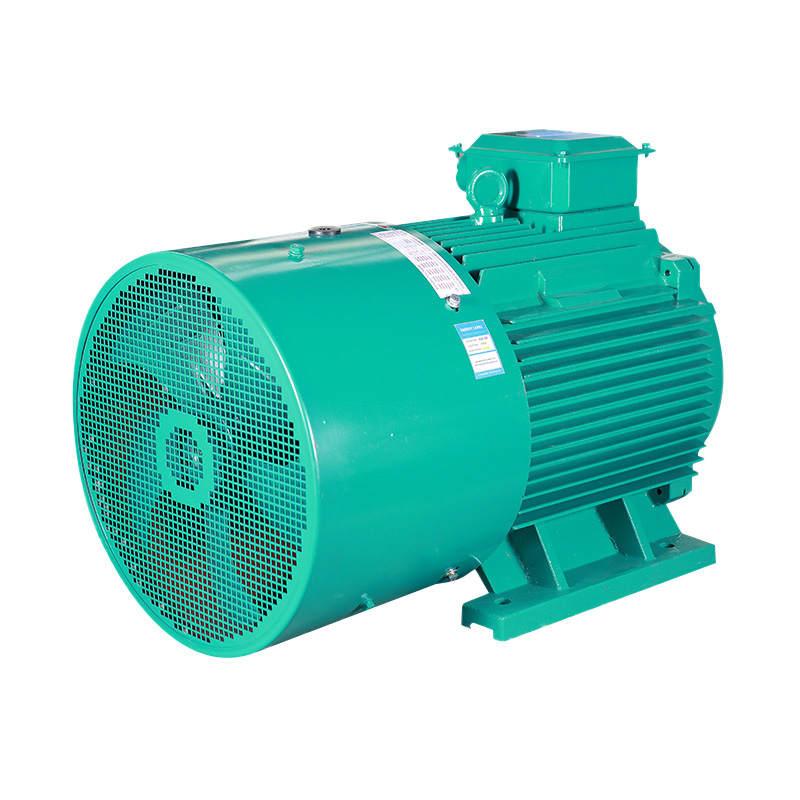
Understanding the Core Technology of 3-PHASE SQUIRREL CAGE MOTOR
The technology behind the 3-PHASE SQUIRREL CAGE MOTOR is rooted in the principles of electromagnetic induction, a phenomenon discovered in the 19th century that remains the backbone of modern electrical engineering. The motor consists of two primary components: the stator, which is the stationary part comprising windings connected to a three-phase power supply, and the rotor, which is the rotating component housed within the stator. The unique aspect of the squirrel cage rotor is its construction, resembling a cylindrical cage formed by aluminum or copper bars short-circuited by end rings. When the three-phase supply energizes the stator windings, it creates a rotating magnetic field. This field induces a current in the rotor bars, which in turn generates its own magnetic field. The interaction between these two magnetic fields produces torque, causing the rotor to turn. The brilliance of this design is its self-starting capability and inherent ruggedness. Because there are no brushes, commutators, or slip rings to wear out, the motor is essentially sealed against the ingress of dust and moisture, making it an ideal solution for the toughest industrial environments.
Defining the Squirrel Cage Rotor Mechanism
The squirrel cage rotor is the heart of the motor's reliability. Constructed typically from die-cast aluminum or copper, the rotor bars are embedded in the laminated steel core. The "cage" name derives from the appearance of the rotor, which looks like a rotating exercise wheel for squirrels. This design is exceptionally durable and capable of handling high starting currents without sustaining damage. The simplicity of the rotor construction means that the motor can operate at high speeds with minimal vibration, provided the unit is properly balanced.
- Robust Construction: The absence of moving electrical contacts reduces mechanical wear.
- Self-Starting: The interaction of magnetic fields allows the motor to start without external aids.
- Low Maintenance: No brushes or slip rings to replace, ensuring long service intervals.
- High Durability: Capable of withstanding high thermal and mechanical stress.
The Role of High Efficiency Three Phase Induction Motor Design
Energy efficiency is no longer just a preference but a regulatory requirement and a competitive necessity. A high efficiency three phase induction motor is engineered to minimize energy losses primarily through heat dissipation and magnetic core losses. Manufacturers achieve this by using high-quality electrical steel laminations to reduce eddy current losses and optimizing the design of the stator and rotor slots to improve the flux density distribution. Furthermore, precision manufacturing ensures a uniform air gap between the stator and rotor, which is critical for maximizing efficiency and minimizing vibration. By reducing the input power required for a specific output, these motors significantly lower the operational expenditure for industrial facilities.
Energy Loss Reduction Techniques
Reducing energy loss is a multi-faceted engineering challenge that involves material science and precision engineering. In a high efficiency three phase induction motor, the use of thinner silicon steel laminations in the stator and rotor cores significantly reduces hysteresis and eddy current losses. Additionally, increasing the amount of active material (copper and iron) in the design reduces the current density and magnetic flux density, which in turn lowers resistive losses (I2R losses) and core losses. Advanced cooling fans and duct designs are also employed to maintain optimal operating temperatures, ensuring efficiency does not drop under load conditions.
| Loss Type | Cause | Mitigation Strategy |
| Stator I2R Losses | Resistance in stator windings | Increasing copper slot fill |
| Rotor I2R Losses | Resistance in rotor bars | Optimizing bar shape and material |
| Core Losses | Magnetization of steel | Using high-grade silicon steel |
| Friction & Windage | Bearing friction and air resistance | Low-friction bearings and fan design |
Operational Cost Savings
The upfront cost of a premium motor is often higher than a standard efficiency model, but the return on investment (ROI) is realized quickly through energy savings. Industrial motors typically operate for thousands of hours per year. Even a small percentage increase in efficiency can translate into massive savings in electricity bills. Furthermore, higher efficiency generally means lower heat generation, which reduces the thermal stress on the motor's insulation and bearings, thereby extending the motor's lifespan and further reducing replacement and maintenance costs.
| Factor | Standard Motor | High Efficiency Motor |
| Initial Cost | Lower | Higher |
| Energy Consumption | Higher | Lower |
| Heat Generation | Higher | Lower |
| Lifespan | Standard | Extended |
Safety and Durability in Industrial Environments
Industrial environments are often harsh, characterized by the presence of dust, moisture, chemicals, and volatile substances. In such settings, the reliability of electrical equipment is paramount. A TEFC Squirrel Cage Induction Motor is specifically designed to address these challenges. TEFC stands for Totally Enclosed Fan Cooled, a designation that indicates the motor has a sealed enclosure that prevents the free exchange of air between the inside and outside of the casing. However, it is not airtight. An external fan is mounted on the shaft, blowing air over the finned exterior of the motor casing to dissipate heat. This design offers the highest level of protection for the internal windings and bearings against contaminants, ensuring continuous operation even in adverse conditions. This level of protection is essential for maintaining safety and preventing catastrophic failures that could lead to fires or explosions in sensitive environments like coal mining or petroleum refining.
Reliability of TEFC Squirrel Cage Induction Motor
The TEFC Squirrel Cage Induction Motor is the gold standard for industrial reliability. The totally enclosed design prevents the ingress of solid particles, such as coal dust or cement powder, as well as liquid sprays. This is particularly important in applications where dirty environments are the norm. By keeping the internal components clean, the risk of short circuits and bearing contamination is minimized. The external cooling fan is designed to provide adequate airflow while keeping the enclosure sealed, ensuring that the motor can maintain its thermal ratings without compromising on protection.
- Particle Protection: Sealed enclosure prevents dust and grit from entering the motor.
- Moisture Resistance: Protects against direct sprays and high humidity.
- Cooling Efficiency: External fan and fins effectively dissipate heat.
- Corrosion Prevention: Internal components are isolated from corrosive atmospheres.
Versatility of Low Voltage Squirrel Cage Motor
While high-voltage motors are common in heavy industries, the low voltage squirrel cage motor plays a pivotal role in general manufacturing and process industries. These motors typically operate at voltages under 1000V (commonly 380V, 400V, or 460V), making them suitable for standard power distribution systems found in most factories. They are used to drive pumps, compressors, fans, conveyors, and machine tools. Their versatility lies in their ability to be easily integrated into existing control systems and their suitability for variable frequency drive (VFD) applications, which allow for precise speed control.
Applications in Common Industrial Settings
The low voltage squirrel cage motor is ubiquitous across various sectors. In the textile industry, they drive spinning frames and looms; in the paper making industry, they power pumps and rollers; and in water treatment plants, they operate mixers and aerators. Their adaptability to different mounting configurations (B3 foot mount, B5 flange mount, etc.) and their compatibility with a wide range of starting methods (star-delta, soft start, VFD) make them the first choice for engineers designing complex machinery.
| Industry | Typical Applications | Motor Type |
| Textile | Looms, Spinning frames | Variable Speed TEFC |
| Water Treatment | Pumps, Blowers | Standard TEFC |
| HVAC | Fans, Chillers | High Efficiency TEFC |
| Material Handling | Conveyors, Cranes | Brake Motors |
Protection Features and Enclosures
Beyond TEFC, these motors often feature other enclosure types such as Explosion-proof (Ex d) or Increased Safety (Ex e) for hazardous areas. The choice of enclosure is dictated by the specific environmental hazards. For instance, in a chemical plant where flammable gases are present, an explosion-proof enclosure is required to contain any internal ignition. For a low voltage squirrel cage motor, ensuring the correct IP (Ingress Protection) rating, such as IP55 or IP65, is crucial to guarantee longevity and safety in the face of dust and water jets.
| Enclosure Type | IP Rating | Primary Protection |
| Open Drip Proof (ODP) | IP12 | Dripping water |
| TEFC | IP55 | Dust and water jets |
| Explosion Proof (Ex d) | IP65+ | Internal explosion containment |
| Weather Protected (WP) | IPW24 | Weather, rain, snow |
Performance for Demanding Applications
For the most arduous tasks in heavy industry, such as crushing rocks in mining or grinding raw materials in cement plants, a standard motor simply will not suffice. These applications require a heavy duty industrial induction motor capable of delivering high torque over extended periods while withstanding significant mechanical shock and vibration. These motors are built with heavy-duty bearings, reinforced end shields, and oversized shafts to handle radial and axial loads. The design focus for these motors shifts from simple efficiency to absolute robustness and the ability to start high-inertia loads. Whether it is driving a large ball mill or a heavy crusher, the motor must provide the necessary breakdown torque to overcome the initial resistance and maintain speed under fluctuating load conditions.
Engineering a Heavy Duty Industrial Induction Motor
A heavy duty industrial induction motor is essentially a tank in the world of electrical machinery. The frame is constructed from cast iron or heavy-duty steel to provide a rigid structure that resists deformation under load. The windings are vacuum pressure impregnated (VPI) with varnish to ensure the insulation is solid and resistant to moisture, vibration, and chemicals. The rotor bars are often made of copper rather than aluminum to handle higher starting currents without excessive heating. These motors are designed to operate continuously at their rated power without overheating, ensuring that critical industrial processes do not suffer from unexpected downtime.
- Reinforced Frame: Cast iron construction reduces vibration and noise.
- Heavy Duty Bearings: Extended bearing life to handle radial and axial loads.
- Robust Shaft: Oversized diameter prevents deflection.
- VPI Insulation: Superior resistance to environmental stress.
Vibration and Noise Control
In many industrial settings, excessive noise and vibration are not just nuisances; they are safety hazards that can lead to equipment fatigue and worker fatigue. High-quality motors are precision balanced to ISO standards to minimize vibration. The 3-PHASE SQUIRREL CAGE MOTOR is inherently balanced due to the symmetrical nature of the rotor, but manufacturing tolerances play a large role. Advanced designs also incorporate cooling fans with low-noise blade profiles and smooth airflow paths to reduce aerodynamic noise.
Balancing Technologies
Precise dynamic balancing of the rotor is critical for the longevity of the heavy duty industrial induction motor. Unbalance can lead to excessive bearing loads, premature bearing failure, and structural damage to the driven equipment. Manufacturers use computerized balancing machines to add correction weights to the rotor, ensuring it runs true at all speeds. This precision is particularly important for motors connected directly to sensitive equipment like pumps and compressors.
| Balancing Grade | Application Type | Vibration Severity |
| ISO G6.3 | Large Industrial Motors | Standard industrial applications |
| ISO G2.5 | Precision Motors | Small motors, precision tools |
| ISO G1.0 | Special Motors | Very low vibration required |
Thermal Management Systems
Effective thermal management is essential for maintaining the insulation life of the motor. Heat is the primary enemy of motor windings. In a TEFC Squirrel Cage Induction Motor, the cooling system is designed to maximize heat transfer. The internal air circulates within the enclosure, transferring heat to the frame. The external fan then blows air over the fins of the frame, carrying the heat away. In heavy duty motors, the surface area of the frame is increased with larger fins, and sometimes air-to-air heat exchangers are used for even more efficient cooling.
| Cooling Method | Code | Description |
| Self-Cooled | IC 411 | Surface cooled by shaft-mounted fan |
| Separate Cooled | IC 416 | Cooled by separate motor driven fan |
| Water Cooled | IC 81W | Cooled by water jacket |
Innovation at Shanghai Pinxing Explosion-proof Motor Co., Ltd
Shanghai Pinxing Explosion-proof Motor Co., Ltd. is a high-tech enterprise that stands at the forefront of innovation in the design, research and development, manufacturing, and service of motors and motor control products. As a AAA manufacturer of electrical equipment in China, the company specializes in the production of more than 1000 varieties of large and medium-sized electrical machines. Their extensive portfolio includes high-voltage flameproof and increased safety explosion-proof motors, large and medium-sized high-voltage AC motors (including asynchronous, synchronous, frequency conversion and wound rotor motors), and various types of small and medium-sized low-voltage explosion-proof motors and AC motors. This diverse product range allows them to provide comprehensive solutions for the most complex industrial challenges. The company is moving towards energy conservation, efficiency, environmental protection, integrated automation and internationalization, aiming to make "Pinxing" motor become a premier motor technology solution provider and motor manufacturer in the global motor industry.
AAA Grade Manufacturing Excellence
Shanghai Pinxing Explosion-proof Motor Co., Ltd is recognized as a AAA manufacturer, a distinction that highlights their commitment to quality and excellence. The company's factory is equipped with advanced production lines and testing facilities that ensure every motor meets stringent international standards. From the sourcing of raw materials like high-grade silicon steel and copper to the final assembly and testing, every step of the process is rigorously controlled. Their expertise in producing heavy duty industrial induction motor units ensures that clients receive products that are not only powerful but also reliable and safe. The factory's capability to produce over 1000 varieties demonstrates its flexibility and technical depth, allowing for custom solutions tailored to specific industry needs.
Global Reach and Industry Applications
The products of Shanghai Pinxing Explosion-proof Motor Co., Ltd are trusted worldwide, exported to more than 40 countries and regions. Their motors are widely used in critical sectors such as coal mining, metallurgy, cement, paper making, environmental protection, petroleum, chemical, textile, road traffic, water conservancy, power, and shipbuilding. This extensive application in diverse fields is a testament to the versatility and durability of their 3-PHASE SQUIRREL CAGE MOTOR units. Whether it is providing a reliable drive for a cement crusher in a remote location or ensuring the safety of an operation in a petroleum refinery with explosion-proof motors, the company's solutions are integral to industrial operations globally.
Commitment to Sustainability and Automation
In alignment with global trends, Shanghai Pinxing is deeply committed to energy conservation and environmental protection. The company invests heavily in R&D to improve the efficiency of their motors, helping clients reduce their carbon footprint and operational costs. Furthermore, the move towards integrated automation means that their motors are designed to work seamlessly with modern control systems, including variable frequency drives (VFDs) and smart sensors. By combining high efficiency with smart technology, Shanghai Pinxing Explosion-proof Motor Co., Ltd aims to provide good motor products and motor technology solutions for global industrial enterprises, driving the industry towards a more sustainable and automated future.
FAQ
What are the main advantages of using a 3-PHASE SQUIRREL CAGE MOTOR?
The main advantages include simplicity, ruggedness, and low maintenance. Since the rotor has no brushes or commutators, there is minimal wear and tear. They are also self-starting and offer excellent speed regulation under load. Additionally, they are highly efficient and cost-effective for continuous industrial operation.
How do I know if I need a TEFC Squirrel Cage Induction Motor?
You need a TEFC Squirrel Cage Induction Motor if your operating environment contains dust, dirt, moisture, or other airborne particles that could damage the motor's internal components. Common applications include woodworking, grain handling, outdoor equipment, and any damp or dirty industrial location where an open motor would fail.
What is the difference between a standard motor and a High Efficiency Three Phase Induction Motor?
A High Efficiency Three Phase Induction Motor is designed with better materials, such as higher grade electrical steel and more copper windings, to reduce energy losses. While the initial cost is higher, the reduction in energy consumption and heat generation results in lower operating costs and a longer lifespan, making it more economical over time.
Can a Low Voltage Squirrel Cage Motor be used in hazardous locations?
Yes, provided the motor is constructed with the appropriate explosion-proof enclosure, such as Ex d or Ex e. These motors are built to withstand internal explosions without igniting the surrounding atmosphere. When selecting a low voltage squirrel cage motor for hazardous areas, it is crucial to ensure it meets the specific certification requirements for the type of gas, dust, or fibers present in the environment.

Get in Touch
Related Products
 Shanghai Pinxing
Explosion-proof Motor Co., Ltd.
-
 cai@pinxingmotor.com
-
 +86-21-57566731
-
 +86-21-57566967
-
 No.699, Pinxing Rd., Qinggang Industrial Zone, Fengxian District, Shanghai, China.(East Gate)
-
No. 168, Qingling Rd, Qinggang Industrial Zone, Qingcun Town, Fengxian District, Shanghai, China (South Gate)
Copyright@ 2024 Shanghai Pinxing Explosion-proof Motor Co., Ltd. All Rights Reserved.
Privacy