- 中文网站请点击 http://www.pinxinggroup.com
-
 +86-21-57566731
-
 cai@pinxingmotor.com
-
 DOWNLOAD


 English
 русский
 Français
 عربى
عربى
Why Is the 3-Phase Squirrel Cage Motor the King of Constant Speed?
Content
Introduction
In the landscape of modern industrial drive systems, the choice of electric motor determines the efficiency and reliability of the entire production line. For applications requiring steady operation without complex speed variation, one technology stands out as the undisputed leader. The 3-PHASE SQUIRREL CAGE MOTOR has earned the title of the "King of Constant Speed" due to its robust design and minimal maintenance requirements. This article explores why this motor type outperforms alternatives like the wound rotor motor in the vast majority of constant load scenarios.
Understanding the Core Mechanics
The Basic Induction Motor Working Principle
To appreciate the superiority of the squirrel cage design, engineers must first understand the fundamental induction motor working principle. When a three-phase alternating current supplies the stator windings, it generates a rotating magnetic field (RMF) with a constant speed. This RMF cuts across the rotor conductors, inducing an electromotive force (EMF) and subsequently a current in the rotor bars. The interaction between the rotor current and the stator's magnetic field produces the torque necessary for rotation. This process relies on electromagnetic induction, meaning the rotor needs no external electrical connection, which is a significant advantage in terms of safety and durability.
The Simplicity of the Squirrel Cage Induction Motor
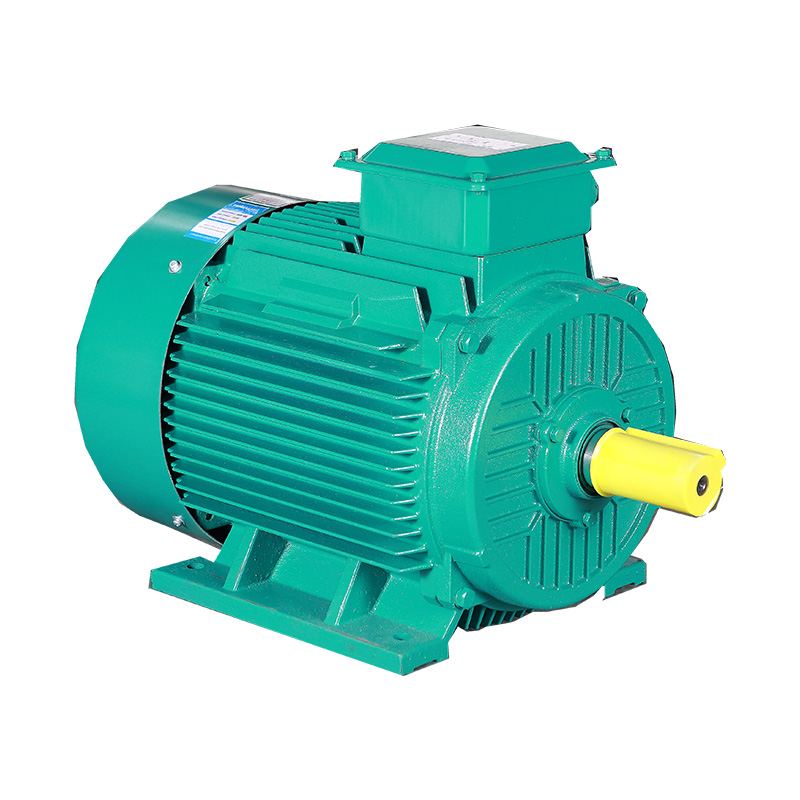
The squirrel cage induction motor derives its name from the shape of its rotor, which resembles a squirrel's exercise wheel. The rotor consists of metal bars short-circuited by end rings, typically made of aluminum or copper. This construction is incredibly simple and rugged. Unlike other motor types that contain delicate components prone to failure, the squirrel cage rotor has no moving electrical contacts. This design eliminates sparking and reduces internal friction, ensuring a long operational life even in harsh environments.
Squirrel Cage vs. Wound Rotor: A Technical Comparison
Construction and Maintenance Differences
The primary distinction between these two motor types lies in the rotor construction. A wound rotor motor features a rotor with windings similar to the stator, connected to external resistors via slip rings and brushes. This design allows for speed control and high starting torque but introduces significant maintenance challenges. Brushes wear out over time and require replacement, and slip rings can accumulate dust and carbon residue. In contrast, the 3-PHASE SQUIRREL CAGE MOTOR has a completely enclosed rotor. This absence of physical electrical contacts drastically reduces maintenance downtime and operational costs.
The following table highlights the key technical differences for procurement officers:
| Feature | Squirrel Cage Motor | Wound Rotor Motor |
| Rotor Construction | Bars shorted by end rings | Windings connected to slip rings |
| Maintenance Needs | Very Low (No brushes) | High (Brush/Slip ring wear) |
| Speed Control | Fixed (Use VFD for variable) | Variable via external resistance |
| Starting Torque | Low to Medium | High (Controlled) |
| Cost | Lower initial cost | Higher initial and maintenance cost |
Performance Under Load
While the wound rotor motor offers superior starting torque and smoother acceleration for extremely heavy loads, it is less efficient for steady-state operation. The external resistors dissipate energy as heat, reducing overall system efficiency. For constant speed applications, the 3-PHASE SQUIRREL CAGE MOTOR operates closer to synchronous speed with higher efficiency. Its rigid characteristics ensure that the speed remains relatively stable under varying load conditions, which is critical for precision manufacturing processes.
Dominance in Industrial Electric Motor Applications
Ideal Fit for Constant Speed Loads
The 3-PHASE SQUIRREL CAGE MOTOR dominates various industrial electric motor applications because most industrial drives do not require variable speed. Pumps, fans, blowers, and compressors typically operate at a constant speed matching the electrical frequency. For these applications, the complex speed control of a wound rotor is unnecessary and inefficient. The direct-on-line (DOL) starting capability of squirrel cage motors makes them perfect for conveyor belts and simple machining tools where ruggedness is prioritized over speed adjustment.
The Economics of Motor Efficiency and Reliability
In the B2B sector, Total Cost of Ownership (TCO) is a critical metric. While initial purchase price is important, the long-term expenses related to energy consumption and maintenance define profitability. Squirrel cage motors excel in motor efficiency and reliability. They typically achieve efficiency ratings of 85% to 95% at full load. Furthermore, their simple construction means they can be sealed to IP55 or IP56 standards, protecting internal components from dust and moisture. This reliability translates to fewer production stoppages and lower spare parts inventory costs for factories.
Selection Criteria for B2B Procurement
Assessing Inrush Current and Torque Requirements
Procurement managers must consider the inrush current, which can be 5 to 7 times the rated current for a squirrel cage motor during direct starting. For large capacity motors, this can strain the local power grid. However, modern soft starters and Variable Frequency Drives (VFDs) mitigate this issue, allowing the 3-PHASE SQUIRREL CAGE MOTOR to replace wound rotors in many high-inertia applications. Buyers should evaluate the torque-speed curve to ensure the motor provides sufficient starting torque for the specific load inertia.
Environmental Considerations
The operating environment plays a crucial role in motor selection. For dusty, dirty, or explosive atmospheres (such as mining or petrochemical plants), the spark-free operation of a squirrel cage motor is a safety mandate. Wound rotors, with their sliding contacts, pose a sparking risk and require frequent cleaning. Therefore, for industries prioritizing safety and cleanliness, the squirrel cage design is the only viable option.
Conclusion
The 3-PHASE SQUIRREL CAGE MOTOR remains the "King of Constant Speed" for valid engineering reasons. Its unmatched reliability, low maintenance requirements, and high efficiency make it the default choice for the majority of industrial constant loads. While wound rotor motors serve a niche in high-torque starting scenarios, the broad applicability and economic benefits of the squirrel cage design ensure its continued dominance in the global market. For B2B buyers, investing in high-quality squirrel cage motors is a strategic decision that guarantees operational stability and long-term profitability.
FAQ
What is the main disadvantage of a 3-PHASE SQUIRREL CAGE MOTOR?
The main disadvantage is its tendency to draw a high starting current, typically 5 to 8 times the full-load current, which can cause voltage dips in the power supply. Additionally, it produces lower starting torque compared to a wound rotor or DC motor. However, modern engineering solutions like star-delta starters and VFDs effectively solve these issues in most applications.
Why is it called a squirrel cage motor?
The name comes from the specific construction of the rotor. The rotor windings consist of metal bars short-circuited by end rings. If you remove the rotor core and look at the winding shape alone, it resembles the wheel or cage that a squirrel runs inside, hence the descriptive name.
Can a 3-PHASE SQUIRREL CAGE MOTOR be used for speed control?
Yes, it can. While the motor itself is designed for constant speed, it can be effectively controlled using a Variable Frequency Drive (VFD). The VFD varies the frequency of the power supply to the motor, thereby changing the speed of the rotating magnetic field and the rotor speed. This combination is now a standard industrial solution for energy-efficient variable speed drives.
References
- Fitzgerald, A. E., Kingsley, C., & Umans, S. D. (2003). Electric Machinery (6th ed.). McGraw-Hill.
- Chapman, S. J. (2012). Electric Machinery Fundamentals (5th ed.). McGraw-Hill Education.
- IEEE Standard Association. (2018). "IEEE Standard for Induction Machinery." IEEE Std 112-2017.
- US Department of Energy. (2021). "Improving Motor and Drive System Performance: A Sourcebook for Industry." Office of Energy Efficiency & Renewable Energy.
- Retter, D. (2020). "Comparative Analysis of Induction Motors for Industrial Applications." Journal of Electrical Engineering, 15(4), 220-235.

Get in Touch
Related Products
 Shanghai Pinxing
Explosion-proof Motor Co., Ltd.
-
 cai@pinxingmotor.com
-
 +86-21-57566731
-
 +86-21-57566967
-
 No.699, Pinxing Rd., Qinggang Industrial Zone, Fengxian District, Shanghai, China.(East Gate)
-
No. 168, Qingling Rd, Qinggang Industrial Zone, Qingcun Town, Fengxian District, Shanghai, China (South Gate)
Copyright@ 2024 Shanghai Pinxing Explosion-proof Motor Co., Ltd. All Rights Reserved.
Privacy