- 中文网站请点击 http://www.pinxinggroup.com
-
 +86-21-57566731
-
 cai@pinxingmotor.com
-
 DOWNLOAD


 English
 русский
 Français
 عربى
عربى
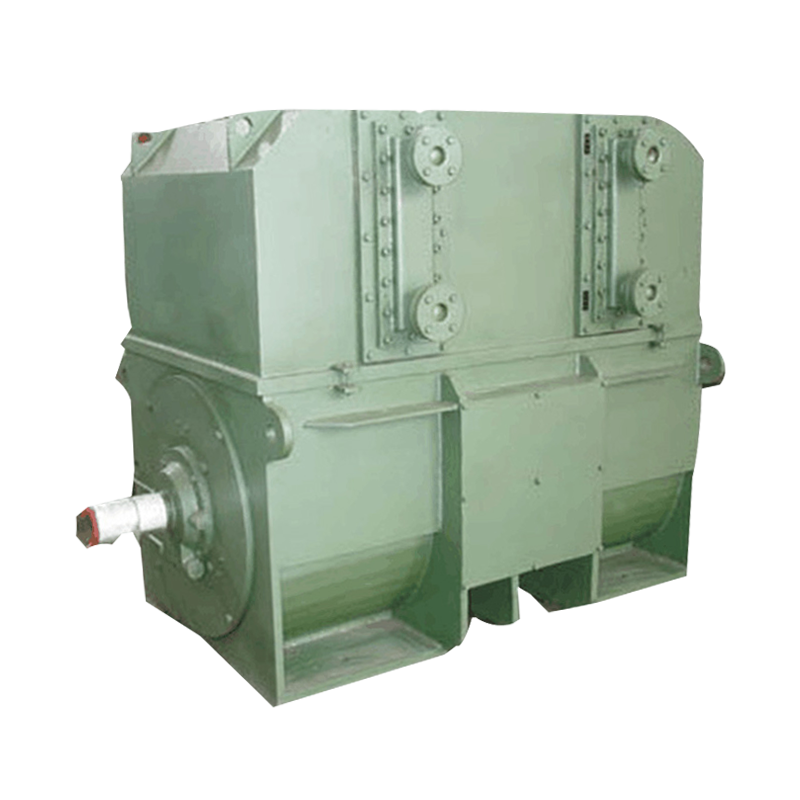
Why is the VPI Process Essential for the Stator and Rotor of a High voltage Slip Ring Motor?
Content
Electromechanical Structural Integrity and Insulation Systems
1. Defining Vacuum Pressure Impregnation (VPI): The VPI process is a specialized manufacturing technique where a fully wound stator or rotor is placed in a vacuum vessel. For a High voltage Slip Ring Motor, this process ensures that solventless resin penetrates every microscopic void within the mica tape and coil windings. 2. Eliminating Partial Discharge: A primary technical concern in high-potential environments is how to prevent partial discharge in high voltage motors. By removing air pockets under vacuum and forcing resin in under high pressure, the VPI system creates a monolithic insulation block that withstands dielectric stresses at 6.6kV or 11kV. 3. VPI Process vs Dip and Bake for High Voltage Insulation: While traditional dip-and-bake methods leave internal voids due to solvent evaporation, VPI utilizes 100 percent solids resins. This comparison is critical for improving the dielectric strength of slip ring motor windings, as it directly impacts the BIL (Basic Insulation Level) rating of the machine.
Thermal Conductivity and Mechanical Rigidity Analysis
1. Enhanced Heat Dissipation Pathways: Air is a poor thermal conductor. By replacing air with high-thermal-conductivity resin, a High voltage Slip Ring Motor can operate at lower internal temperatures. This is a fundamental benefit of VPI for high voltage motor thermal management, allowing the unit to maintain Class F or Class H insulation limits during heavy-duty cycles. 2. Mechanical Bracing Against Electromagnetic Force: During full-voltage starting, the high voltage slip ring motor starting torque generates significant mechanical stress on the end-turns. The VPI resin acts as a rigid structural adhesive, preventing coil movement and vibration-induced insulation abrasion. 3. Environmental Resilience in Extreme Conditions: For motors operating in mining or cement plants, protecting high voltage slip ring motors from moisture and contaminants is mandatory. The VPI process produces a hermetically sealed winding surface that meets IP55 or IP56 enclosure protection standards.
Dynamic Performance of Wound Rotors in Industrial Grinding
1. Rotor Winding Centrifugal Stability: Unlike squirrel cage designs, the wound rotor of a High voltage Slip Ring Motor carries complex three-phase windings. The VPI process is essential to ensure that the windings do not shift under centrifugal forces at rated speeds of 1000 RPM or 1500 RPM. 2. Slip Ring Assembly and Brush Interface: Proper maintenance of collector rings in high voltage motors involves monitoring the surface Ra finish. While the VPI protects the internal windings, the external slip ring interface must be kept free of carbon dust buildup to prevent flashovers between phases. 3. Optimizing Energy Efficiency: By reducing the internal operating temperature and mechanical friction through rigid construction, a VPI-treated unit contributes to reducing the total cost of ownership for high voltage slip ring motors by extending the Mean Time Between Failures (MTBF).
| Insulation Parameter | Conventional Dip & Bake | Vacuum Pressure Impregnation (VPI) |
| Void Content | 5% - 15% | Less than 0.1% |
| Thermal Conductivity | Low (Air trapped) | High (Solid Resin) |
| Dielectric Strength | 15 - 20 kV/mm | Over 30 kV/mm |
| Mechanical Rigidity | Moderate | Maximum (Monolithic) |
Cooling Methodologies and System Integration
1. IC611 vs IC81W Cooling Configurations: When integrating a High voltage Slip Ring Motor into a plant, the cooling system must be selected based on ambient air quality. IC611 air-to-air heat exchangers for high voltage motors are common in dusty environments, whereas IC81W water-cooled systems are used where space is limited and high power density is required. 2. Stator Core Lamination Security: The VPI resin also penetrates the stator laminations, reducing magnetic noise and preventing "lamination buzz" caused by harmonic frequencies in high voltage slip ring motor variable speed drives. 3. IEEE 43 Testing Compliance: Following the VPI process, every motor must pass Insulation Resistance (IR) and Polarization Index (PI) tests to confirm the best insulation practices for 11kV slip ring motors have been successfully implemented.
Hardcore FAQ
Technical References
```

Get in Touch
Related Products
 Shanghai Pinxing
Explosion-proof Motor Co., Ltd.
-
 cai@pinxingmotor.com
-
 +86-21-57566731
-
 +86-21-57566967
-
 No.699, Pinxing Rd., Qinggang Industrial Zone, Fengxian District, Shanghai, China.(East Gate)
-
No. 168, Qingling Rd, Qinggang Industrial Zone, Qingcun Town, Fengxian District, Shanghai, China (South Gate)
Copyright@ 2024 Shanghai Pinxing Explosion-proof Motor Co., Ltd. All Rights Reserved.
Privacy