- 中文网站请点击 http://www.pinxinggroup.com
-
 +86-21-57566731
-
 cai@pinxingmotor.com
-
 DOWNLOAD


 English
 русский
 Français
 عربى
عربى
High-Voltage Corrosion Resistance Explosion-Proof Motor Selection Guide
Content
- 1 The Real Cost of Overlooking Corrosion in Hazardous Areas
- 2 What Makes a High-Voltage Motor Explosion-Proof and Corrosion-Resistant?
- 3 Core Selection Criteria for Corrosive Explosive Environments
- 4 How Area Classification and Gas Properties Guide Your Choice
- 5 Applications That Demand Corrosion-Resistant Ex Motors
- 6 Fixed Speed or Variable Speed? Choose the Right Drive
- 7 How to Validate the Supplier and the Motor
- 8 Final Thought: Match the Motor to the Environment, Not Just the Data Sheet
The Real Cost of Overlooking Corrosion in Hazardous Areas
At a coastal chemical terminal, a 6 kV motor driving a transfer pump failed after 18 months. The problem was not overload or a bearing defect; corrosion from salt spray and hydrogen sulfide had damaged the insulation system. The replacement motor was a high-voltage explosion-proof motor designed with corrosion-resistant construction. It has since operated for years without a winding failure.
The practical conclusion: for any hazardous area where moisture, acid vapor, salt, or sulfur compounds are present, a standard high-voltage motor is a high-risk choice. The correct specification is a high-voltage corrosion resistance explosion-proof motor, and the cost difference is justified by avoided downtime, fires, and premature rewinds.
What Makes a High-Voltage Motor Explosion-Proof and Corrosion-Resistant?
High-voltage motors in this category usually operate at 3 kV, 6 kV, or 10 kV and are used for large pumps, fans, compressors, and conveyor drives. An explosion-proof design means the motor enclosure can contain an internal ignition without allowing the flame or pressure to ignite the surrounding gas or dust.
Corrosion resistance is a separate layer of protection. It starts with a robust frame and extends to surface treatment: high-build epoxy or polyurethane paint, stainless steel fasteners, sealed terminal boxes, and shaft seals. Internally, the winding is protected by vacuum pressure impregnation with moisture-resistant varnish, and bearing cavities are sealed against the ingress of contaminated air.
When both requirements are combined, you get a motor that can spend its working life in a Zone 1 or Zone 2 area with salt, hydrogen sulfide, acid vapor, or chlorine present.
Core Selection Criteria for Corrosive Explosive Environments
Voltage and Power Ratings
Start with the driven equipment duty: required power, speed, starting torque, and available supply voltage. For most large industrial applications, a 6 kV or 10 kV motor is the standard choice. The YBX3 series high-voltage explosion-proof motor covers a wide operating range and is a practical reference when you are matching frame size to duty.
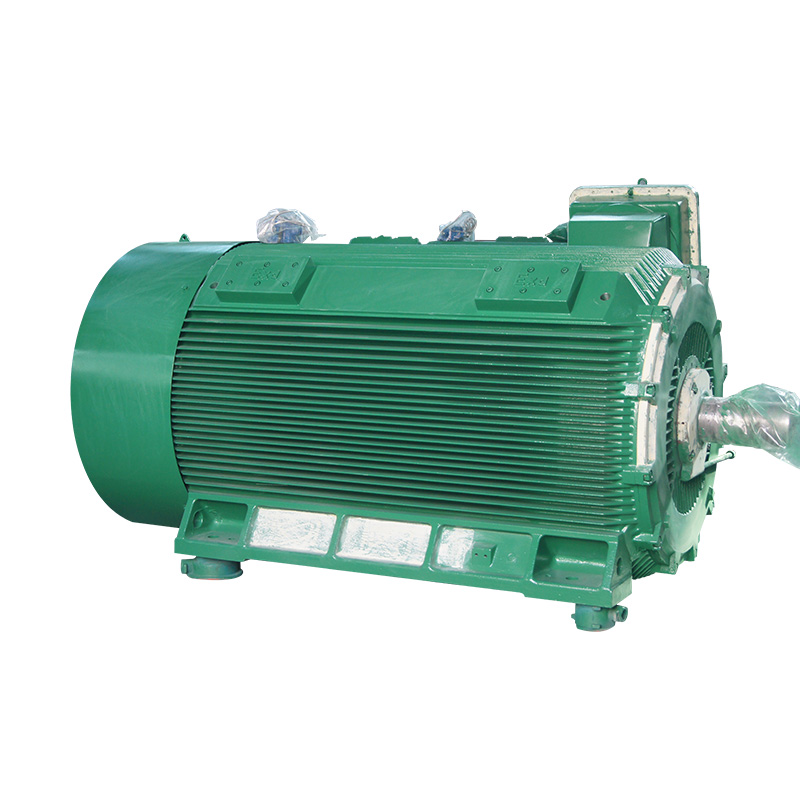 Wholesale YBX3 Series High-Voltage Explosion-Proof Motor (H:355-630mm) ManufactShanghai Pinxing Explosion-proof Motor Co., Ltd is China Wholesale YBX3 Series High-Voltage Explosion-Proof Motor (H:355-630mm) Manufact...View Product →
Insulation System and VPI Treatment
High-voltage windings are subjected to high electrical stress, so insulation quality determines motor life. A fully impregnated Class F or Class H system, applied through VPI, prevents humidity and chemical vapors from entering the winding. The process is explained in our VPI insulation guide, and it is one of the first things to verify when comparing motor suppliers.
Enclosure, Paint and Hardware
The enclosure must be sealed against both dust and water. IP56 or IP65 is common for corrosion-prone Ex motors. Look for a paint system with a high film thickness, epoxy or polyurethane topcoats, and stainless steel hardware. Drain holes, if present, must be fitted with corrosion-resistant breathers or plugs that also maintain the explosion-proof certification.
How Area Classification and Gas Properties Guide Your Choice
Hazardous areas are classified by how often an explosive atmosphere is present. Zone 1 means it is likely to occur during normal operation; Zone 2 means it is unlikely and only occurs briefly. The gas or dust involved is assigned to a gas group (IIA, IIB, IIC) and a temperature class (T1 to T6), which indicates the maximum surface temperature allowed.
A corrosive environment adds another layer of risk. The comparison below shows why corrosion resistance cannot be treated as an optional extra.
| Feature | Standard high-voltage motor | Corrosion-resistant Ex motor |
|---|---|---|
| Enclosure sealing | IP23 to IP44 | IP56 to IP65 |
| Insulation | Standard varnish | Enhanced VPI, moisture-resistant |
| Paint system | Low-build alkyd | High-build epoxy or polyurethane |
| Hardware | Carbon steel | Stainless steel or coated alloy |
| Bearing protection | Standard seals | Contact seals, corrosion-resistant grease |
| Typical environment | Indoor, clean air | Coastal, chemical, offshore, high humidity |
Applications That Demand Corrosion-Resistant Ex Motors
Chemical and Petrochemical Plants
Process areas with pumps, agitators, and compressors often contain solvents, acid vapors, and hydrogen sulfide. A motor that is simply explosion-proof will start to show pitting and seal failure after a few seasons of exposure. Corrosion-resistant construction prevents that slow degradation.
Offshore and Coastal Installations
Salt spray is relentless. On offshore platforms and coastal terminals, motors face high humidity and sodium chloride deposits. External fasteners, paint, and terminal box seals need to tolerate constant salt loading.
Water Treatment and Hazardous Storage
Wastewater plants and landfill sites emit methane and hydrogen sulfide. Sludge pumps and aeration blowers in these sites benefit from a motor designed to survive both corrosive gas and occasional flooding of the room. Project-specific examples can be seen in our application case studies.
Fixed Speed or Variable Speed? Choose the Right Drive
Many large pumps and fans operate at fixed speed, but when process control is needed, a variable speed drive is the obvious solution. In a hazardous area, the motor must be rated for inverter duty, because PWM waveforms create additional stresses on insulation and shafts.
The YBBP series variable-frequency explosion-proof motor is designed for that combination: explosion-proof construction plus VFD-controlled speed. It avoids the need for extra mechanical control devices and often reduces energy consumption by matching speed to process demand.
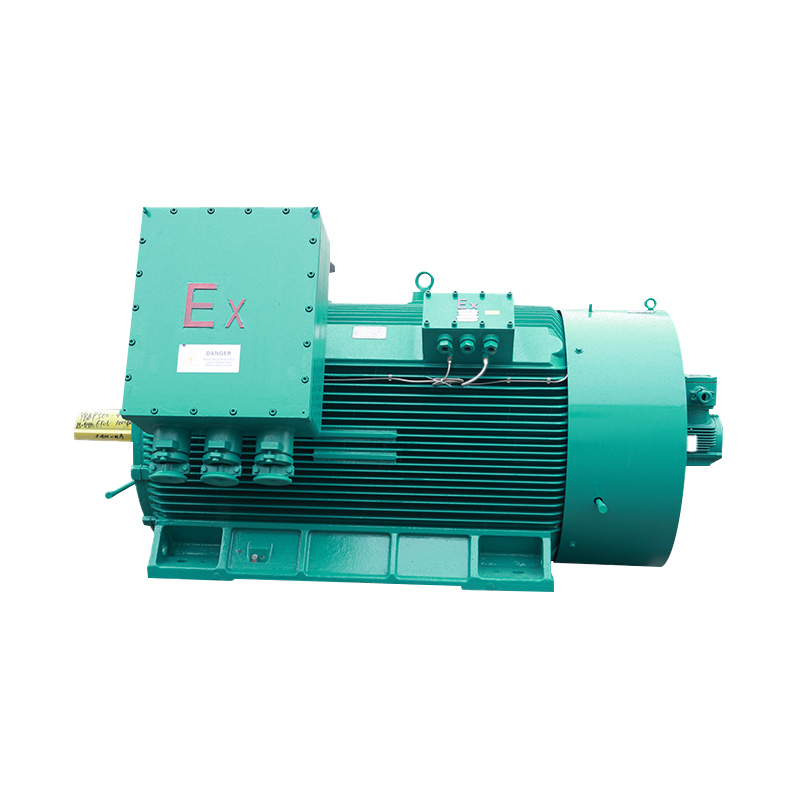 Wholesale VFD Type Explosion-Proof Motor Manufacturers, FactoryShanghai Pinxing Explosion-proof Motor Co., Ltd is China Wholesale VFD Type Explosion-Proof Motor Manufacturers and VFD Type Explosion-Pr...View Product →
How to Validate the Supplier and the Motor
Choosing a motor is also choosing a manufacturer. Look for a supplier that can demonstrate experience with high-voltage motors, complete type-test documentation, and a track record across diverse industries. Shanghai Pinxing, for example, builds more than 1,000 motor types, including a full range of high-voltage explosion-proof motors for hazardous and corrosive duties.
A reputable manufacturer should also provide clear guidance on certifying enclosure types, paint alternatives, and accessory packages.
The range of high-voltage explosion-proof motors offered by Shanghai Pinxing includes fixed-speed and variable-speed options, making it easier to match exactly the requirements of your site.
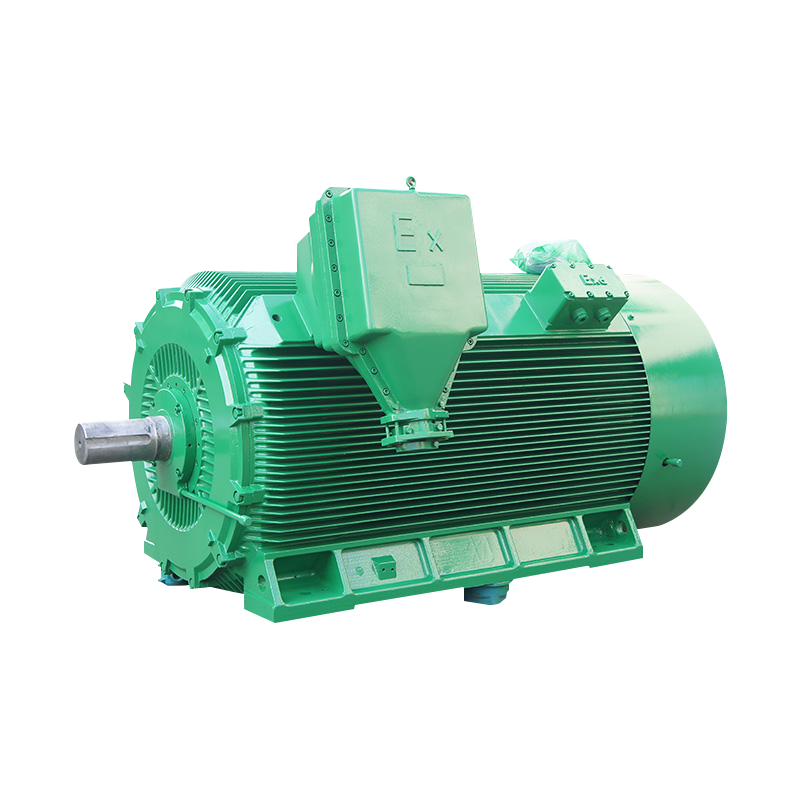 Custom High-voltage Corrosion Resistance Explosion-proof Motor SuppliersPinxing Is China Custom High-voltage Explosion-proof Motor Suppliers And Corrosion Resistance Explosion-proof Motor Company, We Offer Hig...View Product →
Long-term reliability is not just about the manufacturing day. Maintenance procedures, spare parts, and monitoring also matter. For a deeper look at reliability factors, read our article on improving equipment reliability with high-voltage explosion-proof motors.
Final Thought: Match the Motor to the Environment, Not Just the Data Sheet
A high-voltage corrosion resistance explosion-proof motor is more than a sum of specifications. It is a safety and reliability measure for plants that cannot afford unexpected downtime or environmental hazards.
Check the area classification, gas group, temperature class, IP rating, paint system, and insulation system. Then make sure the manufacturer can document both the explosion-proof certification and the corrosion-protection measures. When those boxes are ticked, the motor will protect your process, your people, and your production.

Get in Touch
Related Products
 Shanghai Pinxing
Explosion-proof Motor Co., Ltd.
-
 cai@pinxingmotor.com
-
 +86-21-57566731
-
 +86-21-57566967
-
 No.699, Pinxing Rd., Qinggang Industrial Zone, Fengxian District, Shanghai, China.(East Gate)
-
No. 168, Qingling Rd, Qinggang Industrial Zone, Qingcun Town, Fengxian District, Shanghai, China (South Gate)
Copyright@ 2024 Shanghai Pinxing Explosion-proof Motor Co., Ltd. All Rights Reserved.
Privacy