- 中文网站请点击 http://www.pinxinggroup.com
-
 +86-21-57566731
-
 cai@pinxingmotor.com
-
 DOWNLOAD


 English
 русский
 Français
 عربى
عربى
How Does a 3-Phase Squirrel Cage Motor Work and Why Is It the Most Popular Industrial Choice?
Content
- 1 The Core Mechanism: How a 3-Phase Squirrel Cage Motor Operates
- 2 Technical Comparison: Squirrel Cage vs. Slip Ring Motors
- 3 Industrial Versatility and Sector-Specific Use
- 4 Energy Efficiency Standards: IE3 vs. IE4
- 5 Reliability and 3-Phase Squirrel Cage Motor Troubleshooting Guide
- 5.1 Frequently Asked Questions (FAQ)
- 5.1.1 1. Why is the squirrel cage motor preferred over the slip ring motor for most industrial uses?
- 5.1.2 2. Can a 3-phase squirrel cage motor be used for variable speed applications?
- 5.1.3 3. What does "Squirrel Cage" actually refer to in the motor's design?
- 5.1.4 4. How does voltage imbalance affect motor performance?
- 5.1.5 5. Is it worth investing in an IE4 motor instead of an IE3?
- 5.1 Frequently Asked Questions (FAQ)
- 6 About Our Industrial Motor Solutions
In the modern industrial landscape, reliability and efficiency are the cornerstones of operational success. Among the various types of electric machines, the 3-phase squirrel cage motor has emerged as the definitive "workhorse." Characterized by its rugged rotor construction and brushless design, this motor powers everything from massive industrial compressors to precision HVAC systems. For B2B procurement managers and engineers, understanding the technical nuances of this motor is essential for optimizing lifecycle costs and system performance.
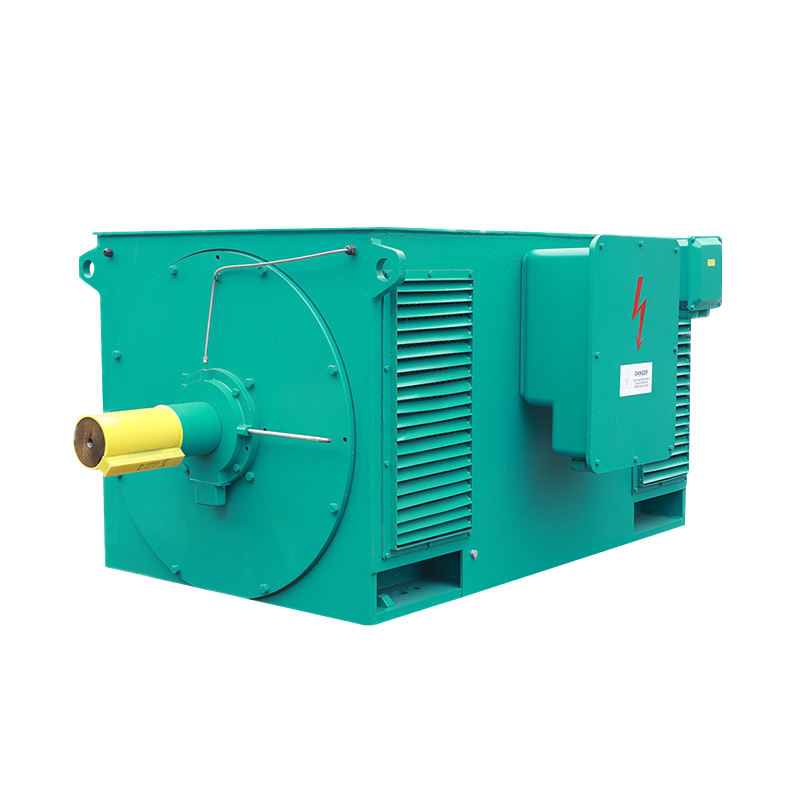
The Core Mechanism: How a 3-Phase Squirrel Cage Motor Operates
The operation of a 3-phase squirrel cage motor is based on Faraday’s law of electromagnetic induction. When a three-phase AC supply is connected to the stator windings, it creates a Rotating Magnetic Field (RMF). This field induces a current in the rotor bars, which, due to the Lorentz force, generates torque. Unlike wound rotors, the squirrel cage rotor consists of heavy duty conducting bars short-circuited by end rings, creating a permanent closed-loop circuit.
Torque Dynamics and Technical Calculations
One of the most critical metrics for engineers is the 3-phase squirrel cage motor starting torque calculation. The starting torque ($T_{st}$) is directly proportional to the square of the applied stator voltage. However, because these motors have a fixed rotor resistance, the starting torque is typically moderate compared to slip ring variants. Engineers must balance the starting current—which can be 5 to 7 times the full-load current—with the required breakaway torque of the load.
To visualize the performance trade-offs between different rotor designs, consider the following comparison:
| Performance Metric | Standard Squirrel Cage (Design B) | High-Torque Squirrel Cage (Design C) |
| Starting Torque | 150% - 200% of Rated | 200% - 250% of Rated |
| Starting Current | High (600% Rated) | Moderate (500% Rated) |
| Slip at Full Load | Low (3% - 5%) | Moderate (5% - 8%) |
Technical Comparison: Squirrel Cage vs. Slip Ring Motors
When evaluating the difference between squirrel cage and slip ring induction motor, the primary distinction lies in the rotor's complexity and the method of torque control. The squirrel cage design is "self-contained," whereas the slip ring motor requires external resistors connected via carbon brushes. While slip ring motors excel in high-inertia starts, the 3-phase squirrel cage motor is preferred for its significantly higher reliability and lower mechanical losses.
| Feature | 3-Phase Squirrel Cage Motor | Slip Ring Induction Motor |
| Maintenance Requirements | Minimal (No brushes/rings) | High (Brush wear & ring cleaning) |
| Speed Control | Electronic (via VFD) | Physical (via External Resistors) |
| Operational Life | Longer (Reduced friction points) | Shorter (Mechanical wear components) |
According to the International Energy Agency (IEA) in their latest World Energy Outlook, electric motors account for approximately 40% of global electricity consumption. Recent 2024 technical standards emphasize that the transition to brushless designs, such as high-efficiency squirrel cage systems, is a primary driver in reducing industrial carbon footprints.
Source: IEA - World Energy Outlook 2024 Report
Industrial Versatility and Sector-Specific Use
The applications of squirrel cage induction motor in HVAC systems highlight its adaptability. In these environments, motors drive centrifugal fans and pumps where constant speed and high uptime are non-negotiable. Beyond HVAC, these motors are foundational in:
- Water Treatment: Powering high-volume submersible pumps.
- Material Handling: Driving conveyor belts in automated warehouses.
- Food & Beverage: Operating in wash-down environments where the enclosed design protects internal components.
Energy Efficiency Standards: IE3 vs. IE4
Modern procurement strategies now prioritize the IE3 vs IE4 energy efficiency for 3-phase squirrel cage motors. As of 2024, many regions, including the European Union and parts of North America, have mandated IE3 as the minimum requirement for motors between 0.75kW and 1000kW. Moving to IE4 (Super-Premium Efficiency) can reduce energy losses by an additional 15% to 20% compared to IE3.
The efficiency gains are quantified in the table below:
| Efficiency Class | Energy Loss Reduction | Typical Payback Period |
| IE3 (Premium) | Baseline (Standard) | 1 - 2 Years |
| IE4 (Super-Premium) | 15% - 20% vs IE3 | 2 - 4 Years |
Recent data from the International Electrotechnical Commission (IEC) indicates that the global market for IE4 and IE5 motors is expected to grow by 7.8% annually through 2025, driven by stricter MEPS (Minimum Energy Performance Standards).
Source: IEC - The Role of Energy Efficiency Standards
Reliability and 3-Phase Squirrel Cage Motor Troubleshooting Guide
Despite their robustness, these motors require systematic monitoring. A comprehensive 3-phase squirrel cage motor troubleshooting guide focuses on three main failure modes: thermal, electrical, and mechanical.
- Thermal Issues: Often caused by overloading or poor ventilation. Ensure the ambient temperature does not exceed the motor's insulation class rating (e.g., Class F).
- Electrical Failures: Insulation breakdown due to voltage surges or harmonic distortion from VFDs.
- Mechanical Wear: Primarily bearing failure, which accounts for nearly 50% of motor downtime.
Frequently Asked Questions (FAQ)
1. Why is the squirrel cage motor preferred over the slip ring motor for most industrial uses?
The squirrel cage design eliminates brushes and slip rings, which reduces maintenance costs, improves safety in explosive environments, and offers a more compact footprint for the same power rating.
2. Can a 3-phase squirrel cage motor be used for variable speed applications?
Yes. When paired with a Variable Frequency Drive (VFD), these motors offer excellent speed control and can even provide high starting torque at low speeds, making them highly versatile.
3. What does "Squirrel Cage" actually refer to in the motor's design?
It refers to the rotor's appearance. The rotor bars and end rings resemble a circular exercise cage used for small animals like squirrels.
4. How does voltage imbalance affect motor performance?
A small voltage imbalance can lead to a significant current imbalance, resulting in increased operating temperatures and a drastic reduction in the motor's insulation life.
5. Is it worth investing in an IE4 motor instead of an IE3?
For applications with high annual running hours (e.g., pumps or fans running 24/7), the energy savings from an IE4 motor typically offset the higher initial purchase price within a few years.
About Our Industrial Motor Solutions
Our company specializes in the engineering and supply of high-performance induction motors designed for rigorous industrial environments. We focus on delivering IE3 and IE4 compliant solutions that help our global partners reduce operational costs while maintaining maximum system reliability. From custom shaft configurations to specialized insulation for VFD operation, we provide the technical expertise required for modern B2B electrical infrastructure.

Get in Touch
Related Products
 Shanghai Pinxing
Explosion-proof Motor Co., Ltd.
-
 cai@pinxingmotor.com
-
 +86-21-57566731
-
 +86-21-57566967
-
 No.699, Pinxing Rd., Qinggang Industrial Zone, Fengxian District, Shanghai, China.(East Gate)
-
No. 168, Qingling Rd, Qinggang Industrial Zone, Qingcun Town, Fengxian District, Shanghai, China (South Gate)
Copyright@ 2024 Shanghai Pinxing Explosion-proof Motor Co., Ltd. All Rights Reserved.
Privacy