- 中文网站请点击 http://www.pinxinggroup.com
-
 +86-21-57566731
-
 cai@pinxingmotor.com
-
 DOWNLOAD


 English
 русский
 Français
 عربى
عربى
3 Phase AC Electric Motor: Practical Selection Guide for Industrial Buyers
Content
- 1 What Is a 3 Phase AC Electric Motor and How Does It Work?
- 2 Squirrel Cage, Wound Rotor, and Synchronous Motors: What Each One Is For
- 3 Efficiency Classes and the Energy Cost of Motor Losses
- 4 How to Select a 3 Phase AC Motor for Industrial Duty
- 5 Common Faults in 3 Phase AC Motors and How to Diagnose Them
- 6 FAQ
Consider a coal preparation plant running a 132 kW conveyor motor at 92% load. That single 3 phase AC electric motor draws approximately 64,000 kWh per month, and the efficiency class of that motor determines 40,000 to 50,000 kWh of the annual energy bill. Add a spare motor, a cooling tower fan, and two slurry pumps, and the plant has a dozen three-phase motors whose energy and maintenance costs dominate the electrical budget. This is the kind of decision a plant engineer faces every time a motor reaches the end of its service life.
What Is a 3 Phase AC Electric Motor and How Does It Work?
A 3 phase AC electric motor is an induction machine that converts three-phase alternating current into rotational mechanical power through a rotating magnetic field. It has no brushes or commutator, which gives it the self-starting and low-maintenance character that makes it the standard drive in industrial plants.
The stator carries three windings displaced by 120 degrees. When energized by a three-phase supply, the windings generate a magnetic field that rotates around the stator bore at synchronous speed. The rotor, which sits inside that bore, is cut by the rotating field and generates its own induced current, creating torque that drags the rotor after the field.
Synchronous speed = (120 x frequency) / poles. For a 4-pole motor on a 50 Hz system, that is 1,500 rpm. The rotor runs 2% to 5% slower under load, and that slip interval is where the motor develops torque.
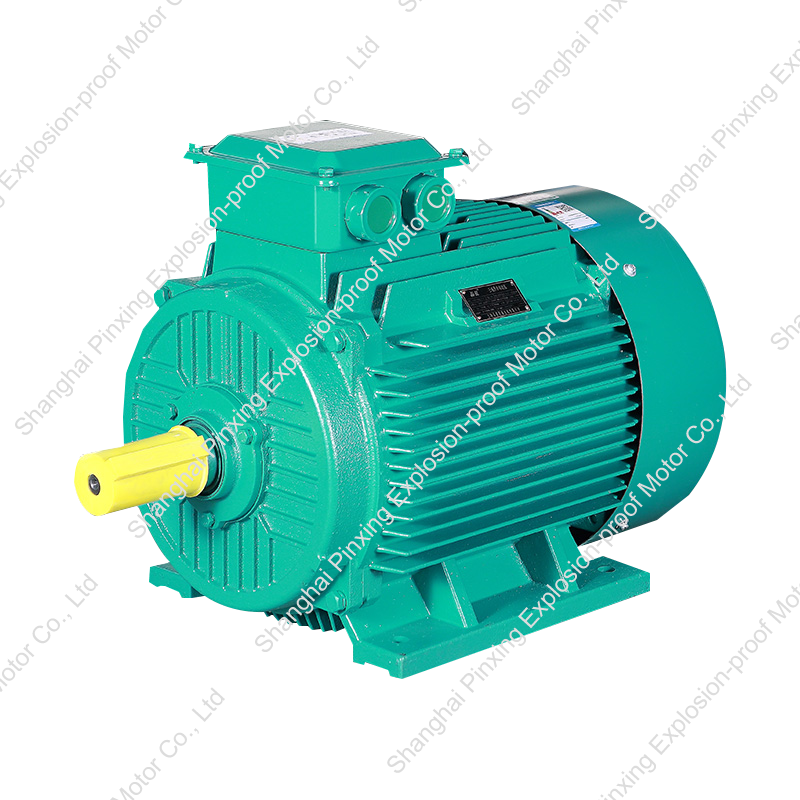
Shanghai Pinxing Explosion-proof Motor Co., Ltd. builds three-phase AC motors across low-voltage and high-voltage ranges, from the Y-series squirrel cage motors used in pumps and fans to the YR-series wound rotor motors applied in crushers and mills. More than 1,000 product varieties leave their Shanghai facility each year, and the company exports to over 40 countries.
Squirrel Cage, Wound Rotor, and Synchronous Motors: What Each One Is For
Squirrel cage motors are the default for constant-speed loads, wound rotor motors are essential for applications that need high starting torque, and synchronous motors serve loads that demand exact speed or power factor correction.
| Criteria | Squirrel Cage | Wound Rotor | Synchronous |
| Starting torque | Low to medium | High | Low to medium |
| Rotor construction | Bars welded to end rings | Copper windings with slip rings | Field windings with brushes or brushless exciter |
| Speed control | VFD or pole changing | Rotor resistance or VFD | VFD |
| Typical duties | Pumps, fans, compressors | Crushers, mills, conveyors | Large compressors, generators |
| Maintenance burden | Minimal | Slip ring and brush inspection | Excitation system checks |
The squirrel cage motor covers most industrial loads. It has no moving electrical contacts on the rotor, which is why it remains the workhorse of the industry. When an application needs high starting torque, such as a ball mill picking up a full charge, a wound rotor motor provides that capability through external rotor resistance. Synchronous motors are reserved for large, continuous loads where the plant also needs the power factor correction benefits of an excitation system.
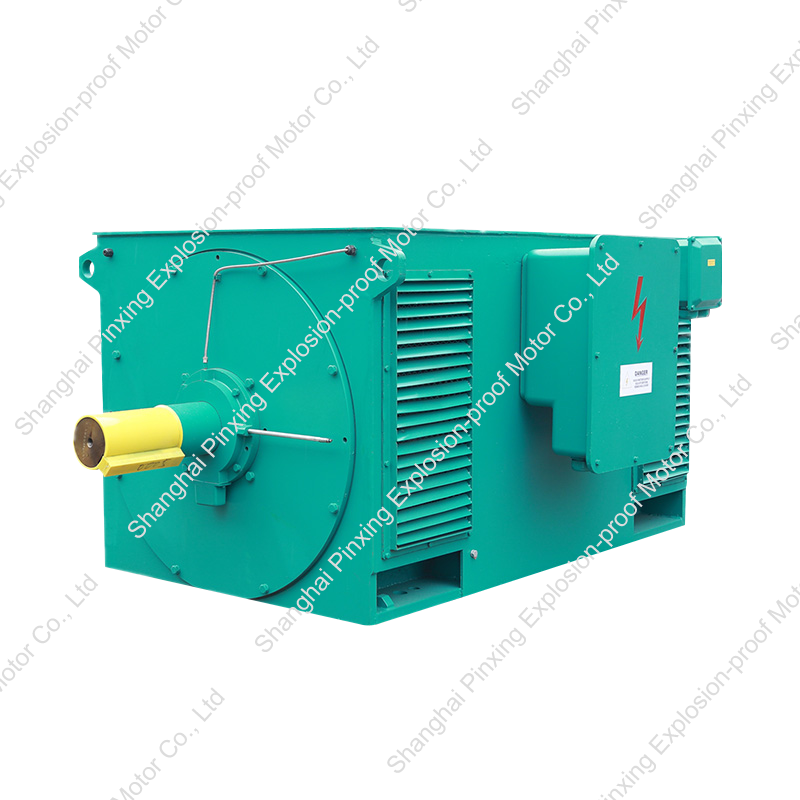
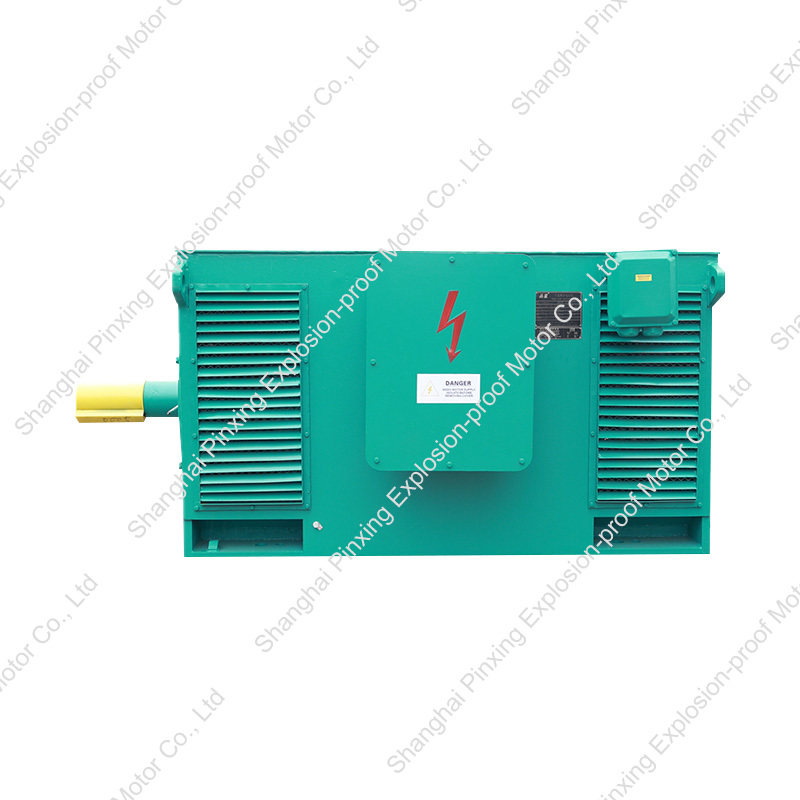 Y Series High-Voltage Three Phase Induction Motor for General MachineryThis Y series high-voltage motor suits compressors, pumps, and cutting machines, offering high efficiency, low vibration, and reliable performance with Class F insulation and box-type construction.View Product →
Efficiency Classes and the Energy Cost of Motor Losses
Motor efficiency is classified as IE2, IE3, and IE4, and moving up one class typically cuts energy losses by 10% to 20%. The higher the efficiency class, the lower the copper and iron losses in the motor, and the lower the total cost of ownership.
For a 75 kW motor running 8,000 hours per year, the difference between IE2 and IE4 is about 39,000 kWh of annual energy consumption. At a conservative $0.08 per kWh, that is roughly $3,100 per motor per year.
Annual energy losses for a 75 kW motor running 8,000 hours, by efficiency class
The practical takeaway is that efficiency class selection is rarely a hardware-only decision. In many markets, IE3 is now the legal minimum, while IE4 is increasingly specified for new projects because the payback period is often under three years. Shanghai Pinxing's YE3 and YE4 series low-voltage motors are built for these efficiency requirements, and the manufacturing process includes automated stator winding to keep copper losses within tolerance.
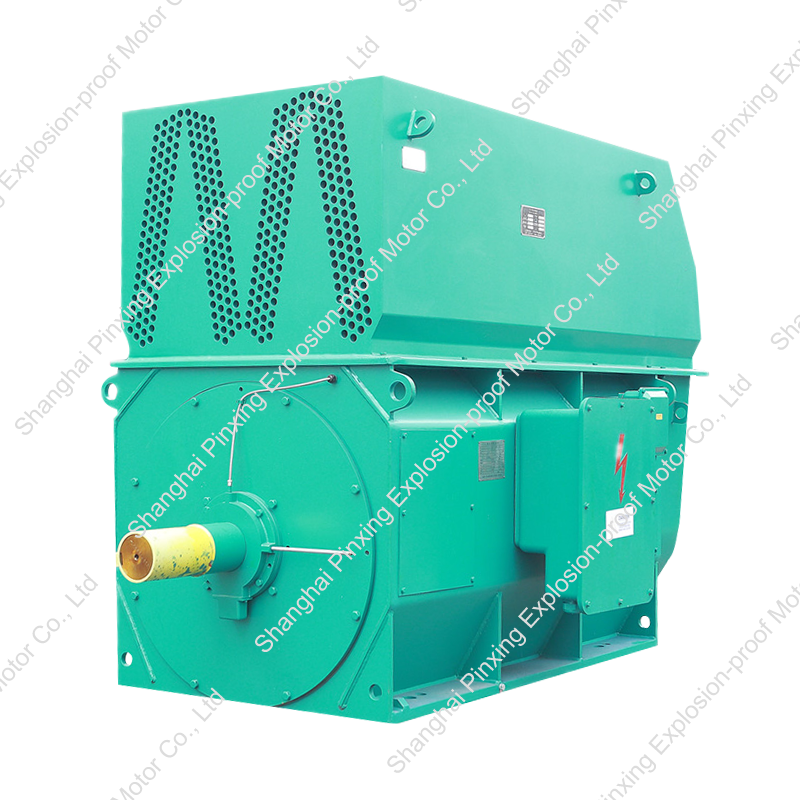
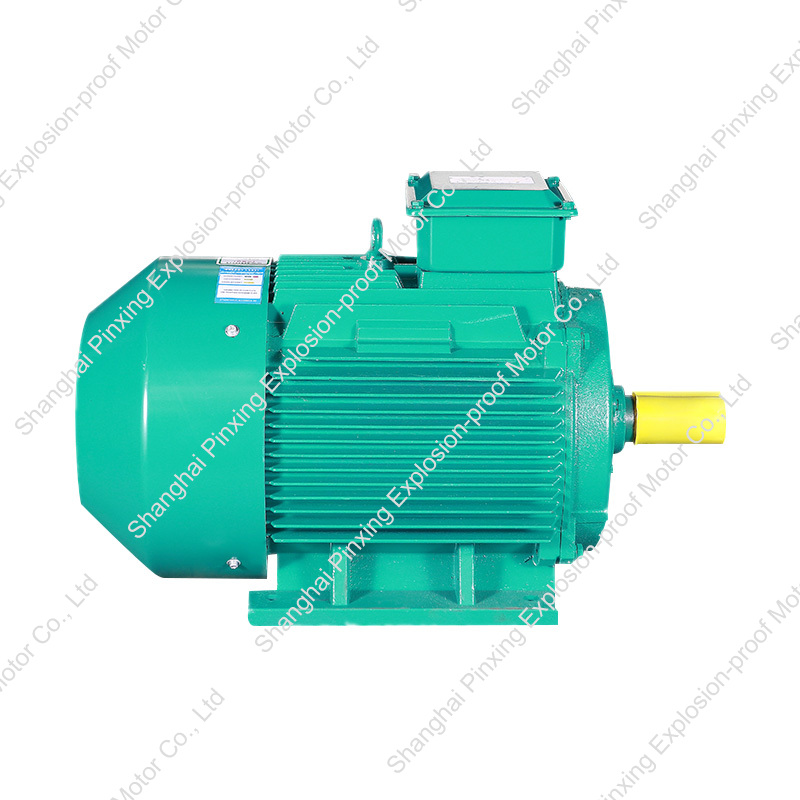 IE3 Series Three Phase Induction Motor for Energy EfficiencyThe IE3 series motor delivers high efficiency and reliability with compact size, low noise, and low vibration. It features Class F insulation and cast-aluminum rotor, meeting current efficiency standards.View Product →
How to Select a 3 Phase AC Motor for Industrial Duty
Select a 3 phase AC motor by matching the driven load, supply voltage, duty cycle, enclosure type, and starting method, in that order. Getting these five points right eliminates most premature motor failures.
- Define the load. Determine the required shaft power from the driven equipment, then apply a safety margin of 10% to 15% for unknown friction and startup transients.
- Match the supply. Confirm frequency (50 Hz or 60 Hz) and voltage (380/400 V or 460/480 V), and check that the motor frame and winding accept that supply.
- Choose the enclosure. Select an open drip-proof motor for clean indoor duty or a totally enclosed fan-cooled motor for dusty, wet, or hazardous locations.
- Duty cycle. Select a continuous S1 motor for constant loads or an intermittent S3 motor for cranes and valve operators that cycle throughout a shift.
- Starting method. For high inertia loads, plan a soft starter or VFD instead of direct-on-line starting, which can draw up to seven times full-load current.
For loads that require speed regulation, a dedicated variable-frequency motor offers a thermal design matched to the VFD's harmonic currents.
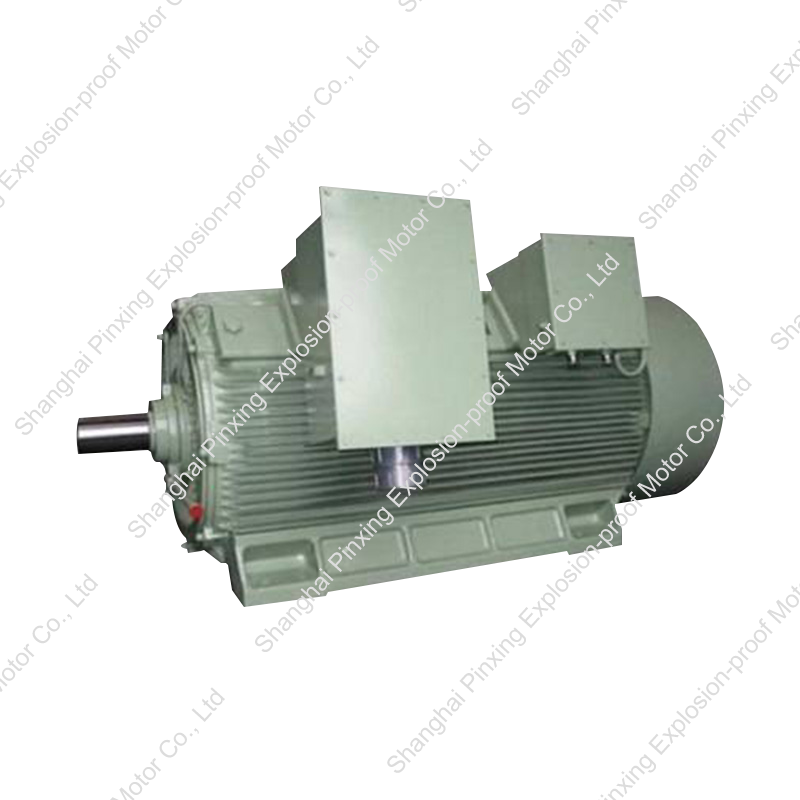
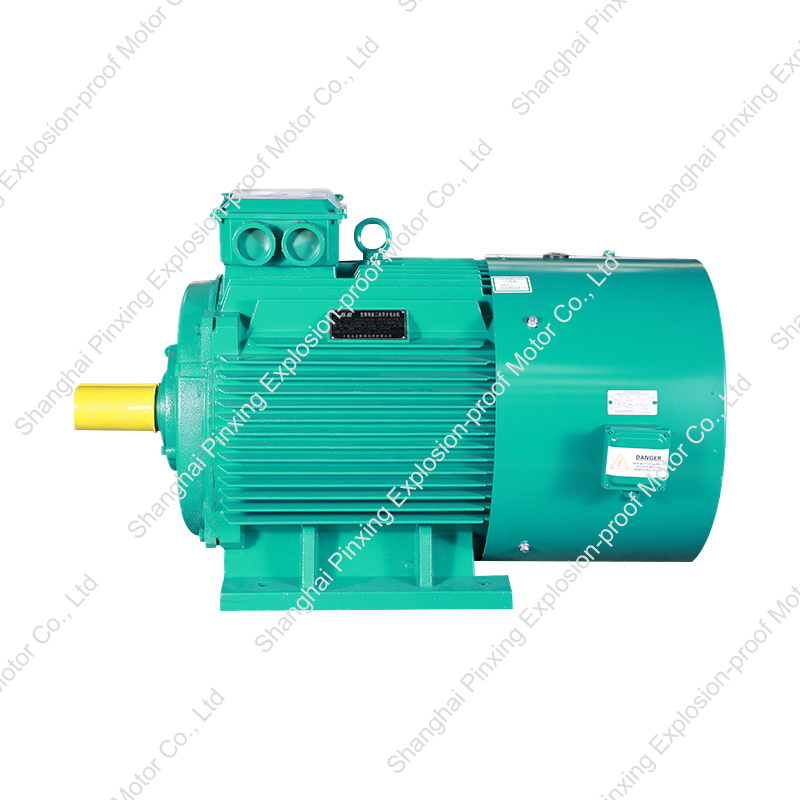 YPT Series Three Phase Induction Motor for Variable Frequency DrivesDesigned for frequency conversion applications, the YPT series supports both independent and fan cooling, operating over a wide frequency range from 5 to 100 Hz for adjustable speed loads.View Product →
For explosive atmospheres, 3 phase AC motors must be selected as explosion-proof motors rated for the specific gas or dust group. Shanghai Pinxing's high-voltage and low-voltage explosion-proof motors cover both zones, and the company's experience supplying the petroleum, chemical, and coal mining sectors means the selection can be matched to the actual environment rather than a generic catalog rating. For real deployments in mining and petrochemical plants, Pinxing's industrial case studies show how these motors are specified in practice, including adjustments made for high ambient temperatures and corrosive atmospheres.
Common Faults in 3 Phase AC Motors and How to Diagnose Them
Most 3 phase AC motor failures originate from bearing wear, insulation degradation, or phase imbalance. These three causes account for the overwhelming majority of unscheduled motor downtime.
- Bearing failure (approx. 40% of cases). Excessive vibration, high casing temperature, and unusual noise are early signs.
- Insulation breakdown (approx. 30% of cases). Overheating, voltage spikes, and contamination lead to winding short circuits.
- Phase imbalance (approx. 10% of cases). Uneven voltage across the three phases raises current in the highest phase and can overheat the stator.
- Rotor bar damage (approx. 10% of cases). Broken rotor bars cause the motor to produce reduced torque and rhythmic oscillation.
Regular measurement of vibration amplitude, winding resistance, and phase current is the most cost-effective strategy. Monitoring a motor's temperature and current draws quarterly during the first year of operation establishes a baseline that makes subsequent faults easy to spot.
FAQ
What is slip in a 3 phase AC electric motor?
Slip is the difference between the synchronous speed of the rotating magnetic field and the actual rotor speed, expressed as a percentage. A typical 4-pole motor on a 50 Hz supply runs around 1,450 rpm against a synchronous speed of 1,500 rpm, which is about 3% slip. Slip is necessary for torque production; at zero slip, no current is induced in the rotor.
Can a 3 phase AC motor run on a single-phase supply?
A 3 phase AC motor will not self-start on a single-phase supply. A static phase converter or a VFD with a single-phase input and three-phase output can be used to run it, but the motor will derate and run at reduced performance. For small industrial loads like compressors on single-phase service, a dedicated single-phase motor is usually the better choice.
What causes a 3 phase AC motor to overheat?
Overheating is most often caused by phase imbalance, overload, blocked cooling airflow, or low insulation resistance. Each of these raises copper and iron losses faster than the fan can remove them. Measuring the current in each phase and checking the fan and air passages will locate most of these issues.
Should I choose an IE3 or IE4 motor for a new project?
For new projects, IE4 is usually the better investment when the motor runs more than 4,000 hours per year. The extra efficiency reduces energy costs, and the payback period is generally two to three years. For lower duty cycles or standby equipment, IE3 is a practical choice that still meets minimum efficiency regulations in most regions.

Get in Touch
Related Products
 Shanghai Pinxing
Explosion-proof Motor Co., Ltd.
-
 cai@pinxingmotor.com
-
 +86-21-57566731
-
 +86-21-57566967
-
 No.699, Pinxing Rd., Qinggang Industrial Zone, Fengxian District, Shanghai, China.(East Gate)
-
No. 168, Qingling Rd, Qinggang Industrial Zone, Qingcun Town, Fengxian District, Shanghai, China (South Gate)
Copyright@ 2024 Shanghai Pinxing Explosion-proof Motor Co., Ltd. All Rights Reserved.
Privacy